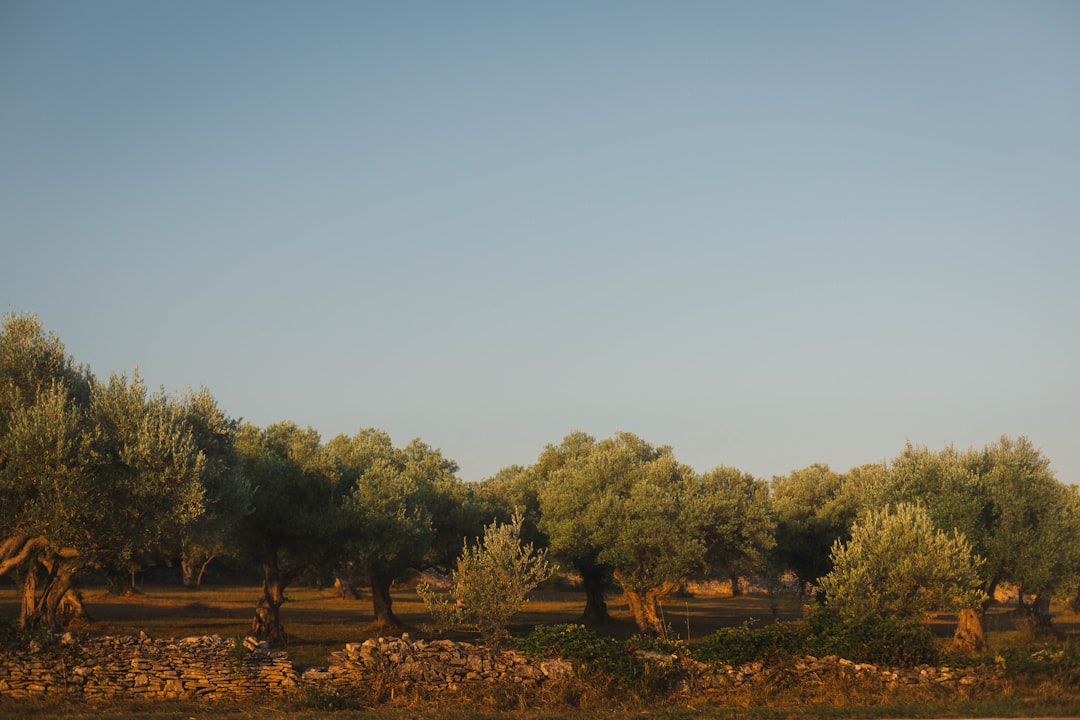
Lebanese Minister of Agriculture Nizar Hani has documented what he describes as systematic agricultural destruction by Israeli forces, with 50,000 olive trees destroyed and between 5,000 and 10,000 stolen during military operations in southern Lebanon.
"The Israelis have stolen thousands of olive trees from us. They want to destroy a symbol of our culture," Hani stated in an interview, detailing the devastation wrought on Lebanese agriculture since the conflict escalated in March 2026.
The Minister's assessment reveals agricultural damage comparable to a natural disaster: 22.5 percent of Lebanese cropland—approximately 54,000 hectares out of 250,000 total—has been rendered unusable. The economic toll from the 2024 war alone was estimated at $800 million in agricultural losses, a figure that continues to climb with ongoing operations.
The targeting of centuries-old olive trees carries particular cultural resonance in Lebanon, where olive cultivation represents both economic livelihood and civilizational continuity. "These are centuries-old olive trees that can be worth thousands of euros. And it's not just about money," Hani emphasized. "They are trying to destroy a symbol of our culture."
According to Israeli media reports and eyewitness accounts from southern Lebanese villages, mature olive trees have been uprooted by Israeli forces and transported across the border for resale in Israel. The practice has drawn comparisons to similar incidents during previous Israeli operations in the West Bank, where olive tree destruction has been documented for decades.
The agricultural catastrophe extends beyond symbolic damage. The southern region accounted for 70 percent of Lebanon's citrus production and 90 percent of banana cultivation before the war. Tobacco farming, which sustained approximately 16,000 families in the south, has been decimated, with an estimated 85 percent or more of growers displaced from their land.
Ramzi Samha, who operates a juice stand in the southern city of Tyre, described the immediate economic impact: "The price of citrus fruits doubled immediately on April 13. The Israelis killed a group of 12 Syrians who were picking oranges. No Lebanese dared to go after that."
The humanitarian implications are severe. The United Nations Food and Agriculture Organization and World Food Programme have warned that the destruction of agricultural production will result in acute famine affecting at least 1.2 million people in Lebanon—in a country with fewer than six million inhabitants.
The broader regional impact is equally stark. The WFP estimates the ongoing conflict threatens to push 45 million people into imminent risk of acute famine and will drive 30 million back into poverty, with four million of those in the Middle East region.
For farmers like Qarim Phliphli, the destruction represents total economic collapse. The 55-year-old farmer, who managed a comfortable household economy in 2025 with his pea plantation and small farm of 350 cattle and sheep, is now displaced to a reception center north of Beirut. "I lost the entire pea harvest and a hundred cows and sheep," he said.
In this region, today's headline is yesterday's history repeating. Agricultural warfare—the deliberate destruction of crops, orchards, and farming infrastructure—has been a feature of conflicts across the Middle East for generations. But the scale and systematic nature of the current destruction in southern Lebanon represents what Lebanese officials describe as an attempt to make displacement permanent.
"Agriculture kept the population in the southern villages," Minister Hani explained. "Without agriculture, the current exodus will become permanent, exacerbating sectarian tensions" in a country where demographic balance between religious communities remains politically fraught.
The economic collapse has compounded Lebanon's existing financial crisis. Since 2019, when the country's banking system collapsed and GDP shrank by 25 percent, Lebanon has struggled with hyperinflation and currency devaluation. The Institute of International Finance now estimates GDP could decline by an additional 12 to 16 percent this year.
Inflation has surged to 17.26 percent in 2026, according to the Central Administration of Statistics. Fuel prices have skyrocketed, with a 20-liter can of gasoline increasing 60 percent and diesel rising 55 percent since early April. NGOs like Action Against Hunger report that families are now "forced to skip meals, reduce the quantity or quality of food, sell their belongings, or pull their children out of school in order to feed themselves."
For Phliphli, like hundreds of thousands of displaced southern Lebanese, the future offers little hope. "The only solution is to leave the country," he concluded. "I want nothing more to do with Lebanon."