
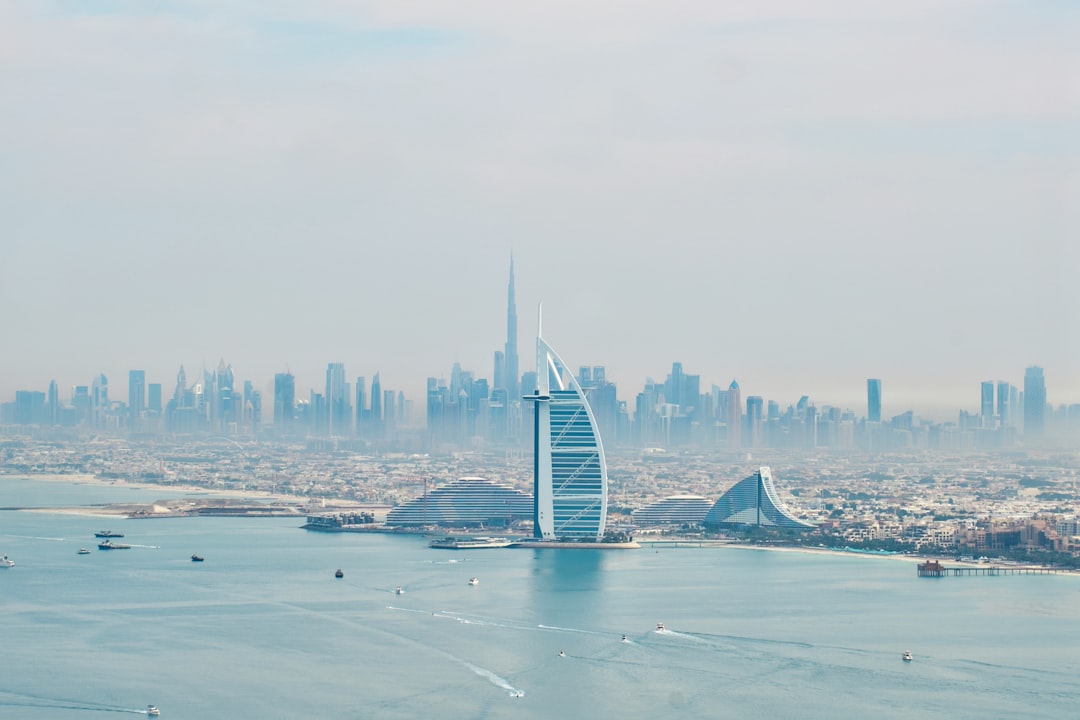
Dubai's hospitality sector faces an unprecedented collapse as credit rating agency Moody's projects hotel occupancy will crater from 80 percent to just 10 percent in the second quarter, describing the scenario as an "effective shutdown of large parts of the hospitality sector."
The stark warning, reported by Middle East Eye citing Wall Street Journal analysis, underscores the devastating economic impact of the regional security crisis that erupted February 28 when US-Israeli military operations against Iran commenced. The crisis represents the most severe test yet of the UAE's diversification strategy—a decades-long transformation from oil dependence to a tourism and business hub now under extraordinary pressure.
In the Emirates, as across the Gulf, ambitious visions drive rapid transformation—turning desert into global business hubs. But that transformation's vulnerability to regional instability has never been more apparent.
Sharp Decline in Air Travel Triggers Crisis
Passenger traffic through Dubai's airports collapsed by 66 percent in March, with first-quarter numbers down 2.5 million compared to 2025. The precipitous drop followed air travel restrictions imposed after Iran's retaliatory strikes against Gulf states, which authorities lifted only this past Saturday in an effort to revive the tourism sector.
The occupancy projections for the quarter ending July 1 paint a grim picture for an emirate that has built its economic model around international connectivity and year-round tourism. Dubai typically maintains occupancy rates around 80 percent, among the highest globally for major cities.
Luxury Hotels Slash Rates, Closures Loom
The crisis has forced even Dubai's most prestigious properties to implement dramatic price reductions. Atlantis The Royal, the ultra-luxury resort that opened in 2023, now offers standard suites at $800 per night—a fraction of typical rates. The Mandarin Oriental Jumeira has dropped to $448 nightly, while Four Seasons Resort Jumeira and the downtown Four Seasons property have fallen to $359 and $243 respectively.
These price cuts reflect desperate attempts to attract the limited visitor traffic still entering the emirate, but analysts warn they may not prevent widespread closures and job losses. The hospitality sector employs hundreds of thousands across Dubai, from international hotel chains to local service providers dependent on tourism spend.
Hotel operators interviewed by industry publications describe the situation as unprecedented. "We've never seen anything like this," one general manager stated, speaking on condition of anonymity. "Even during the 2008 financial crisis, we maintained 40-50 percent occupancy. This is effectively a shutdown."
Businesses and Residents Relocate to Europe
The security situation has prompted not just tourism decline but more fundamental economic disruption. Companies and residents have begun relocating to Europe, viewing the Gulf's proximity to the Iran conflict as an unacceptable business risk.
One logistics executive told the Wall Street Journal that "people felt like it's no longer worth it"—a sentiment that strikes at the heart of Dubai's value proposition as a stable, globally connected business environment. The emirate's success has rested on positioning itself as a safe haven within a volatile region, offering world-class infrastructure and connectivity that offset geopolitical concerns.
The corporate exodus compounds the tourism crisis. Expatriate professionals comprise Dubai's economic engine, filling hotels for business travel, entertaining visiting clients, and supporting the hospitality ecosystem through everyday consumption. Their departure creates cascading effects beyond simple occupancy numbers.
Diversification Model Under Stress
The crisis tests the core assumptions of the UAE's economic diversification strategy. For two decades, Dubai has invested hundreds of billions building itself into a global aviation hub, tourism destination, and financial center—deliberately reducing dependence on hydrocarbon revenues that still dominate neighbors like Saudi Arabia and Kuwait.
That model delivered remarkable results. Dubai attracted 17 million international overnight visitors in 2023, hosted Expo 2020 (delayed to 2021-2022), and positioned itself as the region's preferred transit point between Europe, Asia, and Africa. Emirates airline became the world's largest international carrier, while the emirate's hotels maintained among the highest occupancy rates globally.
But the current crisis exposes a different dependency: on regional stability and international confidence. An economy built on tourism and business travel proves acutely vulnerable when conflict closes airspace and drives corporate relocations.
Economists note the irony. "Dubai diversified away from oil to reduce vulnerability to commodity price shocks," explained one Gulf analyst. "But in doing so, it became vulnerable to different shocks—geopolitical instability that disrupts the connectivity and confidence its model requires."
Tourism Officials Respond
The Dubai Department of Economy and Tourism has emphasized that air travel restrictions have now been lifted and urged international visitors to return. Officials point to the emirate's robust infrastructure, world-class security measures, and ongoing events calendar as reasons for confidence.
"Dubai remains open for business and welcomes visitors from around the world," a department spokesperson stated. "We are confident that as regional tensions ease, our tourism sector will recover quickly given the fundamental strength of our offerings."
The optimistic messaging, however, confronts Moody's sobering analysis. The credit rating agency's projection of 10 percent occupancy suggests limited confidence in near-term recovery, even with travel restrictions lifted. Rebuilding international perceptions of safety and stability will take time—potentially months or longer depending on the regional security trajectory.
Recovery Prospects Uncertain
The lifting of air travel restrictions Saturday offers potential for recovery, but the timeline remains highly uncertain. Even if passenger traffic rebounds quickly, rebuilding international confidence will take time—particularly among corporate decision-makers evaluating whether to maintain Gulf operations.
Moody's projection of 10 percent occupancy for the second quarter suggests the agency expects limited near-term improvement. That would represent occupancy levels typically seen only in cities experiencing natural disasters or severe economic depression—entirely unprecedented for Dubai in the modern era.
The broader regional security situation will ultimately determine the sector's trajectory. As long as the US-Israeli campaign against Iran continues and retaliatory strikes threaten Gulf states, international visitors and businesses will remain wary—regardless of infrastructure quality or pricing incentives.
Some industry observers detect early signs of stabilization. Weekend bookings have increased slightly since restrictions lifted, and several hotels report modest upticks in inquiry volume. But these green shoots remain fragile, dependent on sustained improvement in the security environment.
Employment and Economic Impact
The hospitality sector employs an estimated 400,000 people across Dubai, from hotel staff to restaurant workers to tour operators. Many are expatriate workers on employment visas tied to their jobs. Widespread hotel closures would trigger layoffs potentially affecting tens of thousands, with ripple effects across housing, retail, and service sectors.
Dubai's government has not announced support measures for displaced hospitality workers, though officials have previously implemented wage support programs during economic crises. The scale of potential job losses, however, may exceed previous interventions.
Beyond direct employment, the hospitality crisis affects real estate markets, retail spending, and government revenues from tourism-related fees and taxes. Dubai's fiscal model depends substantially on economic activity generated by visitors and business travelers—revenue streams now severely constrained.
Implications for Gulf Economic Models
The crisis carries lessons for neighboring Gulf states pursuing similar diversification strategies. Saudi Arabia's Vision 2030 aims to attract 100 million annual tourists, while Qatar leverages its World Cup infrastructure for tourism growth. Both models assume regional stability and international connectivity—assumptions now being stress-tested.
For Dubai, the immediate challenge is surviving the shutdown with its economic infrastructure intact. Hotel closures and corporate relocations can become self-reinforcing: empty hotels close, laid-off workers leave, reduced flight schedules make the emirate less accessible, further depressing demand.
Breaking that cycle will require not just lifting restrictions but resolving the underlying regional security crisis—a matter largely beyond the UAE's control, despite its diplomatic efforts and participation in regional security frameworks.
The UAE has historically maintained careful diplomatic balancing between Washington and regional powers, seeking to position itself as a stability actor. The current crisis, however, demonstrates the limits of that approach when broader conflicts erupt. Dubai's connectivity and openness—its greatest economic assets—become vulnerabilities when regional tensions spike.
The coming months will reveal whether Dubai's diversification model can withstand geopolitical shocks, or whether the emirate's rapid transformation has created new vulnerabilities as significant as the oil dependence it sought to escape. The answer will shape economic planning across the Gulf, where modernization and diversification remain paramount policy objectives—but where regional instability continues to impose constraints that even the most ambitious visions cannot entirely overcome.