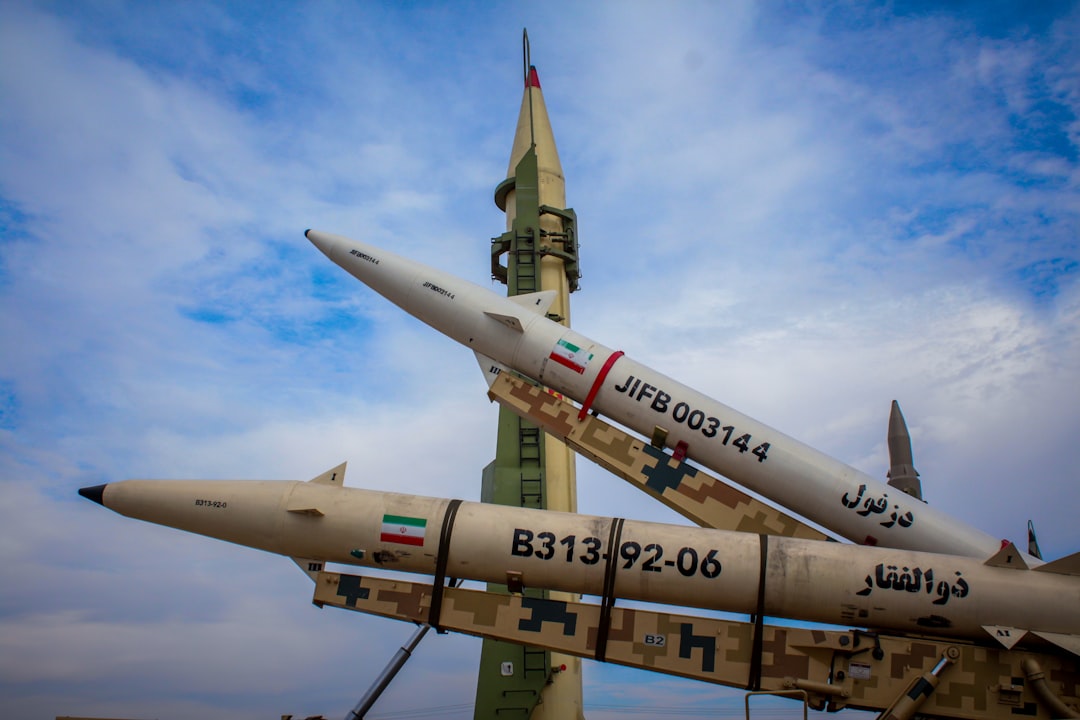
Iran is finalizing negotiations to acquire advanced CM-302 supersonic anti-ship missiles from China, according to defense intelligence sources, a development that would significantly enhance Tehran's ability to threaten naval forces in the Persian Gulf and challenge U.S. maritime dominance in the region.
The CM-302, manufactured by China Aerospace Science and Industry Corporation, represents a substantial capability leap from Iran's existing arsenal. Capable of speeds exceeding Mach 2 and featuring sea-skimming flight profiles, the missile poses severe challenges to naval defense systems.
"This is not incremental—it's transformational," said Bryan Clark, senior fellow at the Hudson Institute and former special assistant to the Chief of Naval Operations. "Supersonic anti-ship missiles compress decision timelines and complicate intercept geometry. U.S. naval forces would need to adjust operating patterns significantly."
The potential deal reflects deepening military cooperation between Beijing and Tehran, part of a broader axis that includes Russia and challenges Western interests across multiple theaters. China and Iran signed a 25-year strategic partnership in 2021, encompassing economic, military, and technological cooperation.
For Iran, the CM-302 addresses a critical vulnerability. While Tehran has invested heavily in ballistic missiles and proxy forces, its anti-ship capabilities have relied primarily on aging Chinese-designed C-802 missiles and domestically produced variants. These subsonic systems are increasingly vulnerable to modern naval defenses.
The CM-302 changes that calculus. With a range estimated at 290 kilometers and terminal speeds that strain radar tracking and interception systems, the missile would give Iran a credible area-denial capability in the Strait of Hormuz—the narrow waterway through which roughly 21% of global petroleum passes.
"Control of the Strait has always been Iran's strategic trump card," noted Michael Knights, senior fellow at The Washington Institute. "Advanced anti-ship missiles raise the costs of any military intervention dramatically."
U.S. defense officials have monitored the negotiations with concern. While the Pentagon maintains substantial capabilities to suppress Iranian threats, supersonic missiles would require more complex operational planning and potentially higher risk to naval assets.
The broader regional implications extend beyond bilateral military balance. Saudi Arabia and United Arab Emirates, both U.S. partners with significant commercial shipping interests, view Iran's military modernization with alarm. An arms race dynamic could accelerate, with Gulf states seeking enhanced air defense and potentially offensive strike capabilities.
The deal also tests international arms control frameworks. The Missile Technology Control Regime (MTCR), while not legally binding, establishes guidelines restricting transfer of missile systems exceeding 300-kilometer range. The CM-302's specifications reportedly stay just below that threshold—a technical compliance that observes the letter while violating the spirit of nonproliferation norms.
China has historically been cautious about arms sales to Iran, balancing economic interests against relations with Gulf monarchies and the United States. The apparent willingness to proceed with this transaction suggests Beijing's calculation has shifted, prioritizing strategic alignment with Tehran over Western concerns.
"This reflects China's broader approach to regional order," said Dr. Tong Zhao, senior fellow at the Carnegie Endowment for International Peace. "Beijing is willing to enable capabilities that complicate U.S. power projection, even if it destabilizes regional security."
The timeline for delivery remains unclear. Defense procurement deals of this complexity typically involve years of negotiation, training, and infrastructure development. However, intelligence assessments suggest Iran could receive initial missile batteries by late 2026 or early 2027.
For U.S. Central Command, which oversees military operations in the Middle East, the development necessitates adjusted planning. Naval forces may need to operate further from Iranian coastlines, rely more heavily on submarine assets, or invest in enhanced missile defense capabilities.
As tensions simmer across the Middle East—from Yemen to Syria—the China-Iran missile deal adds another variable to an already complex security environment. It underscores how great power competition increasingly manifests through military-technical cooperation that reshapes regional balances and challenges established U.S. dominance.