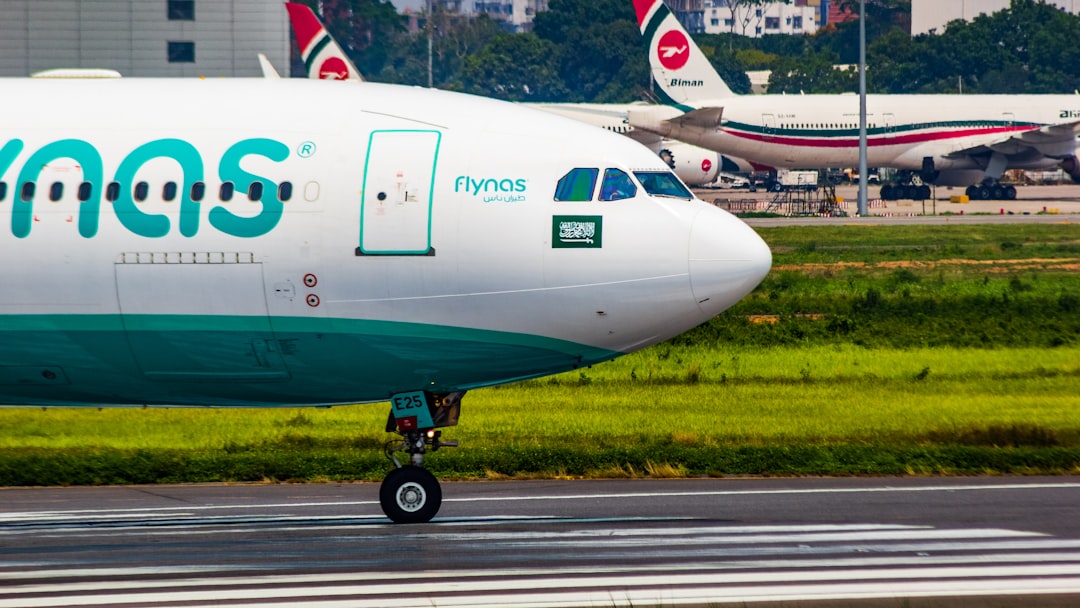
Ten minutes. That's how long it took to board a jumbo jet with hundreds of passengers bound for Seoul. No chaos, no aisle-blockers, no screaming children fighting over window seats.
Meanwhile, a domestic flight to Fort Lauderdale? "ALWAYS a shambles."
One traveler's observation about the stunning efficiency gap between international and domestic boarding sparked a lively debate about whether the difference is cultural, procedural, or just about passenger demographics.
"It always amazes me the quick and efficient nature of boarding a jumbo jet with 100s of people that don't speak English," they wrote on Reddit. "Everyone sat in their seats, got out of the aisle and put stuff away in a manner that seemed otherworldly."
Their experience flying from Tokyo in December was similar: quick boarding, no screaming children, amazing service. US domestic flights? "Shambles almost every time."
So what's actually going on here?
Cultural norms around public behavior:
Many Asian and European cultures place high value on not inconveniencing others in shared spaces. This manifests in:
• Queuing discipline (waiting your turn without pushing) • Efficient personal space management (not blocking aisles) • Quiet behavior in public transit settings • Preparedness (having boarding passes and documents ready)
In Japan, South Korea, and Germany, social pressure to conform to group efficiency norms is strong. Standing in the aisle while you rearrange your bag would be seen as inconsiderate—so people simply don't do it.
In the United States, individualism is culturally dominant. Passengers are less likely to feel social pressure to speed up boarding for others' sake, and more likely to prioritize their own comfort (getting overhead space, settling in slowly).
Airline procedures and enforcement:
International carriers—particularly Asian airlines like JAL, ANA, Korean Air, and Singapore Airlines—have highly structured boarding procedures:
• Clear zone/group announcements in multiple languages • Strict enforcement of boarding order (no early rushers waved through) • Flight attendants actively managing the aisle and overhead bin space • Pre-boarding reminders about having items ready
US domestic carriers often have lax enforcement. Boarding groups are called, but gate agents frequently allow early boarding for anyone hovering near the gate. This creates crowding and disorder.
Passenger demographics matter:
International long-haul flights tend to attract:
• Experienced travelers who've been through the process many times • Business travelers on expense accounts (less stressed about costs, more focused on efficiency) • Solo travelers or couples (fewer family dynamics slowing things down)
Domestic US flights—especially to leisure destinations like Florida or Las Vegas—often carry:
• Infrequent flyers unfamiliar with boarding norms • Large family groups with children • Budget travelers carrying maximum carry-on to avoid checked bag fees (creating bin space competition)
Aircraft configuration:
Many international flights use wide-body aircraft with multiple aisles, allowing boarding from multiple doors and more space for passengers to navigate.
US domestic flights primarily use narrow-body single-aisle aircraft, creating bottlenecks when anyone stops to stow luggage.
The "race for overhead space" problem:
US carriers charge for checked bags, incentivizing passengers to maximize carry-on. This creates competition for limited bin space and encourages aggressive boarding behavior.
Many international carriers include checked baggage in the ticket price, reducing the carry-on arms race.
Time pressure differences:
International flights typically have longer boarding windows (45-60 minutes) because of the larger aircraft and passenger count. The relaxed timeline reduces panic.
Domestic flights often board in 30 minutes or less, creating urgency that makes passengers rush and behave less courteously.
The "screaming child" factor:
Long-haul international flights are expensive, which naturally filters out some leisure family travel. Parents flying internationally with young children also tend to be experienced travelers who've developed coping strategies.
Domestic flights—especially budget routes—are accessible to all family budgets, meaning more inexperienced parents managing stressed children in confined spaces.
Airline service culture:
Asian carriers in particular have reputations for exceptional service that extends to boarding. Flight attendants are trained to actively manage the boarding process, not just stand at the door checking tickets.
US domestic carriers often have minimal crew involvement during boarding beyond checking passes.
So which factor matters most?
Probably all of them, in combination:
• Cultural norms set baseline passenger behavior expectations • Airline procedures either reinforce or undermine those norms • Aircraft design and baggage policies create structural incentives • Passenger demographics determine who's on the flight and how experienced they are
The Seoul-bound flight benefited from: Korean cultural norms around public behavior + a well-managed Asian carrier + experienced international travelers + a wide-body aircraft + included baggage reducing carry-on competition.
The Fort Lauderdale flight suffered from: American individualism + lax enforcement + inexperienced leisure travelers + single-aisle aircraft + baggage fee-driven carry-on maximization.
Can US domestic boarding be fixed?
Sure, but it would require:
• Eliminating checked bag fees (removing carry-on competition) • Strict boarding group enforcement (no early boarding for non-status passengers) • Active crew management of the aisle during boarding • Wider use of two-door boarding on capable aircraft • Longer boarding windows to reduce time pressure
None of these changes are likely, because they either cost money (lost bag fee revenue, more crew time) or slow turnarounds (hurting profitability).
So US domestic boarding will probably remain chaotic—not because Americans are inherently worse at it, but because the system is designed for speed and profit, not passenger experience.
The best travel isn't about the destination—it's about what you learn along the way. And what we learn from boarding processes is that culture, incentives, and design all shape behavior—sometimes in ways that make you want to stay on the ground.