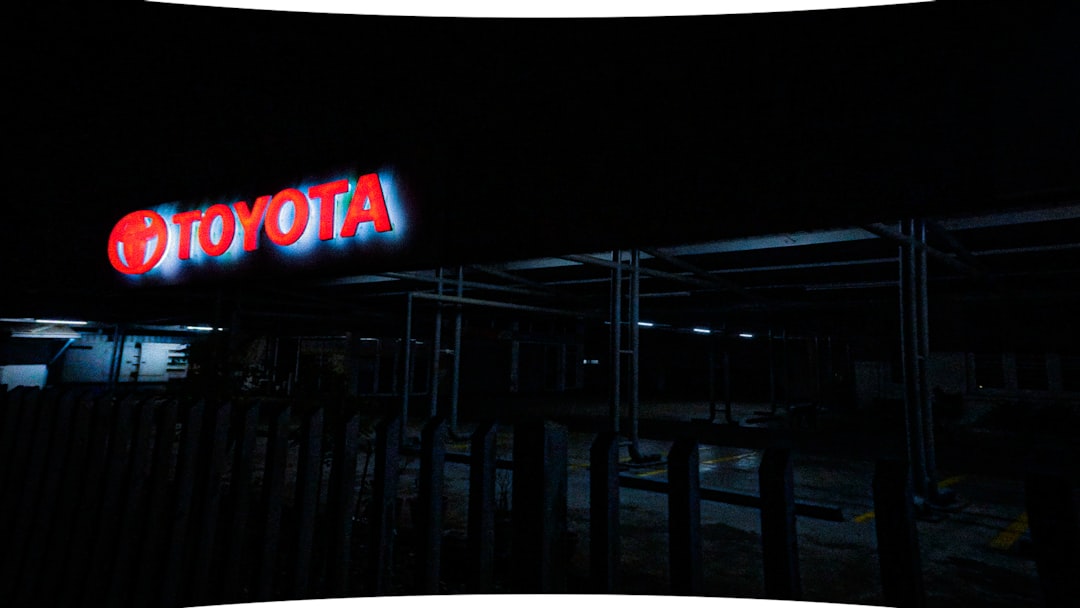
Toyota has built a $10 billion test city called Woven City at the base of Mount Fuji in Japan, designed to test autonomous vehicles, robotics, and smart city technology. But access is tightly controlled, media visits are carefully scripted, and the extreme secrecy raises fascinating questions about what's really happening inside this private urban laboratory.
Ten billion dollars is more than most countries spend on infrastructure. Toyota didn't build a test track or a prototype facility - they built an entire functioning city. That level of investment suggests they're testing something more ambitious than just self-driving cars.
Woven City is designed as a living laboratory for future mobility and urban technology. The plan includes autonomous vehicles, smart homes, robotics, AI systems, and integrated infrastructure. Residents are primarily Toyota employees and researchers, along with their families. It's essentially a company town for the 21st century.
What makes this interesting is the level of control. Toyota owns everything - the buildings, the streets, the infrastructure, even the data generated by residents' daily activities. That's an unprecedented sandbox for testing technology without many of the regulatory and social constraints that apply in real cities.
The cameras-everywhere aspect is both necessary for the research and slightly unsettling. When your entire city is a test environment, comprehensive monitoring makes sense - you need data on how people interact with the technology. But it also means residents are living under constant surveillance as part of the experiment.
Reports from Woven City emphasize the big ideas: sustainable energy systems, autonomous delivery robots, personalized mobility solutions. But the tightly controlled access suggests Toyota is also grappling with the messy realities of deploying this technology at scale.
Here's what they're probably learning: Real people don't behave like test subjects in controlled experiments. Kids mess with the robots. People find unexpected uses for technology. Edge cases proliferate. Systems that work perfectly in simulation break down when exposed to actual human behavior.
The $10 billion price tag also suggests this is about more than just product development. Toyota is positioning itself for a future where automotive companies become mobility platform providers, potentially competing with tech companies as much as other car manufacturers.
The secrecy, while understandable from a competitive standpoint, means we're mostly seeing what Toyota wants us to see. Press visits are carefully orchestrated. Announcements emphasize successes. The inevitable failures, dead ends, and abandoned approaches stay behind closed doors.
That's normal for corporate R&D, but when you're building an entire city as your test bed, there's arguably a public interest in understanding what works and what doesn't. These technologies will eventually be deployed in real cities. Learning from Toyota's experiments could help avoid repeating mistakes.
What's fascinating is comparing this approach to how other companies test smart city technology. Most pilot programs happen in existing cities, with all the constraints and compromises that entails. Toyota essentially said "forget that, we'll build our own city."
That level of ambition is impressive. It's also very Japanese - patient capital, long-term thinking, willingness to make massive upfront investments. You don't see many Western automakers spending $10 billion on a test city.
The question is whether discoveries made in this controlled environment will translate to messy, chaotic real cities. Tokyo isn't Woven City. Los Angeles certainly isn't. The infrastructures are different, the regulatory environments are different, and the social contexts are different.
Still, you have to respect the scale of the ambition. Most companies talk about transforming urban mobility. Toyota built a city to figure out how.
What happens next will be interesting to watch. Will Woven City produce breakthrough technologies that get deployed globally? Or will it become a very expensive proof-of-concept that looks great in press releases but doesn't translate to real-world adoption?
The technology is impressive. The $10 billion question is whether anyone outside Mount Fuji will actually use it.