Admiral Dinesh Tripathi, Chief of Naval Staff, revealed on Wednesday that the Indian Navy was minutes away from launching strikes against Pakistan during Operation Sindoor, a previously undisclosed military operation that brought two nuclear-armed neighbors to the brink of direct conflict.
Speaking at the Indian Navy's Annual Press Conference in New Delhi, Admiral Tripathi disclosed that naval assets were positioned and ready to execute strikes from the sea, but the operation was called off at the last moment. The revelation marks one of the most candid public admissions by an Indian military chief about how close India and Pakistan have come to armed confrontation in recent years.
While the Navy Chief did not specify the exact timeframe of Operation Sindoor, defense analysts believe it likely occurred in the context of heightened India-Pakistan tensions following the 2019 Pulwama attack and subsequent Balakot airstrikes, or during the 2019 India-Pakistan standoff. The operation's name—Sindoor, referring to the vermillion powder significant in Hindu tradition—suggests it was conceived as a punitive military response.
"We were fully prepared and positioned to strike from the sea," Admiral Tripathi said, according to The Indian Express. "The decision to hold back came at the final moment, but it demonstrated our capability and readiness to respond across all domains."
In India, as across the subcontinent, scale and diversity make simple narratives impossible—and fascinating. The disclosure comes as India increasingly emphasizes its military modernization and willingness to respond forcefully to cross-border terrorism. The Navy's role in this potential strike is particularly significant, as it represents India's growing confidence in projecting power beyond its immediate borders.
The revelation has implications for regional security dynamics. Pakistan, which maintains its own nuclear arsenal and has fought four wars with India since 1947, faces growing Indian military superiority across conventional forces. India's defense budget of approximately $74 billion dwarfs Pakistan's $10 billion, and the technological gap continues to widen.
Defense experts note that going public with such operational details represents a significant shift in India's strategic communication. Traditionally, Indian military leadership has maintained operational secrecy around such matters, even years after events. The Navy Chief's disclosure appears designed to signal India's changed posture—one more willing to use military force and to communicate that willingness publicly.
"This is unprecedented transparency from an Indian service chief," said Ajai Shukla, a defense analyst and former army officer. "It signals that India wants potential adversaries to know that military options are not just on the table—they've been minutes away from execution."
The timing of the revelation is also notable. With India positioning itself as a major Indo-Pacific power and key strategic partner for the United States, Japan, and Australia through the Quad partnership, demonstrating resolve against Pakistan reinforces India's image as a decisive regional power willing to use force when necessary.
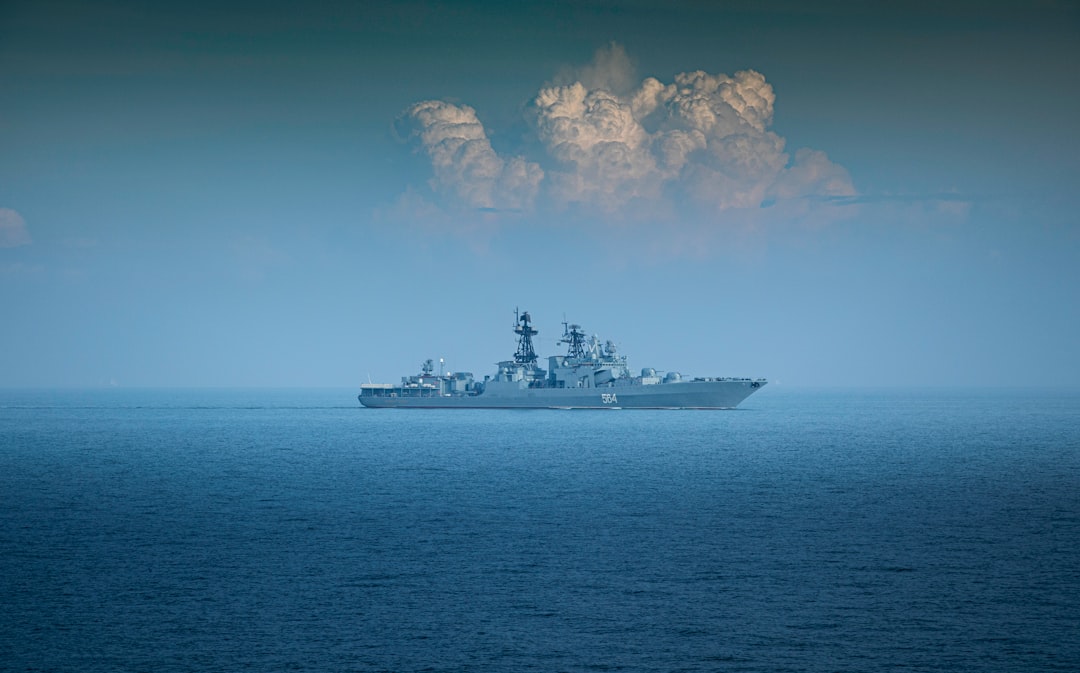
Operation Sindoor would have involved coordinated missile strikes from naval vessels, likely from destroyers and frigates equipped with BrahMos supersonic cruise missiles, which have a range of approximately 450 kilometers. The Navy's ability to position assets for strikes from the sea demonstrates India's growing maritime capabilities.
The disclosure comes as India continues to modernize its military with an emphasis on indigenization. The government has prioritized defense manufacturing under the "Make in India" initiative, with defense exports recently hitting record levels. This combination of enhanced capability and willingness to use force represents a significant evolution in India's strategic posture.
For Pakistan, already facing severe economic challenges with inflation near 30% and foreign reserves critically low, the revelation serves as a reminder of India's growing conventional military superiority and willingness to act. The asymmetry in military capabilities continues to widen, potentially altering the strategic calculus that has governed India-Pakistan relations for decades.
The Navy Chief's comments underscore a broader shift in Indian strategic thinking—from strategic restraint to a more assertive posture that emphasizes capability, readiness, and political will to respond to provocations. Whether this approach enhances deterrence or increases the risk of miscalculation remains a critical question for regional stability.