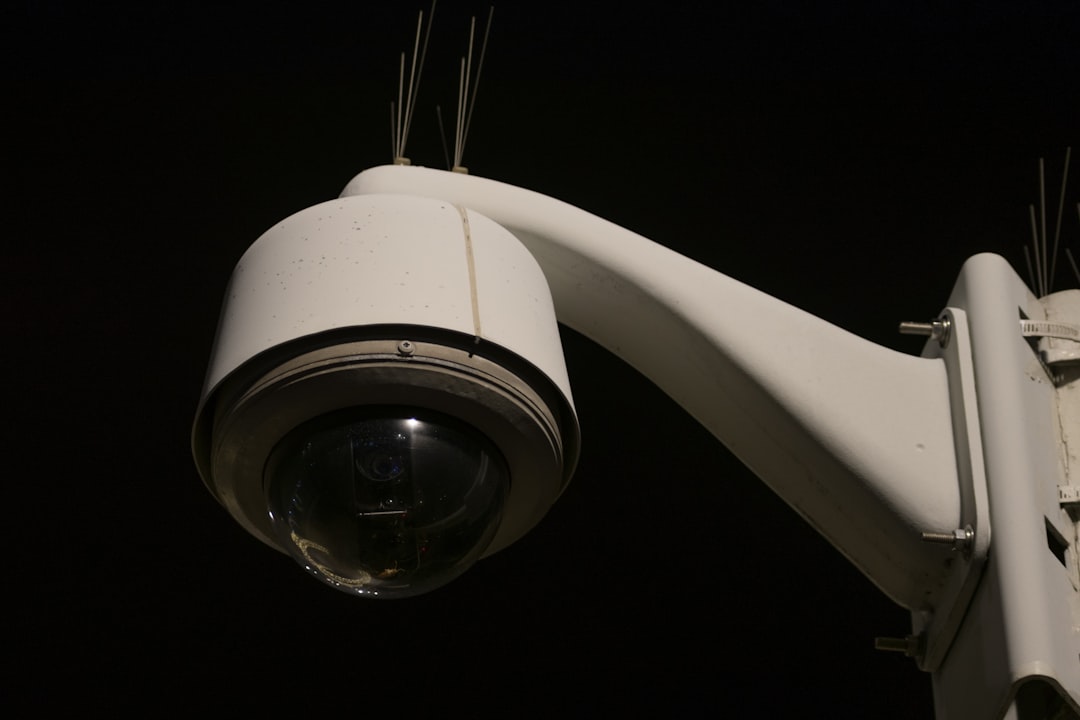
The Indian government has banned Chinese-made security cameras from all government offices, buildings, and sensitive installations effective immediately, marking the latest escalation in India's technology decoupling from China amid growing national security concerns.
The ban targets cameras manufactured by Chinese companies Hikvision, Dahua, and TP-Link, which collectively dominate India's surveillance camera market with an estimated 60-70% market share. The directive, issued by the Ministry of Home Affairs, requires immediate removal of existing Chinese cameras and prohibits future procurement of equipment from these manufacturers.
According to India Today, the decision affects thousands of government installations nationwide, from central ministries in New Delhi to state government offices, police stations, and public sector undertakings across India's 28 states and 8 union territories.
In India, as across the subcontinent, scale and diversity make simple narratives impossible—and fascinating. The implementation of this ban across India's vast government infrastructure—spanning everything from village panchayat offices to nuclear facilities—represents a massive logistical and financial challenge that will unfold across multiple years.
The government's primary concern centers on data security and potential surveillance by Chinese authorities. Intelligence agencies have warned that Chinese-manufactured cameras could be compromised to transmit sensitive video feeds to servers in China, potentially exposing classified government operations, security protocols, and sensitive discussions.
"The risk is not theoretical," said a senior Ministry of Home Affairs official speaking on condition of anonymity. "We have evidence suggesting that certain Chinese surveillance equipment can be remotely accessed. Given the sensitivity of government installations, we cannot take this risk."
The ban extends beyond just cameras to include associated networking equipment, storage devices, and video management software from the targeted Chinese manufacturers. Government departments must now source alternatives from approved Indian or non-Chinese manufacturers, significantly narrowing their procurement options.
Industry estimates suggest the ban affects hundreds of thousands of cameras currently deployed across government facilities. The replacement cost could run into billions of rupees, though the government has not announced a specific budget or timeline for the transition.
Indian security equipment manufacturers view the ban as a major opportunity. Companies like Matrix Comsec, CP Plus, and Zicom are positioned to capture market share, though their current production capacity falls far short of immediate demand. Some of these companies, ironically, have historically sourced components from China, raising questions about supply chain independence.
"This creates a significant opportunity for domestic manufacturers," said Ganesh Jivani, Managing Director of Matrix Comsec. "But we need time to scale up production and ensure we can meet government specifications and volume requirements."
The decision reflects India's broader strategy of reducing dependence on Chinese technology in critical infrastructure. Since the deadly 2020 border clash in Ladakh, which killed 20 Indian soldiers, India has progressively restricted Chinese involvement in telecommunications, power infrastructure, and now security systems.
The government has already banned over 300 Chinese mobile applications, restricted Chinese companies from participating in government tenders, and implemented stringent screening for Chinese investments. The camera ban represents another step in this comprehensive approach to technological sovereignty.
Private sector implications remain unclear. While the current ban applies only to government installations, industry analysts expect pressure on private companies—particularly those in sensitive sectors like banking, telecommunications, and defense manufacturing—to follow suit. Several major Indian corporations have already begun voluntarily replacing Chinese surveillance equipment.
The move aligns with similar actions by the United States, United Kingdom, and Australia, which have banned or restricted Hikvision and Dahua equipment from government use citing national security concerns. Hikvision and Dahua have repeatedly denied that their products pose security risks and maintain that they comply with all local regulations.
For India's surveillance camera market, worth an estimated $2.5 billion annually and growing rapidly, the ban represents a fundamental restructuring. Chinese manufacturers had achieved dominance through aggressive pricing and extensive dealer networks. Their displacement creates space for Indian and other non-Chinese manufacturers, but at potentially higher costs for government buyers.
Implementation challenges are substantial. Many government buildings have integrated surveillance systems where cameras, recording equipment, and software from Chinese manufacturers work as unified platforms. Replacing only the cameras while retaining other components may not fully address security concerns, potentially requiring complete system overhauls.
The ban also affects India's Smart Cities Mission, an ambitious program to develop 100 smart cities with extensive surveillance infrastructure. Many of these projects have relied heavily on Chinese equipment due to cost considerations. Municipal authorities now face the challenge of either replacing existing equipment or accepting reduced surveillance coverage.
Critics note that India's dependence on Chinese technology extends beyond cameras to fundamental components and manufacturing equipment. While the ban sends a strong political signal about India's security priorities, achieving genuine technological independence requires building domestic manufacturing capabilities across the entire electronics value chain—a process that will take years and require substantial investment.