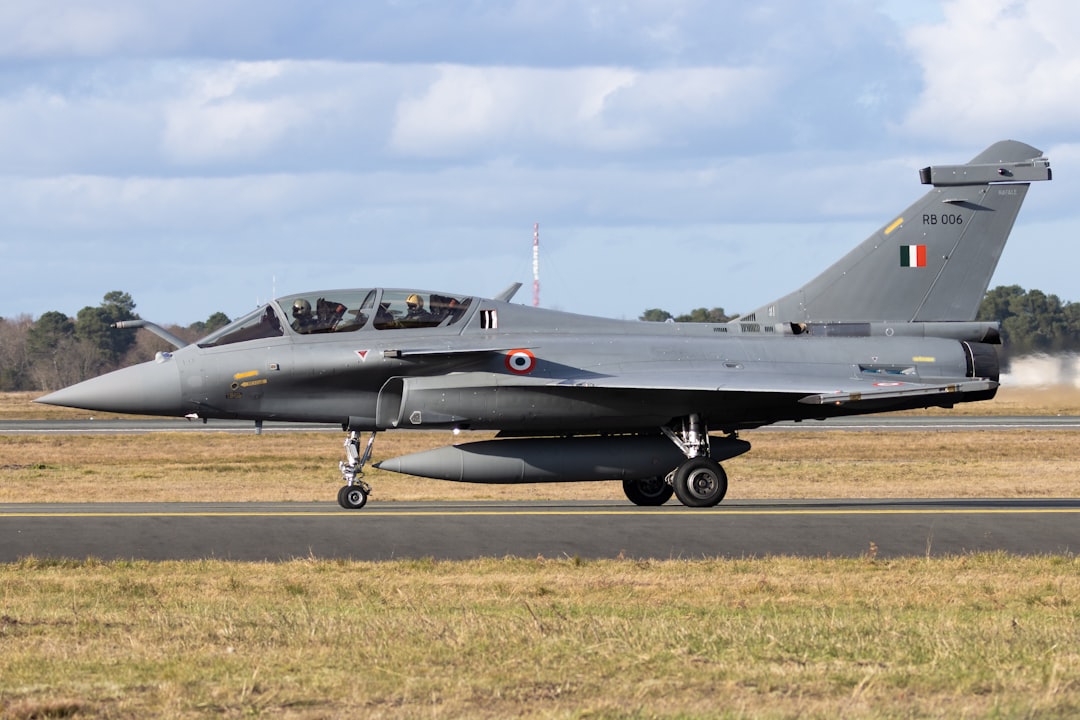
India has formally requested France to supply 114 Rafale multirole fighter jets in what would become one of the largest defense contracts in history, valued at approximately ₹3.25 lakh crore ($42 billion), according to CNBC-TV18.
The massive procurement request, sent to the French government and Dassault Aviation, represents roughly 1.1% of India's entire GDP and would dramatically expand the Indian Air Force's combat capabilities as New Delhi modernizes its military amid growing strategic competition with China. In India, as across the subcontinent, scale and diversity make simple narratives impossible—and fascinating. This deal would dwarf India's previous defense purchases and reshape the country's aerial combat posture for decades.
Expanding the Rafale Fleet
India already operates 36 Rafale jets acquired in a 2016 deal worth ₹59,000 crore ($7.9 billion). Those aircraft, delivered between 2020 and 2022, have become the crown jewels of the Indian Air Force, deployed along the disputed border with China and providing capabilities that legacy Russian and domestically-produced aircraft cannot match.
The new request for 114 additional Rafales emerged from the Indian Air Force's Multi-Role Fighter Aircraft (MRFA) competition, a decade-long procurement process originally intended to introduce a new combat platform through competitive bidding. That India has now directly approached France suggests urgency has overtaken the traditional tender process, with defense planners prioritizing speed and proven capability over procedural competition.
Defense analysts note the Rafale's performance in Indian service influenced the decision. The French-built jets have operated successfully in high-altitude environments along the Line of Actual Control with China, where air density and extreme conditions challenge aircraft performance. During the 2020 Ladakh standoff, Rafales provided India with a qualitative edge that appeared to factor into strategic calculations on both sides.
The China Factor
The procurement request comes as India confronts a dramatically expanded Chinese military threat across the Himalayan frontier and in the Indian Ocean. China operates approximately 1,200 fighter aircraft, including advanced J-20 stealth fighters and modern Russian-origin Su-35s, vastly outnumbering India's combat fleet of around 450 fighter jets—many of which are aging MiG-21s and MiG-27s nearing retirement.
Indian defense planners have identified a requirement for 42 fighter squadrons to defend the country's borders with both China and Pakistan. The Air Force currently operates just 31 squadrons, a shortfall that has grown as old aircraft retire faster than new ones arrive. The 114 Rafales would help arrest this decline while providing capabilities needed for modern aerial combat.
"This is about bridging a critical capability gap against an adversary that has been rapidly modernizing," said Air Marshal Anil Chopra (retired), a defense analyst based in New Delhi. "The Rafale brings sensor fusion, network-centric warfare capabilities, and combat-proven systems that India's current fleet largely lacks."
Make in India Contradiction
The massive foreign purchase sits awkwardly with India's "Make in India" defense manufacturing initiative, which aims to build indigenous military capabilities and reduce dependence on imports. India has invested billions in developing the home-grown Tejas light combat aircraft and the more advanced Advanced Medium Combat Aircraft (AMCA), a fifth-generation fighter currently under development.
Critics argue the $42 billion allocated for French jets could accelerate domestic programs and build India's defense industrial base. The government counters that immediate operational requirements cannot wait for indigenous development timelines that stretch years or decades into the future. The Tejas, while improving, cannot match the Rafale's capabilities, and the AMCA remains years from operational deployment.
The deal is expected to include substantial technology transfer and local manufacturing components. India's 2016 Rafale contract established maintenance and support facilities in the country, and the expanded order would likely involve manufacturing portions of the aircraft in India, potentially in partnership with private sector firms like Reliance Defence or state-owned Hindustan Aeronautics Limited.
Geopolitical Alignment
The France-India defense partnership has deepened significantly under Prime Minister Narendra Modi, with Paris emerging as a key strategic partner for New Delhi alongside the United States, Japan, and Australia in the Indo-Pacific region. France shares Indian concerns about Chinese assertiveness and has positioned itself as a reliable defense supplier willing to transfer technology that the United States often restricts.
For France, the deal would represent the largest export success for the Rafale program, validating years of development investment and potentially opening markets in other countries seeking alternatives to American or Russian aircraft. Dassault Aviation has pursued export orders for decades, with India emerging as the program's most important foreign customer.
The procurement still requires final government approval and commercial negotiations. Indian defense acquisitions often face delays as procurement processes navigate bureaucratic procedures, price negotiations, and parliamentary oversight. Yet the scale and strategic importance of this acquisition—combined with the operational urgency created by the China challenge—may accelerate decision-making that has historically moved at a glacial pace.
With each Rafale costing approximately $368 million in this deal, India would be making a multi-decade bet on French technology at a moment when its security environment grows more threatening. Whether this massive investment closes the capability gap with China—or locks India into dependence on foreign suppliers—will shape the subcontinent's strategic balance for a generation.