
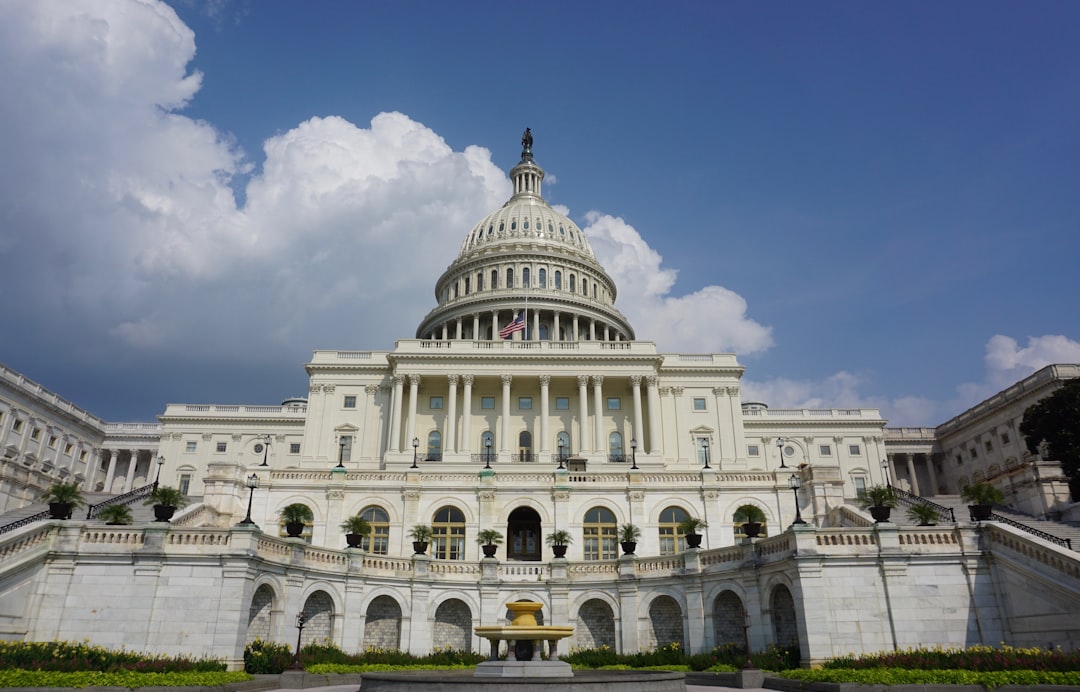
The House Oversight Committee issued a subpoena to Attorney General Pam Bondi on Tuesday, demanding her testimony in its investigation into the handling of sealed records related to convicted sex offender Jeffrey Epstein, according to congressional sources familiar with the matter.
The move sets up what legal experts are calling a potential constitutional showdown over executive privilege and congressional oversight powers. Bondi, who has served as Attorney General since January, has until March 24 to comply with the subpoena or assert executive privilege, the committee said in a statement.
"This is fundamentally about whether Congress can conduct meaningful oversight of the Justice Department," said Representative Jamie Raskin, the committee's ranking Democrat. "The American people deserve answers about how these records were handled and why they remain sealed."
The subpoena comes amid mounting pressure on the Justice Department following reports that sealed court documents related to Epstein's associates remain under wraps despite his 2019 death in federal custody. According to Reuters, the committee is investigating whether political considerations influenced decisions about which records to release.
A Justice Department spokesperson declined to comment on the subpoena but said the department "cooperates with appropriate congressional oversight." The statement did not address whether Bondi would invoke executive privilege, a tool that allows the executive branch to withhold information from Congress under certain circumstances.
Constitutional scholars say the dispute echoes similar confrontations between Congress and the executive branch during previous administrations. "What makes this different is the public interest element," said Stephen Vladeck, a constitutional law professor at the University of Texas. "Courts have historically been more skeptical of executive privilege claims when there's significant public concern about potential wrongdoing."
The House Oversight Committee has been investigating the Epstein matter since February, when it issued document requests to the Justice Department and the Southern District of New York. Those requests have gone largely unfulfilled, committee aides told reporters on background.
For Washington veterans, the institutional conflict is familiar territory. Similar battles over congressional subpoenas have played out across multiple administrations, often ending in prolonged court fights or negotiated accommodations between the branches.
But the political stakes are particularly high in this case. A recent poll showed that nearly half of Americans believe unrelated foreign policy decisions may have been influenced by concerns about the Epstein files, though no evidence has emerged to support that theory.
What happens next depends on several factors. If Bondi refuses to comply and the White House invokes executive privilege, the committee could vote to hold her in contempt of Congress. That would likely trigger a court battle that could take months or years to resolve.
Alternatively, the two sides could negotiate terms for Bondi's testimony, possibly in a closed session with limited scope. Such compromises have resolved similar standoffs in the past, though they often satisfy neither side fully.
As Americans like to say, "all politics is local"—even in the nation's capital. For constituents in swing districts, the Epstein investigation has become a test of whether their representatives are willing to demand accountability from federal agencies, regardless of which party controls the White House.
The March 24 deadline gives both sides just over a week to find a resolution or prepare for what could become one of the most significant executive privilege battles in recent years.