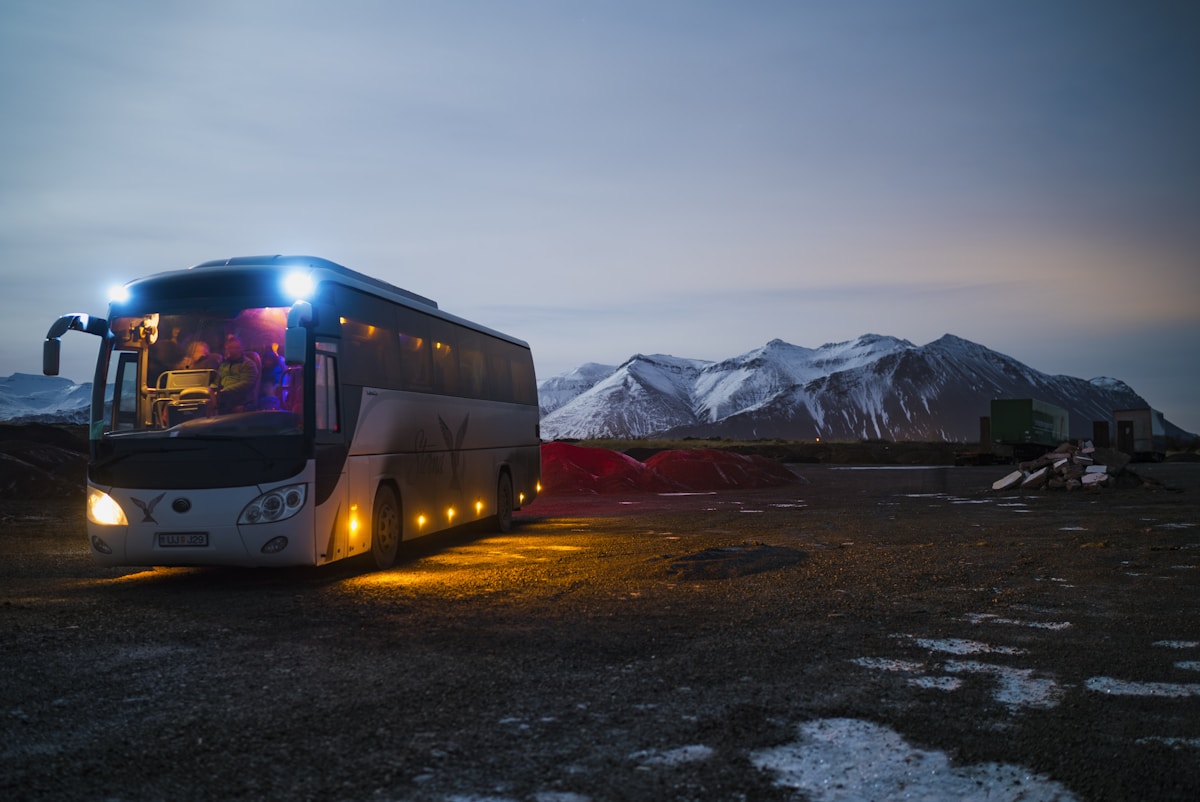
Gothenburg's self-driving bus project got off to an inauspicious start: it hit another vehicle on day one.
According to The Register, the autonomous bus collided with a tram shortly after launch. No one was seriously injured, but the symbolism is hard to ignore. Autonomous vehicles are supposed to be safer than human drivers. They don't get distracted, don't get tired, and process sensor data faster than any person could.
And yet, on the very first day, the bus failed at the most basic requirement: don't hit things.
To be fair, autonomous systems are incredibly complex. Sensor fusion, path planning, object detection, and decision-making all need to work flawlessly in real time. Edge cases are everywhere—unexpected road conditions, unusual vehicle behavior, sensor noise. Testing helps, but real-world deployment always surfaces issues that simulations miss.
But that's exactly why the hype around autonomous vehicles has been frustrating. Companies have been promising full self-driving is "just around the corner" for over a decade. Investors have poured billions into startups that demoed well in controlled environments but struggled in production. And cities keep launching pilot programs that end up being more about PR than actual transportation.
The Gothenburg incident is a reminder that autonomous vehicles are still not ready for unsupervised operation in complex urban environments. They work in narrow use cases—highway driving, closed campuses, low-speed shuttles on fixed routes. But navigating mixed traffic with pedestrians, cyclists, and unpredictable human drivers? That's still hard.
The technology will get there eventually. Sensor costs are dropping, algorithms are improving, and compute is getting cheaper. But the timeline keeps slipping, and every high-profile failure erodes public trust.
The other issue is accountability. When a human driver hits someone, liability is clear. When an autonomous system does it, who's responsible? The manufacturer? The city that deployed it? The software vendor? The safety driver who was supposed to intervene?
These aren't just legal questions. They're questions about whether we're ready to hand over control of multi-ton vehicles to systems that are statistically safer than humans on average but still make catastrophic mistakes in edge cases.
The Gothenburg bus will get debugged, the software will get updated, and the project will probably continue. But the fact that it crashed on day one is a useful corrective to the narrative that autonomous vehicles are a solved problem just waiting for regulatory approval.
The technology is impressive. The question is whether it's reliable enough to trust with public safety in complex, unpredictable environments. Day one in Gothenburg suggests we're not there yet.