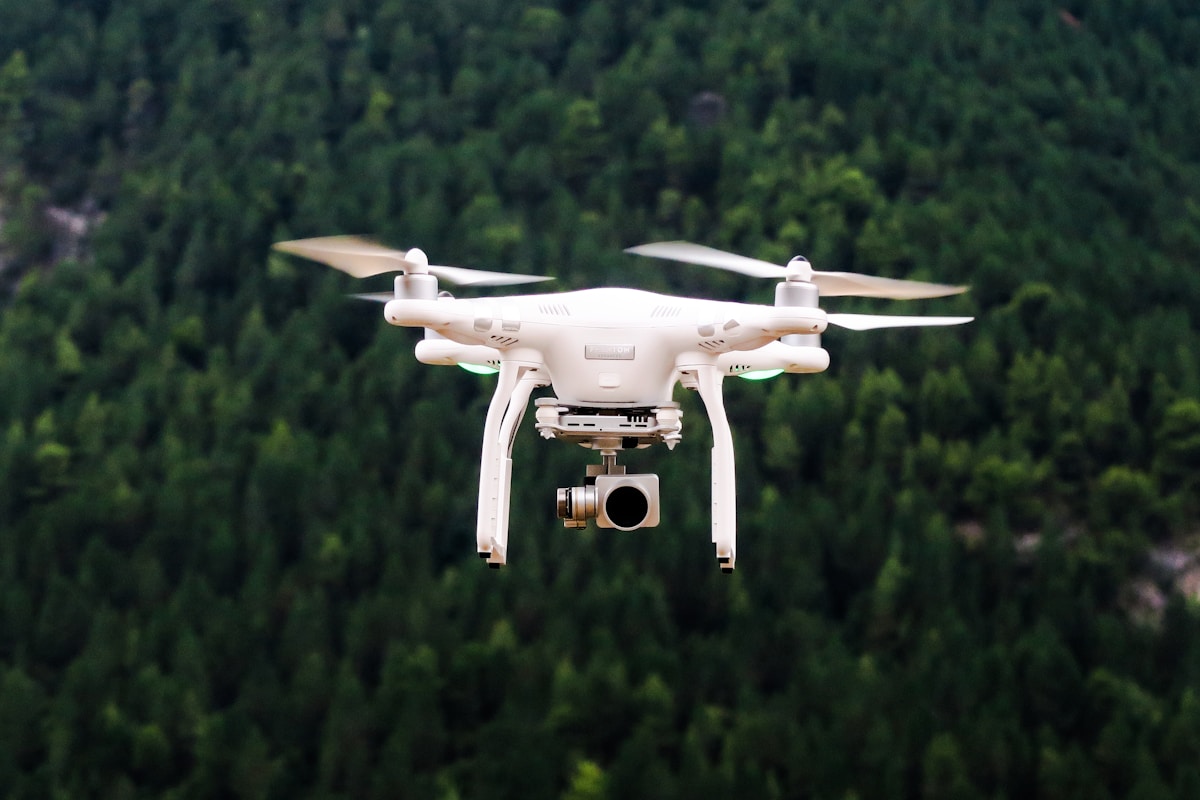
A custom-built drone just shattered the speed record, hitting 453 miles per hour in a test run. The secret? Exotic sawtooth carbon fiber propeller blades.
According to Tom's Hardware, the Blackbird design represents a genuine hardware breakthrough. Most consumer and commercial drones top out well below 100 mph. Racing drones push that to maybe 150-200 mph. But 453 mph is fighter-jet territory.
The key innovation is the propeller design. Traditional drone blades are limited by material strength and aerodynamic efficiency at high speeds. Push them too hard and they either break or create so much turbulence they become counterproductive. The Blackbird's sawtooth carbon fiber blades solve both problems—they're strong enough to handle extreme rotational forces and shaped to maintain efficiency at speeds where conventional designs fail.
This isn't just a stunt. High-speed drones have real applications. Search and rescue in large areas. Rapid delivery over long distances. Military reconnaissance and interception. Time-sensitive medical transport. All of these benefit from cutting transit time in half or more.
The challenge is that speed creates new problems. At 453 mph, even small navigation errors become catastrophic. Battery drain increases exponentially. Wind gusts that would barely affect a slow drone can destabilize a fast one. And safely landing something moving that quickly requires either a lot of space or very sophisticated control systems.
But as a proof of concept, the Blackbird is impressive. It demonstrates that with the right materials and engineering, drones can operate in speed ranges previously reserved for manned aircraft. That opens up new use cases and changes the economics of aerial logistics.
The next question is whether the technology can scale. Custom carbon fiber blades are expensive. Building a drone that can handle those speeds safely adds weight and cost. And regulatory frameworks for high-speed autonomous flight barely exist.
But those are solvable problems. Materials get cheaper. Manufacturing improves. Regulations catch up. The hard part—proving the technology works—is done.
The technology is impressive. The question is what we build with it next.