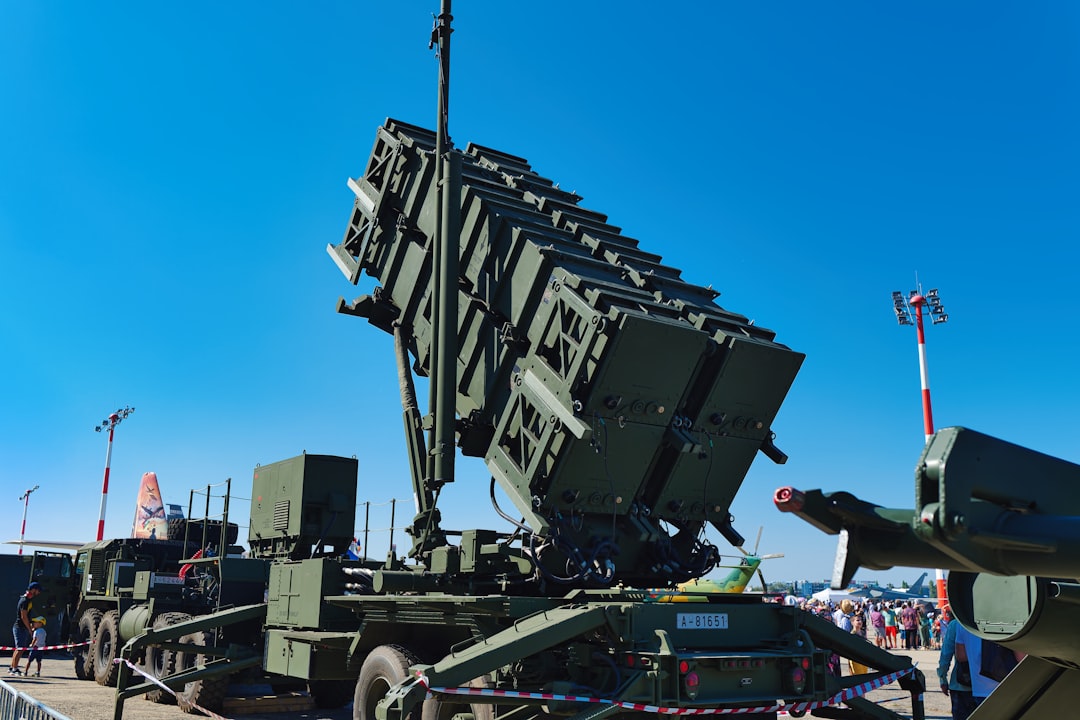
Germany will deploy a Patriot air defense battery and approximately 150 soldiers to Turkey from late June through September, relieving American forces on NATO's southeastern flank in what Berlin is framing as evidence of its growing role in European security.
The deployment, announced by Defense Minister Boris Pistorius, sends troops from Flugabwehrraketengeschwader 1 based in Husum to form a Patriot Air and Missile Defence Task Force under NATO's Integrated Air and Missile Defence framework. The German unit will operate alongside Turkish forces and remaining American personnel.
"This demonstrates that Berlin is taking on more responsibility within NATO," Pistorius said, according to Defense News, citing Germany's simultaneous commitments on NATO's eastern flank and in the High North.
The deployment follows Iranian ballistic missile strikes in early March that tested NATO air defenses. The alliance intercepted at least four Iranian missiles entering Turkish airspace, with one apparently targeting Incirlik Air Base in Adana province, where U.S. forces and nuclear weapons are stationed. NATO subsequently reinforced its ballistic missile defense posture, deploying additional American Patriot systems to Adana and Malatya.
Brussels decides more than you think. But increasingly, it's Berlin that deploys.
The Turkish mission underscores Germany's evolving security role since Chancellor Olaf Scholz announced the Zeitenwende - the turning point - in German defense policy following Russia's invasion of Ukraine. Yet the deployment also highlights Berlin's constraints: Germany operates a limited number of Patriot fire units and faces persistent Ukrainian requests for systems, which it has accommodated despite strains on readiness.
Germany last stationed Patriot units in Turkey from 2013 to 2015 under Operation Active Fence, guarding the Syrian border during that country's civil war. This new deployment marks a return to Turkey under different circumstances - not border defense against spillover conflict, but integrated air defense against state-level missile threats in a region where NATO and Iran have come closer to direct confrontation.
The burden-sharing implications are clear. American officials have pressed European allies for years to assume more defense responsibilities. Germany, with Europe's largest economy, now shoulders overlapping commitments: eastern flank reinforcement following the Ukraine war, High North security as Arctic tensions rise, and now southeastern flank air defense.
Whether Berlin can sustain these commitments with its current force structure remains an open question. The Bundestag authorized a €100 billion special defense fund in 2022, but procurement takes years and Germany's defense industrial base remains constrained. For now, Germany is stretching what it has.
The deployment is scheduled to begin in late June, with the German contingent expected to remain through September before rotation or further decisions on extension.