Archaeologists working in Ethiopia's Wollo region have reportedly uncovered what may be a major complex of rock-hewn churches, potentially rivaling the famous Lalibela site, though experts caution that verification is still underway.
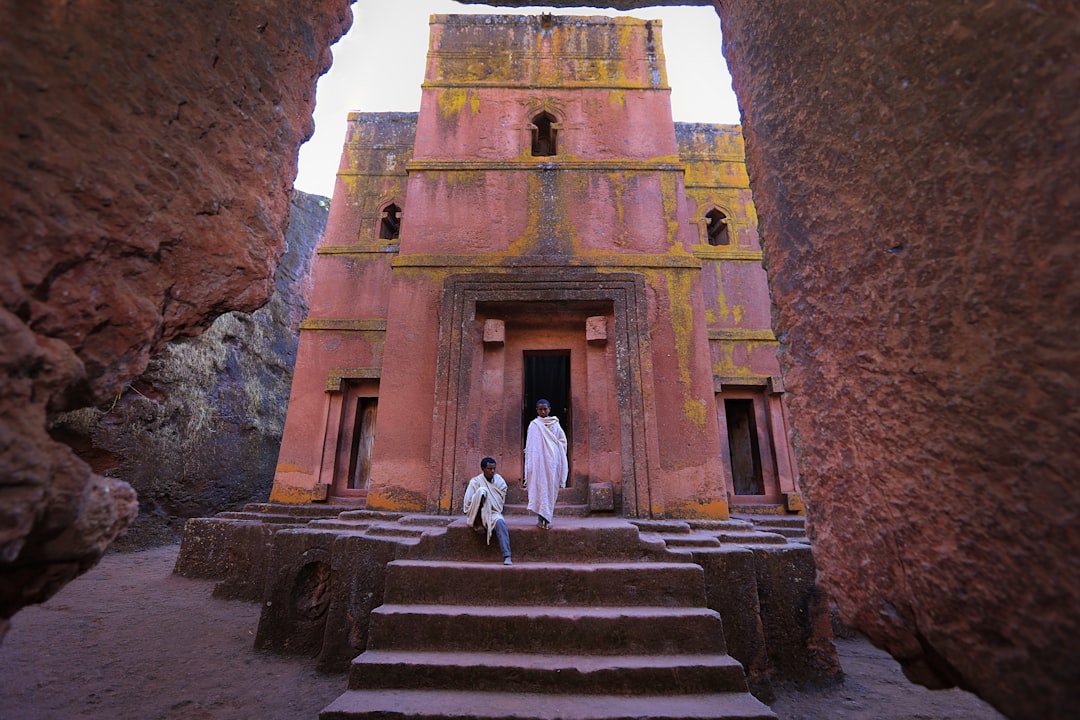
Images circulating on social media this week show what appear to be extensive stone-carved structures partially buried in the mountainous terrain of Wollo, a region in northern Ethiopia. The photographs, shared by local researchers and heritage advocates, depict architectural features consistent with medieval Ethiopian ecclesiastical construction, including carved columns, arched doorways, and cruciform layouts characteristic of the country's ancient Christian tradition.
If confirmed, the discovery would represent one of the most significant archaeological finds in Ethiopia in decades and could reshape understanding of the country's medieval kingdom period.
Lalibela, a UNESCO World Heritage site located roughly 150 kilometers south of Wollo, contains eleven monolithic rock-hewn churches dating to the 12th and 13th centuries. Carved entirely from solid volcanic rock, these churches were commissioned by King Lalibela of the Zagwe dynasty and remain active places of worship today. The site attracts tens of thousands of pilgrims and tourists annually and is considered one of the greatest architectural achievements of medieval Africa.
Discovering a second complex of comparable scale would have profound implications for Ethiopian history and heritage conservation.
Dr. Hailu Zeleke, an archaeologist at Addis Ababa University, urged caution while acknowledging the photographs' significance. "The images suggest structures of considerable age and sophistication, but we need systematic excavation and dating before making definitive claims," he said. "Ethiopia has many rock-hewn churches scattered across the highlands. What matters is the scale, age, and historical context of this particular site."
Ethiopia's northern highlands are home to hundreds of rock-hewn and cave churches, many still in use by Ethiopian Orthodox communities. However, most are smaller, single-chamber structures. Large-scale complexes like Lalibela are exceptionally rare.
The potential discovery comes at a critical time for Ethiopia's heritage sector. The country's archaeological sites have faced mounting threats from conflict, climate change, and insufficient conservation resources. The recent civil conflict in Tigray damaged numerous heritage sites, and experts have warned that many churches and monasteries lack adequate protection.
Ato Yonas Desta, director of the Authority for Research and Conservation of Cultural Heritage in Ethiopia, confirmed that his agency is aware of the reports and plans to dispatch a team to assess the site. "We take all potential heritage discoveries seriously," he stated. "Our priority is to secure the site, prevent looting, and conduct proper archaeological assessment."
Heritage preservation advocates have called for immediate action to protect the site if the findings are verified. Looting of archaeological sites is a persistent problem across Ethiopia, with artifacts frequently appearing on international black markets.
Dr. Bethlehem Girma, a cultural heritage specialist based in Addis Ababa, emphasized the importance of community involvement in preservation. "The people of Wollo have likely known about these structures for generations," she noted. "Any conservation effort must center local communities as guardians, not just archaeological subjects. They have protected these sites through wars and famines. Their knowledge is invaluable."
The timing of the potential discovery also highlights the need for increased investment in Ethiopia's archaeological infrastructure. The country has fewer than 50 professional archaeologists for a nation of 120 million people, and many sites remain unexplored or inadequately documented.
If the Wollo site proves to be a major ecclesiastical complex, it could provide new insights into the Zagwe and Solomonic dynasties that dominated the Ethiopian highlands during the medieval period. These kingdoms maintained sophisticated administrative systems, developed distinctive architectural traditions, and preserved Christian practices that diverged from European and Middle Eastern forms.
The rock-hewn churches of Ethiopia represent a unique architectural achievement, carved downward into solid rock rather than built upward with blocks. The engineering required to excavate entire churches, complete with pillars, arches, and drainage systems, from single pieces of stone demonstrates remarkable technical sophistication.
Professor Taddesse Beyene, a historian at the Institute of Ethiopian Studies, said potential new discoveries underscore how much remains unknown about Ethiopia's past. "We tend to think of places like Lalibela as isolated wonders," he observed. "But they may have been part of a broader architectural movement we're only beginning to understand. Every new site adds pieces to that puzzle."
Formal archaeological assessment of the Wollo site is expected to begin in the coming weeks, pending security conditions and resource allocation. Until then, the images have sparked both excitement and caution among heritage specialists.
For a country whose ancient history includes the Kingdom of Aksum, the Ark of the Covenant tradition, and some of Christianity's oldest continuous practices, the potential discovery represents another chapter in a story that has captivated historians for centuries.
54 countries, 2,000 languages, 1.4 billion people. Tell me which 'Africa' you're asking about.