A drone attack struck a fuel tank at Kuwait International Airport on Monday, causing a fire and marking a significant escalation as the Middle East conflict expands to target civilian infrastructure in previously neutral Gulf states hosting U.S. military bases.
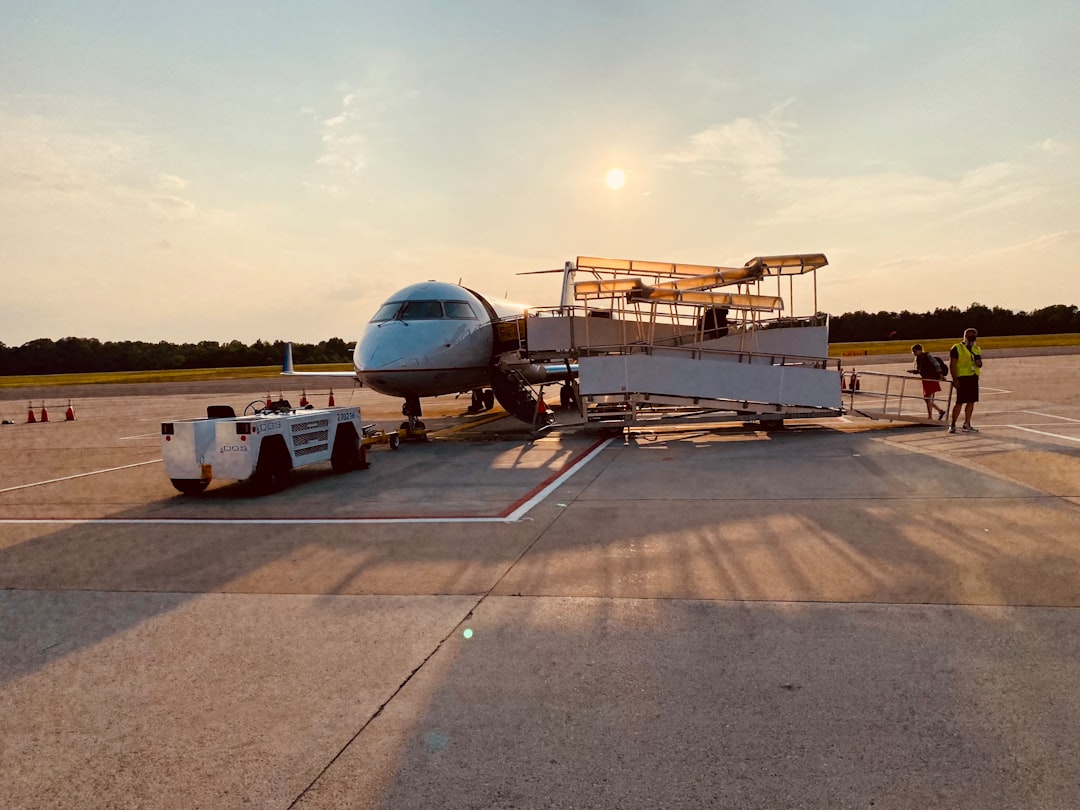
The attack, confirmed by Kuwaiti authorities, targeted aviation fuel storage facilities on the airport's perimeter. Fire crews contained the blaze within hours, and no casualties were reported, according to Reuters. Flight operations continued with minimal disruption, though several departures experienced delays while emergency services secured the area.
No group has claimed responsibility for the attack, though the targeting of Kuwait—a nation that has maintained relative neutrality in the Iran-Israel conflict—suggests either an expansion of targeting criteria or a miscalculation by the attacking party. Kuwait hosts thousands of U.S. military personnel at Camp Arifjan and other installations, but has not participated directly in recent military operations.
To understand today's headlines, we must look at yesterday's decisions. Kuwait has historically positioned itself as a mediator in regional disputes while maintaining security relationships with both the United States and neighboring states. During the 1990-91 Gulf War, Iraq's invasion of Kuwait prompted international intervention. Since then, Kuwait has carefully balanced its relationships to avoid becoming a target in regional conflicts.
The attack's implications extend beyond immediate damage. Gulf states have long relied on their perceived neutrality and importance to global energy markets as protection against direct targeting. If that calculus has changed—either through intentional expansion of targeting or through degraded precision in attacks—it fundamentally alters regional security dynamics.
Airport infrastructure represents a particularly sensitive target given its dual civilian and potential military use. Kuwait International Airport serves as a major commercial hub for the region while also supporting military logistics. The distinction between civilian and military targets becomes blurred at such facilities, raising questions under international humanitarian law about proportionality and precautions.
Regional security analysts note that drone technology's proliferation has lowered barriers to conducting cross-border attacks. Iranian-aligned groups in Iraq, Syria, and Yemen have demonstrated increasing sophistication in drone operations, though attribution remains challenging given the technology's accessibility to various state and non-state actors.
The timing coincides with broader regional escalation. The Pentagon is deploying thousands of additional troops to the Middle East, Israel has announced territorial control in southern Lebanon, and diplomatic efforts to contain the crisis have produced limited results. Each incident risks triggering responses that further expand the conflict's geographic scope.
Kuwait's government issued a statement condemning the attack and pledging to enhance security measures around critical infrastructure. Officials notably did not attribute responsibility or announce specific countermeasures, suggesting uncertainty about the perpetrators or reluctance to escalate through public accusations.
The attack raises questions about the security of civilian infrastructure across the Gulf. If Kuwait—which maintains relatively good relations across the region—can be targeted, airports in Saudi Arabia, the UAE, Qatar, and Bahrain face similar vulnerabilities. Each nation hosts significant U.S. military presence and supports regional security operations to varying degrees.
For Washington, the incident complicates force protection calculations. U.S. personnel depend on civilian infrastructure for logistics, transportation, and support. Threats to such facilities require enhanced defensive measures and potentially force dispersion—increasing operational complexity and costs.
The broader pattern suggests a conflict increasingly difficult to contain geographically. What began as exchanges between Israel and Iran now involves Lebanon, Syria, Iraq, Yemen, and potentially Kuwait. Each expansion increases the risk of miscalculation or unintended escalation that could draw in additional parties.
Oil markets reacted modestly to the news, with Brent crude rising approximately $1.50 per barrel on concerns about Gulf stability. While Kuwait's oil production and export facilities were not targeted, the attack demonstrated vulnerabilities in a region that supplies approximately 30% of global petroleum.