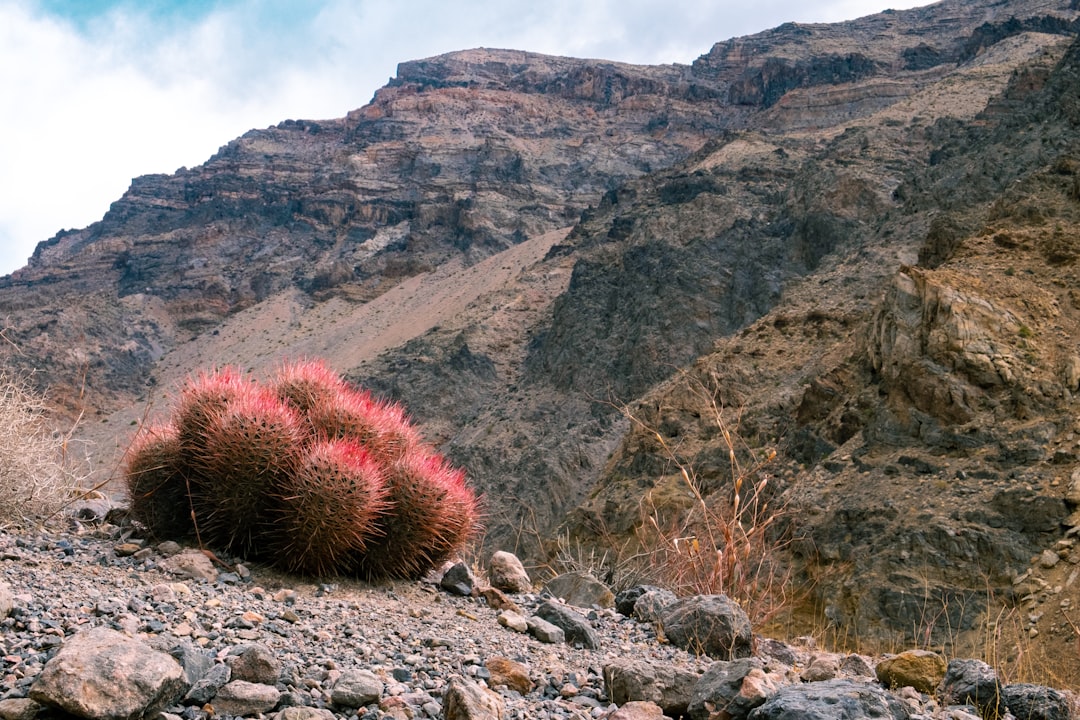
Death Valley, typically one of Earth's most inhospitable landscapes, has erupted in the greatest wildflower bloom since 2016, transforming barren desert into vibrant carpets of gold, purple, and pink as climate volatility delivers both destruction and unexpected beauty.
The spectacle, documented by the National Park Service and Scientific American, results from atmospheric rivers that drenched California through winter 2026, delivering precipitation far exceeding normal ranges to one of North America's driest regions.
"This is what climate variability looks like," park ecologists explain. "Not just more heat or drought, but wild swings between extremes—catastrophic flooding followed by desert blooms, record fires followed by mudslides. The changes aren't subtle."
The superbloom phenomenon occurs when rare precipitation aligns with optimal timing: enough rain to germinate dormant seeds, but not so much that it washes them away; warm enough to trigger growth, but not so hot that young plants desiccate. These conditions converge perhaps once a decade under historical climate patterns—but atmospheric river intensification may alter the frequency.
Wildflower species participating in the bloom include desert gold (Geraea canescens), gravel ghost (Atrichoseris platyphylla), desert five-spot (Eremalche rotundifolia), and notch-leaf phacelia (Phacelia crenulata). Many remained dormant for years, their seeds waiting in soil seed banks for precisely these conditions before germinating en masse.
In climate policy, as across environmental challenges, urgency must meet solutions—science demands action, but despair achieves nothing. The Death Valley bloom reminds us that nature retains capacity for resilience and regeneration even as climate patterns shift—but beauty shouldn't obscure the disruption driving it.
The same atmospheric rivers that enabled the bloom also caused devastating floods across California, killing dozens, destroying infrastructure, and displacing thousands. This duality captures climate change complexity: not uniform warming but destabilizing variability that delivers feast and famine, disaster and spectacle, often simultaneously.
Park visitor numbers have surged as word spreads, raising conservation concerns. Thousands of tourists eager to witness the rare phenomenon risk trampling fragile desert crusts and compacting soil that supports future seed banks. Park officials urge visitors to remain on designated paths and avoid walking through bloom areas.
Climate scientists study superblooms as indicators of precipitation pattern changes. Historical records show such events occurred roughly once per decade in the 20th century. Recent decades have seen increased frequency—2005, 2016, and now 2026—potentially signaling that atmospheric river intensification is making extreme wet years more common even as average conditions become drier.
The ecological cascade extends beyond flowers. Desert tortoises emerge to feast on fresh vegetation. Migratory birds time stops to coincide with blooms, capitalizing on insect abundance. Even desert bighorn sheep alter movement patterns to access rare green forage.
"These blooms are ecologically important, not just aesthetically stunning," conservation biologists emphasize. "They represent rare opportunities for desert species to reproduce, store energy, and build resilience for the harsh years between."
The 2026 superbloom will fade within weeks as desert heat returns and moisture evaporates. Seeds will return to dormancy, waiting years or decades for the next convergence of conditions. Whether climate change makes such events more or less frequent remains uncertain—but the underlying driver, atmospheric instability, continues intensifying.