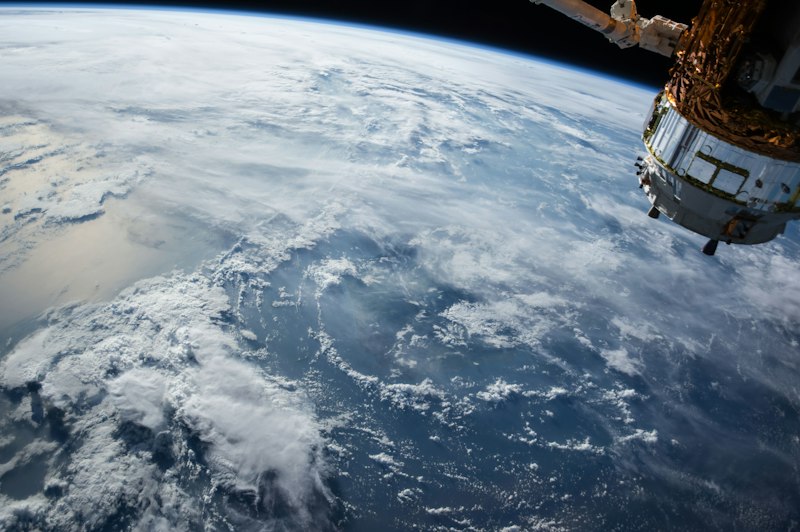
Congress has extended the International Space Station's operational timeline while simultaneously directing NASA to accelerate its transition to commercially operated orbital platforms, marking what industry observers call the most significant infrastructure transformation in human spaceflight since ISS launched in 1998.
The legislative action, reported by Ars Technica, reflects both continued confidence in the aging orbital laboratory and growing urgency around establishing its successors. "We were happy to see the renewed commitment to transition from the ISS," said commercial space industry representatives, acknowledging the delicate balance between maintaining current capabilities and enabling the next generation of orbital infrastructure.
In space exploration, as across technological frontiers, engineering constraints meet human ambition—and occasionally, we achieve the impossible. The ISS extension provides critical breathing room as NASA and its commercial partners navigate the complex engineering and financial challenges of building humanity's first privately operated orbital research platforms.
Engineering a New Era
The transition represents unprecedented technical complexity. Unlike ISS—a government-owned, internationally-operated facility built at a cost exceeding $150 billion—the emerging commercial stations adopt fundamentally different architectures. Companies like Axiom Space, Blue Origin, and Northrop Grumman are developing modular platforms designed for diverse customers: government research, pharmaceutical manufacturing, materials science, and eventually space tourism.
Axiom's approach involves initially attaching commercial modules to ISS itself, creating a hybrid platform before eventually separating into an independent station. Blue Origin's Orbital Reef concept envisions a "mixed-use business park" in orbit, with pressurized volume comparable to ISS but optimized for commercial operations. Northrop Grumman leverages heritage from its Cygnus cargo spacecraft, scaling up proven systems for long-duration habitation.
The engineering challenges extend beyond spacecraft design. Commercial stations must maintain microgravity environments suitable for research while managing life support, thermal control, power generation, and radiation protection—all with economics that work without unlimited government funding. It's a constraint ISS never faced.
The Economics of Orbit
Congress's push reflects recognition that NASA's current ISS budget—roughly $3-4 billion annually—could support multiple commercial stations while freeing resources for deep-space exploration programs. The agency's Commercial LEO Development Program has already invested hundreds of millions in development agreements, but congressional leaders want faster progress.
The economics hinge on diversified revenue streams. Government research represents the anchor tenant, but commercial stations need pharmaceutical companies producing protein crystals, materials manufacturers exploiting microgravity, satellite servicing operations, and yes, space tourists. Axiom Space has already flown private astronaut missions to ISS, proving demand exists at the high end of the market.
"The transition model fundamentally differs from Apollo-era government-only approaches," note space policy analysts. Commercial operators assume the financial risk and operational responsibility, while NASA becomes a customer purchasing services—the same model that revolutionized cargo and crew transportation through SpaceX and Northrop Grumman's commercial contracts.
ISS's Continuing Legacy
The station extension ensures continuity of microgravity research and maintains humanity's permanent presence in space while commercial alternatives mature. ISS has hosted continuous human habitation since 2000, supporting thousands of experiments across biology, materials science, Earth observation, and fundamental physics.
But the station shows its age. Originally designed for 15-year service life, ISS now operates well beyond initial projections. Engineers carefully monitor structural integrity, manage obsolete systems, and work around hardware that can't be replaced. The Russian segment, particularly, faces increasing maintenance challenges.
The extension provides insurance against schedule slips in commercial station development—a realistic concern given the technical complexity and financial risks involved. If commercial platforms face delays, ISS can bridge the gap. If they succeed on schedule, ISS can gracefully retire, its mission accomplished.
International Implications
The transition also reshapes international space cooperation. ISS represents partnerships among United States, Russia, Europe, Japan, and Canada—political ties that survived Cold War tensions and geopolitical conflicts. Commercial stations will likely involve different partnership models, with some nations potentially operating their own platforms.
China already operates its independent Tiangong station, demonstrating alternative approaches to orbital infrastructure. As commercial stations proliferate, low-Earth orbit could host multiple concurrent platforms serving different nations, companies, and research communities—a dramatic expansion of human presence in space.
The Path Forward
Congress's directive creates urgency around concrete milestones: finalizing commercial station designs, securing additional funding, and establishing operational timelines. NASA must balance supporting commercial development while maintaining ISS operations and advancing lunar and Mars programs—all within constrained budgets.
The transition timeline remains ambitious. Most commercial stations target operational dates in the late 2020s or early 2030s, requiring rapid progress on design, manufacturing, testing, and launch. SpaceX's Starship could enable single-launch station deployment, dramatically reducing assembly complexity compared to ISS's multi-year, multi-mission construction.
For the space industry, the stakes extend beyond orbital platforms. Success validates commercial approaches to complex space infrastructure, potentially enabling similar models for lunar bases, Mars habitats, and deep-space facilities. Failure could force costly government bailouts or extended ISS operations straining NASA's budget.
"This represents the most significant shift in how humans access and utilize space since the Space Shuttle program," industry observers note. The transition from government-owned infrastructure to commercial services could define spaceflight for decades.
Congress's action signals confidence in commercial space capabilities while recognizing the critical nature of continuous orbital presence. As ISS approaches its eventual retirement, the next chapter in humanity's orbital infrastructure is being written—not by governments alone, but through partnerships between public vision and private innovation. The engineering constraints remain formidable, but human ambition is proving, once again, capable of achieving what seemed impossible.