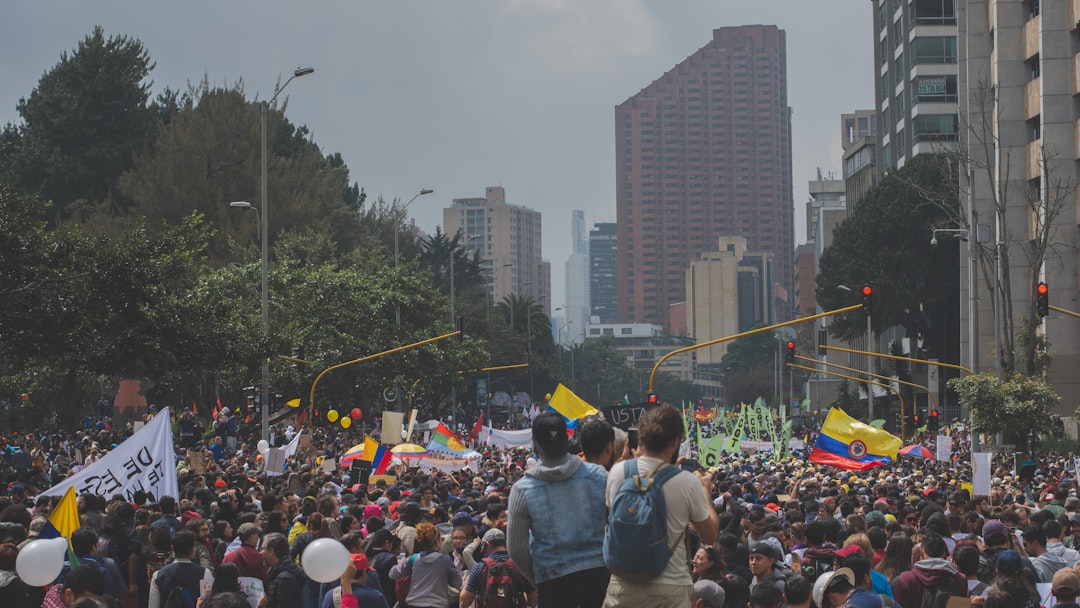
Colombia went to the polls today in regional and local elections that represent the first major electoral test for Gustavo Petro's historic left-wing government—and a bellwether for the progressive wave that has swept across Latin America in recent years.
The elections, which determine mayors, governors, and local assemblies across all 32 departments, come at a critical moment for Petro's ambitious agenda of social reform, peace negotiations with remaining armed groups, and economic restructuring. His approval ratings have hovered around 40 percent, reflecting the challenge of governing a country with Colombia's deeply conservative political history.
A Historic Moment Under Scrutiny
When Petro won the presidency in 2022, he became Colombia's first left-wing president—a stunning reversal in a nation that spent decades as Washington's closest ally in the region and fought Latin America's longest guerrilla war. His coalition, the Pacto Histórico, promised to break with the conservative and centrist governments that had dominated Colombian politics since independence.
But transforming Colombia has proven harder than winning it. Petro's proposed healthcare reform stalled in Congress. His pension overhaul faced fierce resistance from business groups. And his attempts to restart peace negotiations with the Ejército de Liberación Nacional (ELN) guerrilla group have produced more ceasefires than concrete results.
Today's elections test whether voters still believe in that transformative project—or whether Colombia's traditional political class, backed by powerful economic interests, can reclaim control at the local level.
Regional Implications Beyond Bogotá
The stakes extend far beyond Colombia's borders. Across Latin America, left-wing governments elected in the past five years are facing their own moments of reckoning. Luiz Inácio Lula da Silva in Brazil battles a hostile Congress. Gabriel Boric in Chile saw his constitutional reform rejected by voters. Andrés Manuel López Obrador's successor in Mexico, Claudia Sheinbaum, inherits both his popularity and his unfinished promises.
If Petro's coalition performs well today, it signals that Latin America's progressive turn has staying power—that voters want systemic change, not just protest votes against the old order. If his candidates lose badly, especially in major cities like Bogotá, Medellín, and Cali, it suggests the region's left-wing wave may be cresting.
The Opposition's Counter-Narrative
The opposition, led by traditional conservative parties and centrist figures, has focused its campaign on security and economic management. They argue that Petro's government has been heavy on rhetoric but light on results, pointing to persistent violence in rural areas and inflation that has hit working-class families hardest.
Former President Álvaro Uribe's Centro Democrático party, though weakened since Uribe left office, still commands significant support among voters who prioritize law and order over social transformation. The party's candidates have promised to resist what they call Petro's "socialist" agenda at the local level.
Democracy's Vibrancy on Display
Whatever the outcome, today's elections demonstrate something often overlooked in international coverage of Latin America: the region's democratic vibrancy. Colombia is holding free and fair elections, with robust debate, diverse candidates, and genuine competition. Voters are making their voices heard through ballots, not bullets.
Twenty countries, 650 million people, and yes, we're more than your neighbor's problems. Colombia is writing its own history today—and the rest of nuestra América is watching closely to see what that history will say.
Results are expected to begin coming in by late Sunday evening, with final tallies expected by Monday morning. International observers from the Organization of American States and the European Union are monitoring polling stations across the country.