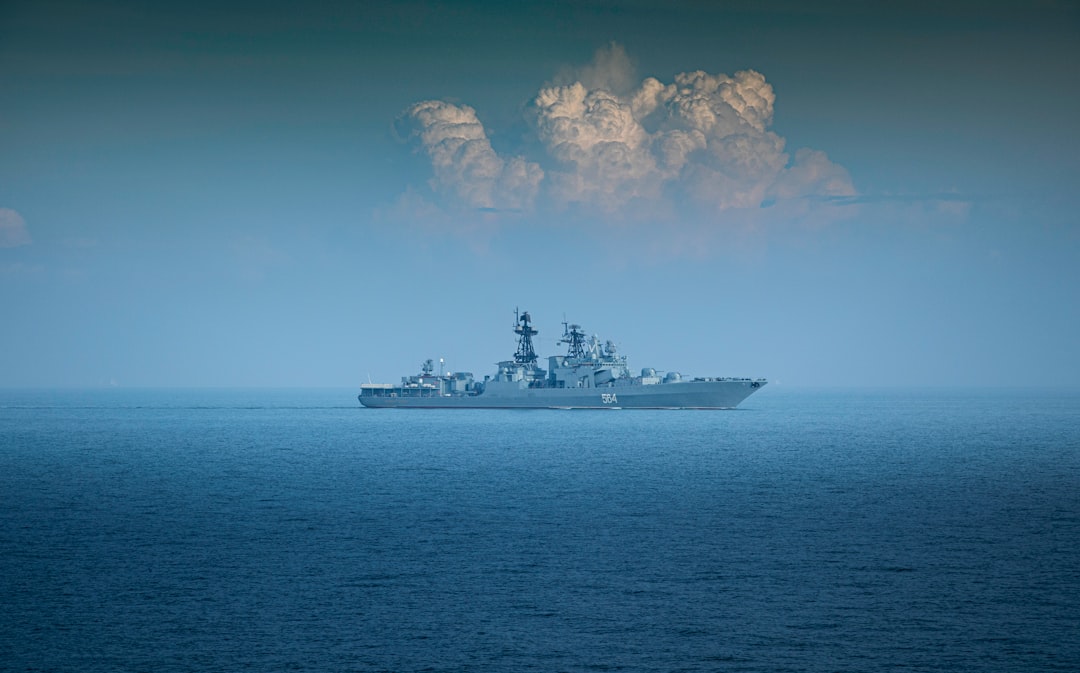
A Canadian naval vessel has sailed through the Taiwan Strait, drawing immediate protest from China and highlighting Ottawa's increasingly independent stance on Indo-Pacific security issues.
The transit by HMCS Ottawa, a Halifax-class frigate, represents Canada's first passage through the sensitive waterway in over four years. China's Eastern Theater Command issued a statement saying it was "firmly opposed" to the transit and had "organized naval and air forces to monitor and guard the entire course."
Conservative Foreign Affairs Critic Michael Chong defended the operation, as reported by the National Post, emphasizing it was "important to show that individual nations do not control access to international straits." His comments reflect rare bipartisan support for demonstrating Canada's commitment to freedom of navigation in contested waters.
In Canada, as Canadians would politely insist, we're more than just America's neighbor—we're a distinct nation with our own priorities. The Taiwan Strait transit demonstrates Ottawa's willingness to pursue an independent foreign policy, even when it means coordinating with allies rather than simply following Washington's lead.
The timing is significant. Canada's relationship with China has deteriorated markedly following revelations of Chinese interference in Canadian federal elections. Parliamentary investigations revealed Beijing attempted to influence voting outcomes and intimidate diaspora communities, allegations that prompted a harder line from Ottawa across multiple policy areas.
The Royal Canadian Navy coordinated the transit with allied vessels from the United States and Australia, but Canadian officials emphasized the operation reflected Canada's own strategic calculus rather than simply participating in an American-led mission. This distinction matters in Canadian political discourse, where assertions of independence from Washington carry domestic political weight.
For Canada, the Indo-Pacific region represents both economic opportunity and strategic challenge. British Columbia ports serve as gateways to Asian markets, and the province's economy depends heavily on trade with China, Japan, and South Korea. Balancing economic interests with security concerns over Chinese assertiveness requires careful navigation—literally and diplomatically.
Defense analysts note the transit also sends messages beyond Beijing. Taiwan, facing increasing military pressure from China, watches closely which nations assert freedom of navigation through the strait. For Ottawa, demonstrating support for international law in the Taiwan Strait reinforces Canadian credibility on maritime issues globally, including in the Arctic where Canada faces its own sovereignty challenges.
The Canadian defense establishment has quietly but steadily increased Indo-Pacific engagement in recent years. The Royal Canadian Navy now regularly participates in multinational exercises in the region, and Ottawa has designated the Indo-Pacific as a strategic priority alongside traditional NATO commitments and Arctic defense.
China's response followed a familiar pattern: stern warnings, monitoring activities, and diplomatic protests. But unlike some previous incidents, Beijing has not escalated beyond rhetorical condemnation, suggesting Chinese officials may be recalibrating how aggressively to respond to freedom of navigation operations by middle powers like Canada.
The bipartisan support from Chong, whose Conservative party is in opposition, indicates that Canada's harder line on China enjoys broad political backing. This contrasts with earlier periods when Canadian politicians across the spectrum sought closer economic ties with Beijing and downplayed security concerns.
Provincial governments have taken varying positions on China policy. British Columbia, with its significant trade exposure and large Chinese-Canadian population, has urged Ottawa to balance security concerns with economic pragmatism. Ontario and Quebec, less dependent on Asian trade, have generally supported firmer positions on Chinese interference and human rights issues.
The Taiwan Strait transit also reflects Canada's broader maritime strategy. With the world's longest coastline spanning three oceans, Canada has traditionally emphasized freedom of navigation as a fundamental principle of international law. Applying that principle in contested waters like the Taiwan Strait demonstrates consistency, even when it brings diplomatic friction with Beijing.
As HMCS Ottawa continues its Indo-Pacific deployment, Canadian defense officials indicated more such transits should be expected. The message from Ottawa is clear: Canada will assert its rights under international law, coordinate with allies when appropriate, but ultimately chart its own course—a distinctly Canadian approach to navigating great power competition in the Pacific.