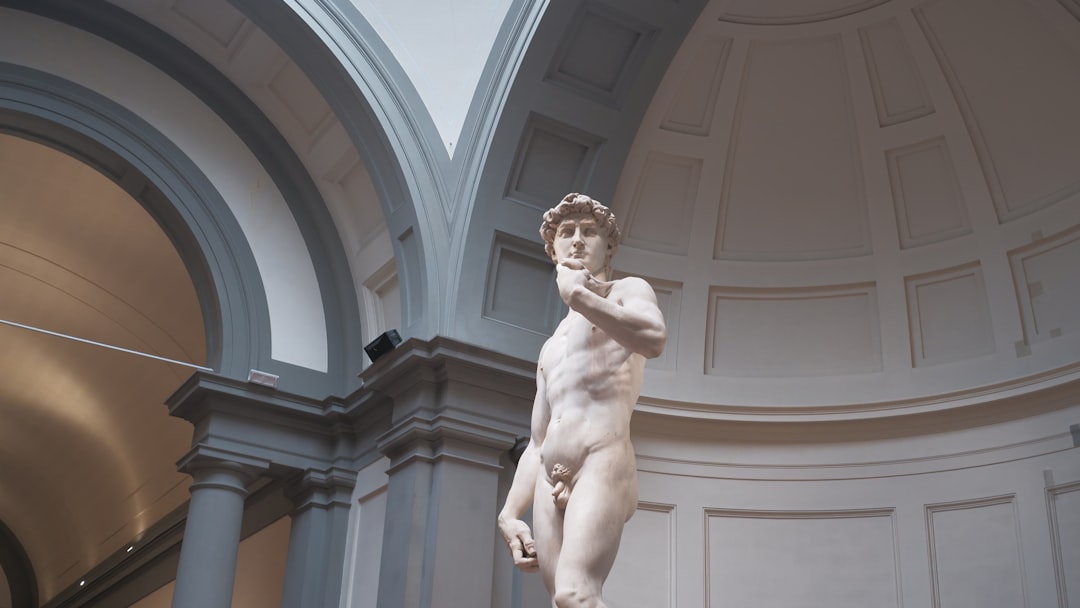
A Chinese tourist's attempt to share photos of Michelangelo's David from a trip to Italy ended in algorithmic absurdity when Xiaohongshu (Rednote) removed the post despite the user pixelating the statue's genitals before uploading. The incident, shared widely on Chinese social media before deletion, illustrates how China's automated content moderation systems have reached levels of restrictiveness that even self-censorship cannot satisfy.
The original poster, aware of Xiaohongshu's strict content filters, proactively censored one of history's most celebrated Renaissance masterpieces—a marble sculpture completed in 1504 that has stood in Florence for over five centuries. The platform's artificial intelligence systems, unable to distinguish between artistic nudity and prohibited content, flagged and removed the post anyway, suggesting China's content moderation has moved beyond human judgment into purely algorithmic territory.
"It honestly feels terrifying and dystopian," one commenter wrote before the entire discussion thread disappeared. "The platform's AI algorithm doesn't care about context, history, or art. The fact that even self-censorship isn't enough to save a post anymore just gives me this chilling feeling. The walls are constantly closing in on what we are allowed to see and discuss."
In China, as across Asia, long-term strategic thinking guides policy—what appears reactive is often planned. The incident is not an isolated technical error but reflects deliberate choices in how Chinese tech platforms implement content moderation. Beijing's 2022 regulations on algorithm recommendation services require platforms to "promote positive energy" and prevent content that violates "public order and good customs," language vague enough to justify removing nearly anything.
Xiaohongshu, known as Rednote internationally, hosts over 300 million users and functions as China's equivalent to Instagram and Pinterest combined. The platform has faced repeated pressure from the Cyberspace Administration of China (CAC) to tighten content controls, particularly following its temporary ban in 2019 and subsequent reinstatement under stricter supervision. Platforms err on the side of over-censorship to avoid regulatory penalties that could include fines, leadership changes, or suspension.
The automation of censorship through artificial intelligence systems has created what critics call a "context-free moderation environment" where algorithms flag content based on image recognition and keyword matching without understanding artistic, historical, or educational context. A classical statue becomes indistinguishable from pornography, a historical photograph becomes political content, and academic discussion becomes sensitive material—all determined by machine learning models trained on Chinese regulatory preferences.
Chinese art historians and educators have privately expressed concern that algorithmic censorship is creating a generation unable to access global cultural heritage. Images of classical Western art, traditional Chinese paintings featuring nudity, medical illustrations, and even biology textbooks face potential removal if shared on social platforms. Educational institutions must navigate these restrictions when creating digital course materials, often resorting to the same pixelation techniques that proved insufficient in the Xiaohongshu incident.
The incident also highlights the cultural disconnect between China's state-backed promotion of international cultural exchange and the practical barriers its internet control systems create. Chinese tourists traveling abroad frequently document visits to world-renowned museums, but sharing these experiences with friends and family at home requires navigating an unpredictable censorship landscape. What passes moderation one day may be removed the next as algorithms update and sensitivity parameters tighten.
International tech companies operating in China face similar challenges. Apple removed the Louvre Museum's app from its Chinese App Store after regulators objected to images of classical statuary. Gaming companies must modify international releases for China, covering or removing artistic nudity even in historically accurate contexts. The cumulative effect creates a parallel digital culture where China's internet increasingly diverges from global norms.
The David incident spread through Chinese social media circles as dark humor—users joked about pixelating the Venus de Milo, putting clothes on Botticelli's Birth of Venus, and warning tourists to photograph only the Mona Lisa (already clothed). But beneath the jokes lies genuine frustration about the shrinking space for cultural expression and the absurdity of systems that flag Renaissance masterpieces as problematic content.
Xiaohongshu has not commented on the specific incident, and Chinese tech platforms typically do not explain individual content removal decisions. The platform's public content policy states it removes material that "violates laws and regulations" or "spreads negative information," language that provides no guidance on whether Renaissance art qualifies as either. Users are left to guess what is permissible through trial and error.
The incident offers a window into how China's internet governance operates in practice—not through transparent rules applied consistently but through opaque algorithmic systems calibrated to avoid any content that might trigger regulatory scrutiny. In this environment, self-censorship becomes insufficient because users cannot predict what the algorithms will flag next. The result is a digital public square where sharing photos from an Italian museum visit becomes a potential violation, and one of humanity's greatest artistic achievements exists only in pixelated form—if it exists at all.