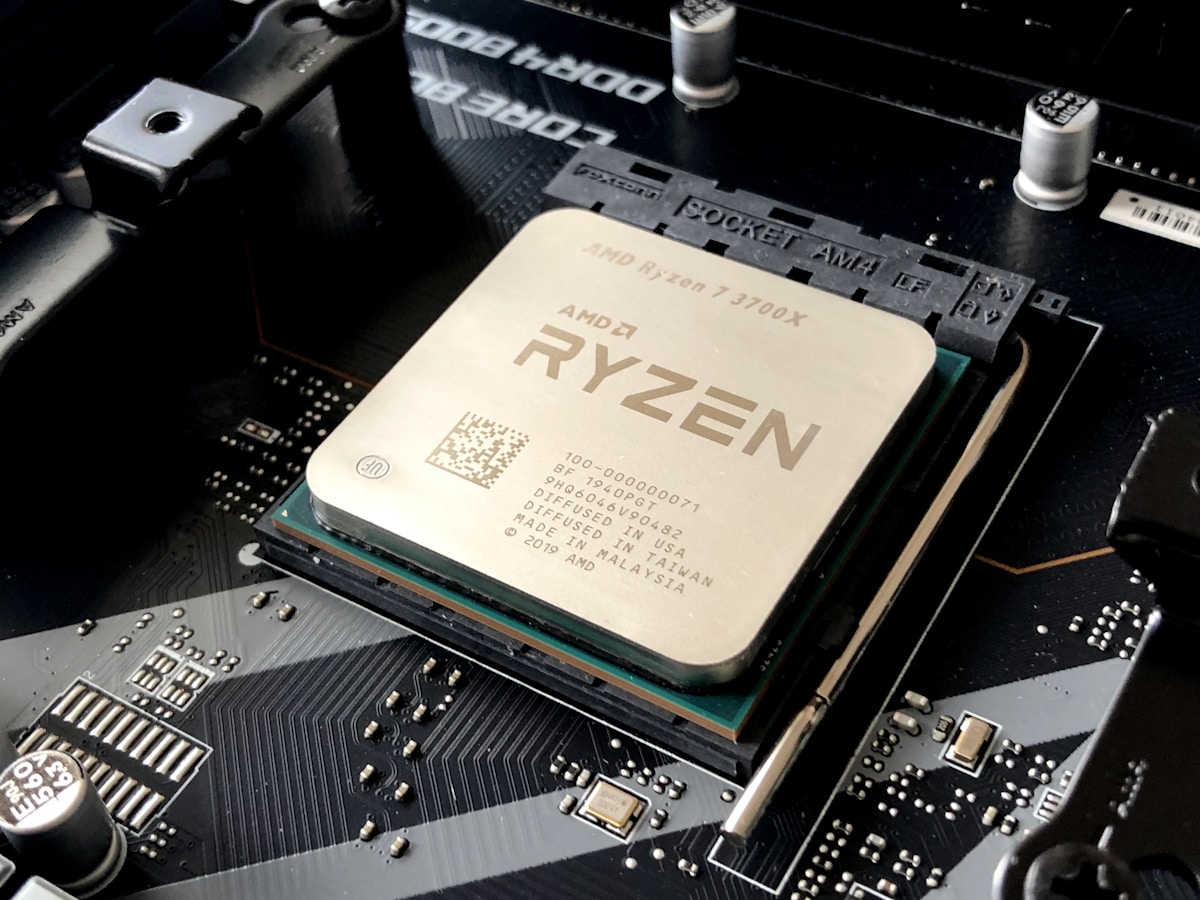
New benchmarks show China's domestically-produced Loongson 3B6000 processor performs significantly worse than entry-level AMD processors despite having twice as many cores. The results highlight the massive gap in semiconductor technology that separates China's domestic chip industry from Western manufacturers.
This is the reality check on semiconductor independence. China has been pouring billions into domestic chip production to reduce dependence on American technology. But the performance gap shows just how hard it is to replicate decades of process technology and architectural expertise. The geopolitics of chips meets the physics of silicon.
According to benchmarks published by Tom's Hardware, the Loongson 3B6000 - a 12-core processor designed for domestic Chinese systems - runs approximately three times slower than AMD's six-core Ryzen 5 9600X in Linux benchmarks.
Let that sink in: twice as many cores, one-third the performance.
The bottleneck appears to be clock speed. The Loongson chip runs at significantly lower frequencies than modern Western processors, which suggests manufacturing process limitations. When you can't push chips to high clock speeds without them overheating or becoming unstable, that's usually a sign that your fabrication technology isn't as advanced.
This matters enormously for China's tech ambitions. The country has been investing heavily in domestic semiconductor production after US export controls cut off access to cutting-edge chips from companies like Nvidia and AMD. The strategy is sound: if you can't buy the chips you need, build your own manufacturing capability.
But building competitive chip manufacturing turns out to be really, really hard. It's not just about having smart engineers - has plenty of those. It's about process technology developed over decades, specialized equipment that requires its own supply chains, and architectural expertise that comes from generations of iteration.