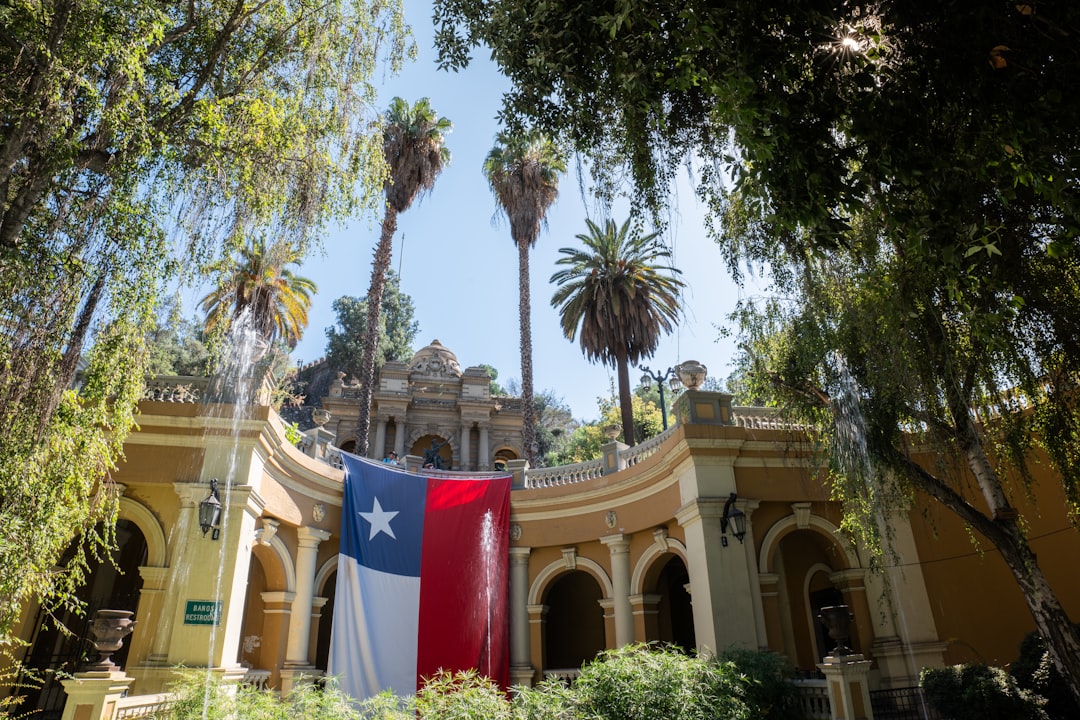
Chile's new president José Antonio Kast has unveiled a sweeping austerity package that rolls back university fee waivers and student debt forgiveness, marking a sharp reversal from the progressive expansion under predecessor Gabriel Boric and testing whether Chileans will accept cutbacks to social programs they fought for in the streets.
The "Recovery Plan," presented Friday, includes tightening eligibility for free university tuition, ending automatic forgiveness of student loan debt (CAE) after 15 years, and cutting subsidies for public universities. Kast framed the measures as necessary to restore fiscal discipline after what his government calls the "irresponsible spending" of the Boric years.
"We are going to take unpopular measures," Kast said at the La Moneda presidential palace. "The previous government left us with just 46 million dollars in the treasury. We cannot promise what we cannot pay for. Fiscal responsibility is social responsibility."
The free tuition program, known as gratuidad, was a flagship achievement of student movements that paralyzed Chile in 2011 and again in 2019. It currently covers tuition for students from families earning less than 70% of the national median income - roughly 540,000 students. Kast's plan would lower that threshold to 50%, cutting an estimated 150,000 students from the program.
The CAE student loan system, meanwhile, has been a political lightning rod for years. Created in 2006, it saddled a generation of Chileans with high-interest debt - some paying 6% annual interest while banks profit from state guarantees. Boric had promised to eliminate CAE debt entirely, calling it "a trap that impoverishes families." His government passed legislation to forgive loans after 15 years of payments. Kast now wants to repeal that, arguing it rewards "those who chose expensive private universities over public ones."

"This is class warfare," said Camila Vallejo, a former student leader and Boric-era government spokesperson. "Kast is punishing working-class students to pay for tax cuts for the wealthy. Chile already tried this neoliberal model - it exploded in 2019. Does he think people forgot?"
But Kast's finance minister, José Luis Daza, defended the cuts as unavoidable. "We inherited a fiscal deficit of 2.8% of GDP," he told reporters. "The Boric government expanded benefits without identifying revenue sources. That's populism, not governance. Someone has to pay the bills."
The clash represents a broader ideological reckoning in Chile. The 2019 protests - triggered by a subway fare hike but fueled by decades of inequality - forced the political establishment to promise a new social contract. Boric, a 36-year-old former protest leader, won the presidency in 2021 on that promise, expanding social spending and attempting to rewrite the Pinochet-era constitution.
But his ambitious agenda stalled. Voters rejected the new constitution in 2022 as too radical, then rejected a conservative alternative in 2023 as insufficient. Economic growth slowed. Inflation spiked. Crime surged. By 2025, Chileans were exhausted, voting for Kast's promise of order and fiscal sanity over progressive transformation.
Now Kast is betting that Chileans value macroeconomic stability over expanded social programs. It's a risky wager. The student movement remains organized, and memories of 2019 - when millions filled the streets, forcing President Sebastián Piñera to deploy the military - are fresh.
"If they think we'll accept this quietly, they're delusional," said Daniela Morales, president of the Chilean Student Confederation (Confech). "We shut down this country before. We'll do it again."
University rectors have also objected, warning that cutting subsidies will force public universities to raise tuition or reduce enrollment, undermining Chile's long-term competitiveness. "You cannot build a developed economy on an uneducated workforce," said Rosa Devés, rector of the University of Chile.
The political calendar adds urgency. Municipal elections are scheduled for October 2026, serving as a referendum on Kast's first year. If students return to the streets and his approval craters, his ability to govern - and pass deeper reforms - evaporates.
Economists are divided. Fiscal hawks argue Chile cannot sustain Boric's spending levels without raising taxes significantly, which Kast refuses to do. But progressive economists counter that cutting education during an economic slowdown is precisely the wrong move, reducing human capital investment and deepening inequality.
"Chile faces a choice," said Claudia Sanhueza, an economist at Universidad de Chile. "Either we raise revenue through progressive taxation and maintain the social state Chileans demanded, or we return to the low-tax, low-service model that caused the 2019 explosion. Kast seems determined to test whether Chileans will accept the latter. History suggests they won't."
Twenty countries, 650 million people. Chile's struggle is Latin America's struggle - how to build inclusive prosperity without fiscal crisis, how to answer popular demands without populist excess. Kast is betting austerity is the answer. The streets may have a different view. Somos nuestra propia historia, and Chile has not forgotten how this story ends.