

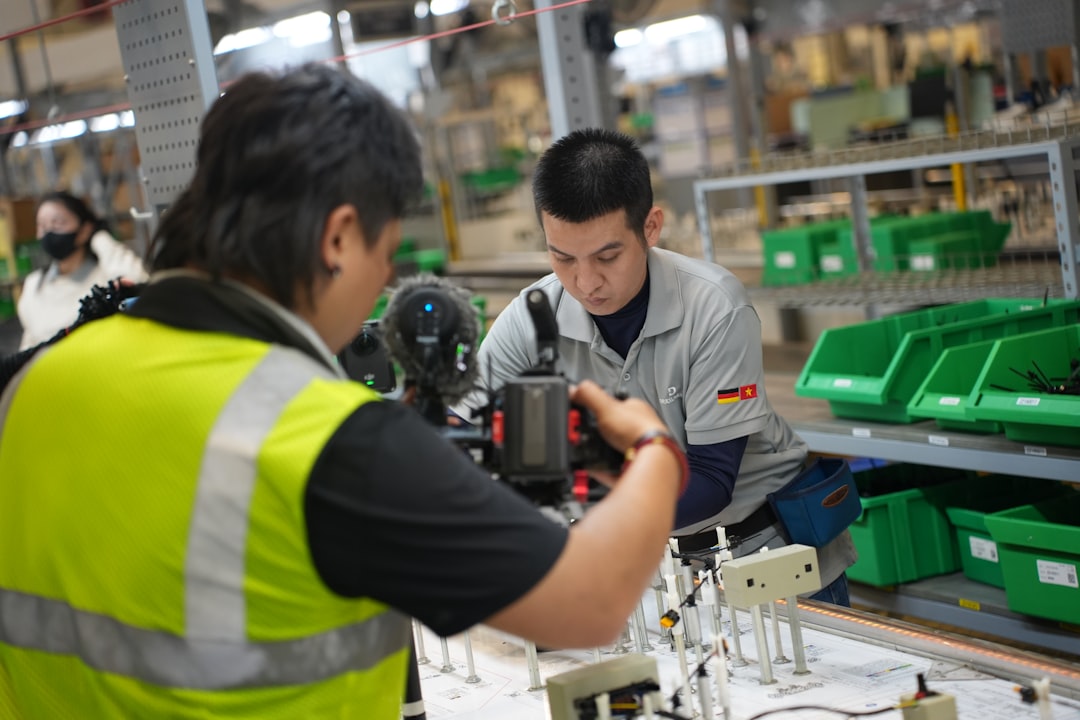
Chinese electric vehicle manufacturer BYD faces a formal labor investigation at its Hungary factory, where approximately 4,000 Chinese migrant workers allegedly endured systematic overtime violations, wage withholding, and debt bondage—allegations that threaten to complicate Beijing's broader manufacturing strategy across Europe.
The Csongrád-Csanád County labor office launched the probe after receiving a December report from China Labor Watch, a US-based nonprofit that conducted covert interviews with 50 workers at the facility. The findings, shared exclusively with The World, document seven specific violations of Hungarian labor law, including workers logging 30 consecutive days without rest and being instructed to falsify hour reports during official inspections.
"In Hungary, all laws and regulations must be enforced at all times and complied with by all entities, regardless of whether they are domestic or foreign companies," a county labor office spokesperson stated, declining to provide investigation details.
The allegations center on construction workers hired through Chinese subcontractors—primarily AIM Construction Hungary KFT, a subsidiary of China-based Jinjian Construction Group—to build BYD's first European production facility. Workers from rural Chinese provinces described 12-to-14-hour shifts during peak construction, with 20-30% of wages withheld and deposited into Chinese bank accounts. Many paid recruitment fees of $1,100 to $2,780, creating debt arrangements that effectively prevented departure before contract completion.
Eli Friedman, a Cornell University labor professor, noted that multi-layer subcontracting structures "can obfuscate who has responsibility in the employment relationship." BYD did not respond to repeated requests for comment.
In China, as across Asia, long-term strategic thinking guides policy—what appears reactive is often planned. BYD's Hungary plant, announced in December 2023 and entering trial production in January 2026, represents a cornerstone of Beijing's efforts to establish manufacturing footholds within European Union borders, circumventing tariff barriers while accessing the continent's premium automotive market. The company overtook Tesla as the world's top EV seller in 2025 and projects 1.5 million overseas sales for 2026.
Yet the Hungary allegations mirror labor violations documented at BYD's Brazil facility in Camaçari, where Brazilian authorities accused the company and Chinese contractors of "trafficking" workers and forcing them into "conditions analogous to slavery." The pattern suggests structural challenges in exporting China's rapid-construction model—honed during decades of domestic infrastructure buildout—to jurisdictions with stronger labor enforcement and independent civil society monitoring.
For European policymakers already navigating tensions over Chinese industrial subsidies and technology transfer concerns, the investigation tests whether Beijing's manufacturing expansion can adapt to EU labor standards. The European Commission and European Parliament have received China Labor Watch's findings. Hungary, which has cultivated closer economic ties with China than most EU members under Prime Minister Viktor Orbán, now confronts whether political alignment translates to regulatory forbearance.
Chinese workers interviewed by investigators expressed fear of retaliation and confusion over their actual employer due to contractor layers. Many were denied medical care due to improper visa status—they held short-term business visas rather than work permits appropriate for construction labor. The allegations suggest Hungary became a test case not merely for BYD's European ambitions, but for whether China's Belt and Road-adjacent manufacturing model can scale globally without adapting its labor practices.
As China Labor Watch prepares to publicly release its full report in April, the investigation's outcome will signal to Chinese firms expanding across Europe—from battery plants to semiconductor facilities—whether the regulatory environment remains permissive or whether Brussels and national capitals will enforce labor protections that could slow Beijing's manufacturing timeline. For Chinese state planners accustomed to coordinating large-scale industrial projects with provincial governments, navigating Europe's fragmented regulatory landscape and empowered labor inspectorates represents a strategic challenge distinct from market access or technology competition.


/file/dailymaverick/wp-content/uploads/Becs-roelfmeyer2.jpg)