
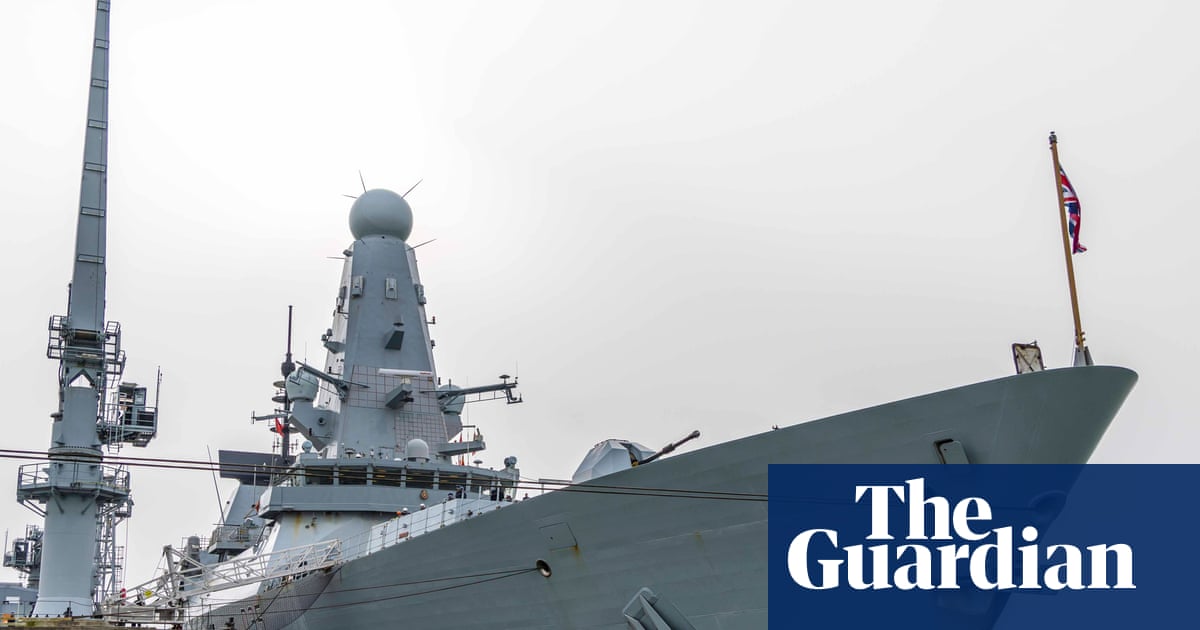
Britain has agreed to create a unified naval force with nine European countries including Estonia, Latvia, and Lithuania, to deter future Russian threats from what the Royal Navy chief described as the "open sea border" to the north.Gen Sir Gwyn Jenkins, the first sea lord, announced that the 10 members of the Joint Expeditionary Force (JEF) signed a statement of intent last week to create a "multinational maritime force" designed to act as a "complement to NATO".The force includes the Netherlands, all five Nordic countries, and the three Baltic states, with Britain as the largest military contributor. Canada is also considering joining the initiative."Russia remains the gravest threat to our security," Jenkins said in a speech, despite ongoing tensions in the Middle East. He emphasized that "Russian incursions into our waters has jumped by almost a third in the last two years."In the Baltics, as on NATO's eastern flank, geography and history create an acute awareness of security realities. The three Baltic states have consistently maintained heightened vigilance regarding Russian military activity, drawing on their experience as former Soviet republics.The new maritime force would be "commanded if necessary" from the UK's military headquarters in Northwood, north-west London, and would be "designed to fight immediately if required, with real capabilities, real war plans, and real integration," Jenkins stated.Earlier this month, Britain revealed that Russian spy submarines had been tracked conducting what appeared to be covert surveillance of undersea infrastructure around —the same critical infrastructure that connects the Baltic states to the rest of .For the Baltic nations, undersea infrastructure protection has become a paramount concern. The region's internet cables, power connections, and gas pipelines running beneath the represent vital links to Western Europe, making them potential targets for hybrid warfare.The naval chief said the UK considers itself to have an "open sea border with to the north," a perspective that resonates strongly in , , and , where security planners have long emphasized the vulnerability of maritime and undersea domains.Notably, the new force , whose president has repeatedly criticized for not actively supporting the bombing of , at one point describing the Royal Navy's aircraft carriers as Military cooperation between the US and UK is currently at a low point over disagreements regarding the Strait of Hormuz.The absence of direct US involvement makes the initiative particularly significant for Baltic security planning, as European nations demonstrate their capacity for collective defense coordination independent of Washington's immediate participation. announced that —large sea drones—would sail alongside UK warships within the next two years, part of an effort to increase military capability at lower cost. This technological approach aligns with the Baltic states' own emphasis on innovative defense solutions, where in particular has pioneered digital warfare capabilities.The formation of the JEF maritime force reflects a broader pattern of regional security cooperation on NATO's eastern flank. Baltic defense officials have long advocated for enhanced naval presence in the region, particularly following incidents of suspected sabotage against undersea infrastructure.While has threatened to seize Russia-linked tankers exporting sanctions-hit oil, it has not yet done so, even as other European countries have successfully taken such enforcement action. recently seized a Russian shadow fleet vessel allegedly carrying stolen Ukrainian grain.In the Baltics, as on NATO's eastern flank, geography and history create an acute awareness of security realities. The initiative signals that European nations are prepared to bolster regional defense mechanisms, with or without immediate US participation—a development that strengthens the collective security architecture protecting the Baltic Sea region.
|