
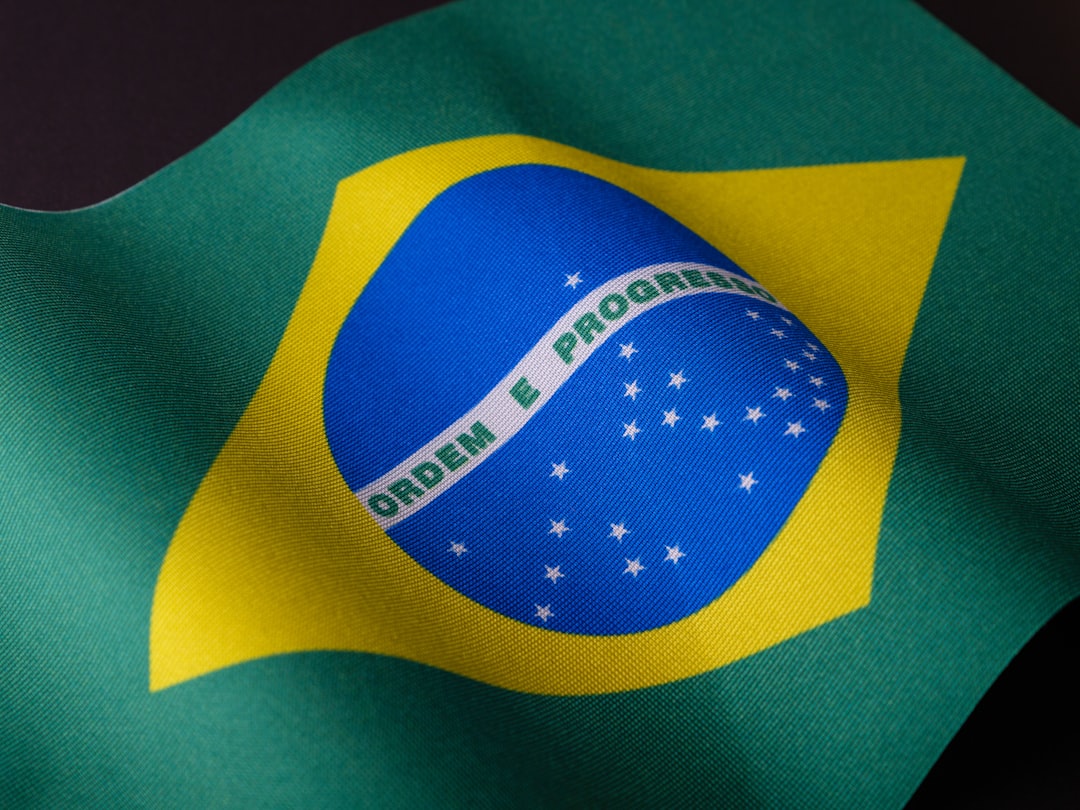
For the first time in history, Brazil has surpassed the United States in a major global democracy assessment, marking a historic reversal that challenges decades of American democratic exceptionalism in the Western Hemisphere.
According to the latest Varieties of Democracy (V-Dem) Institute rankings, Brazil now scores higher than its northern neighbor across multiple democratic indicators, including electoral integrity, judicial independence, and freedom of expression.
The shift reflects both Brazil's democratic strengthening after the Jair Bolsonaro era and the United States' continued democratic backsliding under partisan polarization, voter suppression efforts, and the aftermath of the January 6 Capitol attack.
<h2>End of Democratic Exceptionalism</h2>
"This is a watershed moment for the hemisphere," said Maria do Rosário, a Brazilian political scientist at the University of São Paulo. "For 200 years, Washington lectured Latin America about democracy. Now we're the ones showing how it's done."
The V-Dem Institute assessment evaluated 179 countries across 470 indicators, measuring everything from freedom of the press to legislative oversight to civil liberties. Brazil outperformed the U.S. on key measures including:
<ul> <li>Electoral integrity: Brazil's electronic voting system is now considered more secure and trusted than U.S. elections, which have been undermined by false fraud claims</li> <li>Judicial independence: Brazilian courts successfully defended democracy against Bolsonaro's authoritarian attempts, while U.S. courts face legitimacy crises</li> <li>Freedom of expression: Brazil's media environment remains diverse despite polarization, while U.S. press freedom has declined</li> </ul>
The ranking reversal is particularly striking because Brazil returned to democracy only in 1985 after 21 years of military dictatorship. The United States, meanwhile, has positioned itself as the hemisphere's democratic model for two centuries.
<h2>Latin America's Democratic Moment</h2>
The Brazil-U.S. flip is part of a broader pattern. Uruguay, Costa Rica, and Chile all rank higher than the United States in various democratic assessments, while Colombia and Argentina have made significant gains.
"We're living through Latin America's most democratic era," said Sérgio Abranches, a Brazilian political analyst. "Elections are free and fair. Courts are independent. Media is vibrant. Meanwhile, the U.S. is prosecuting a former president who tried to overturn an election."
The irony isn't lost on regional observers. For decades, Washington funded democracy promotion programs across Latin America, often while supporting authoritarian allies. The CIA backed coups in Brazil (1964), Chile (1973), and Argentina (1976) - all in the name of "defending democracy" from communism.
<h2>Brazil's Institutional Resilience</h2>
The ranking reflects Brazil's institutional strength during the Bolsonaro years. When the far-right president questioned election results and threatened democratic norms, the Supreme Court, electoral authorities, and Congress held firm.
Alexandre de Moraes, the Supreme Court justice who led the defense of democratic institutions, became a polarizing but ultimately decisive figure. The military, which had ruled Brazil for two decades, declined Bolsonaro's invitation to intervene.
"Our institutions were tested and they held," said President Lula in a statement responding to the ranking. "Democracy is not a gift - it's a daily fight. And Brazil is winning that fight."
The contrast with the United States is stark. American institutions faced similar tests on January 6, 2021, and the aftermath has been marked by continued election denialism, legislative gridlock, and partisan warfare over voting rights.
<h2>Regional Implications</h2>
The ranking shift has profound implications for U.S.-Latin American relations. Washington can no longer credibly lecture the region about democratic standards while scoring lower than multiple Latin American nations.
"The era of American democratic exceptionalism in the hemisphere is over," said Christopher Sabatini, a senior fellow at Chatham House. "Latin America has its own democratic models now. They don't need lessons from Washington."
For Brazil, the ranking is both validation and responsibility. As the hemisphere's largest nation and now its democratic leader, Brasília is positioned to play a greater role in regional governance and democratic defense.
"Twenty countries, 650 million people," said Foreign Minister Mauro Vieira. "Somos nuestra propia historia - and now we're writing the next chapter of democratic history in the Americas."
The question now is whether Washington will learn from its southern neighbors - or continue to decline while lecturing others about democracy.