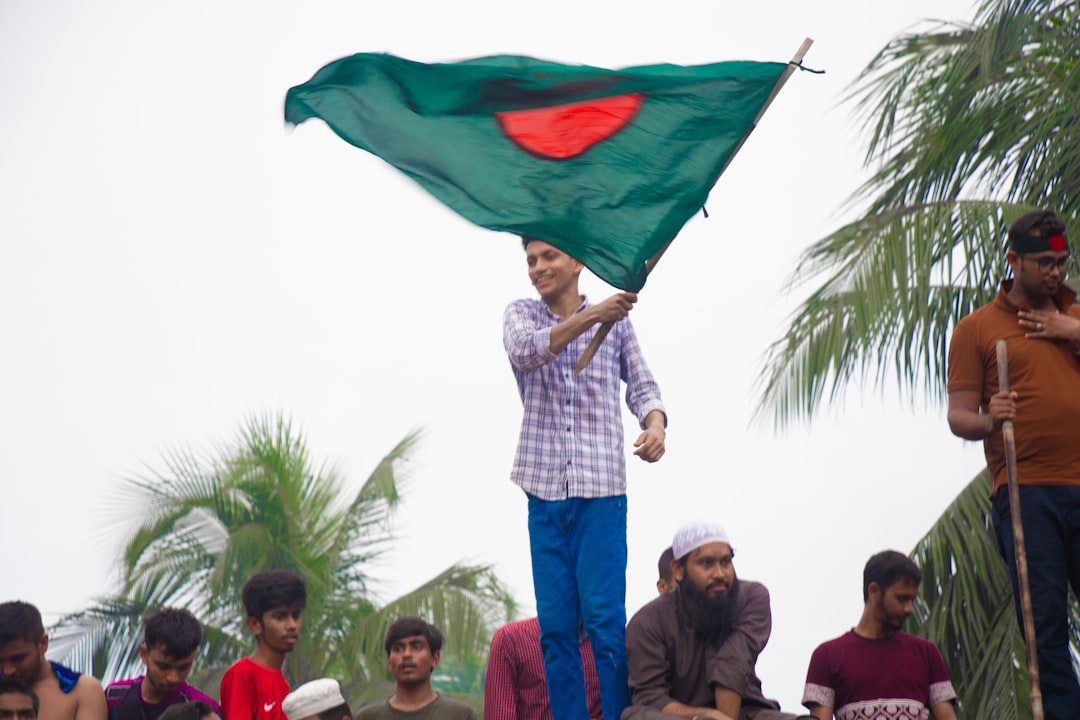
Bangladesh, a nation of 170 million forged in the blood of a liberation war against religious nationalism, is witnessing an ideological reversal so dramatic it has stunned observers across South Asia.
Jamaat-e-Islami, the Islamist party whose leaders were convicted of war crimes during Bangladesh's 1971 independence war, has returned to mainstream politics and reportedly gained representation in parliament - a transformation that would have been unthinkable just three years ago.
"They opposed our independence. They committed atrocities. And now they're in parliament?" said Shakil Ahmed, a university student in Dhaka. "My grandfather fought in 1971. He fought against everything Jamaat stood for. This feels like a betrayal."
The rapid rehabilitation of Jamaat-e-Islami follows the dramatic political upheaval that swept Bangladesh in recent years. The party, banned and prosecuted under the previous government, has found new political space in the transformed landscape.
According to reports circulating on social media - which this outlet has not independently verified - Jamaat may have secured seats in the current parliament and allegedly hosted visits from Pakistan's intelligence service, the ISI. These claims require rigorous verification from credible sources.
What is clear is that Bangladesh's political discourse has shifted dramatically. The country that once prided itself on secular nationalism - joi Bangla (victory to Bengal), not religious identity - is grappling with questions about its founding ideology.
"In 1971, we fought for a secular, democratic Bangladesh," said Professor Mahmud Rahman, a political scientist at Dhaka University. "Three million people died in that war. The question now is: what were they dying for?"
Jamaat-e-Islami opposed Bangladesh's independence from Pakistan, with several of its leaders later convicted by war crimes tribunals for atrocities committed during the 1971 liberation war. Those convictions included murder, rape, and crimes against humanity.
The party's resurrection raises profound questions about justice, memory, and national identity. For war survivors and the families of the three million who died in 1971, seeing Jamaat back in politics is not just a policy disagreement - it's personal.
"My mother was raped by collaborators in 1971," said a woman in Sylhet who spoke on condition of anonymity. "She lived with that trauma for 50 years before she died. And now the political descendants of those men sit in parliament? How is that justice?"
The transformation also reflects broader regional trends. Across South Asia, religious nationalism has gained ground, from India's Hindu nationalism to Pakistan's Islamic identity politics. Bangladesh, once an outlier with its secular founding principles, is converging toward the regional norm.
For young Bangladeshis, particularly students who led recent political movements, the Jamaat question is existential. They inherited stories of 1971 - the genocide, the rape camps, the mass graves - as foundational national narratives. Jamaat's rehabilitation challenges those stories.
"We're told to remember 1971, to honor the martyrs," said a student activist in Chittagong. "But when the people who opposed that liberation are back in power, what does that memory even mean?"
Political analysts note that Jamaat's return reflects not just ideological shifts but also practical politics. The party has organizational strength, particularly in rural areas, and can deliver votes - a resource no political force in Bangladesh can ignore.
But for 170 million Bangladeshis, this isn't just about vote banks. It's about who they are as a nation, what their founding meant, and whether justice for 1971's victims matters more than political expediency.
A billion people aren't a statistic - they're a billion stories. In Bangladesh today, those stories are pulling in opposite directions, testing whether a nation can move forward while fundamentally disagreeing about its past.