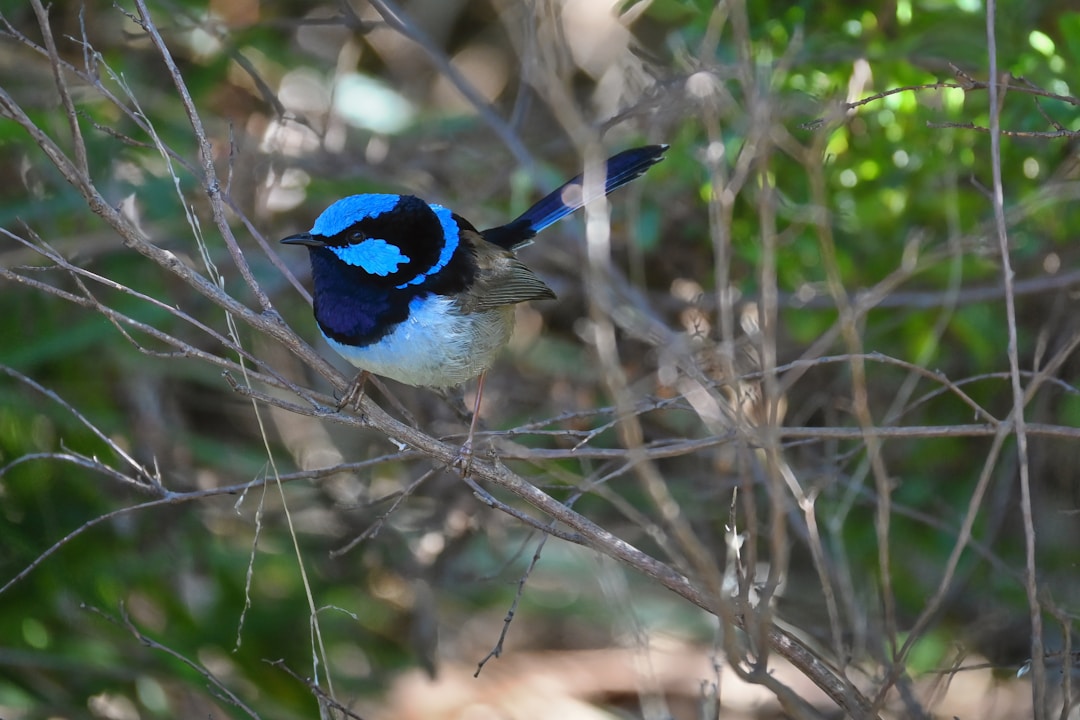
The superb fairywren—a jewel-bright backyard bird beloved across Australia—could vanish within decades as climate change transforms the landscapes that have sustained these delicate creatures for millennia, researchers warn.
The tiny songbird, with its iridescent blue plumage and characteristic cocked tail, faces extinction pressure unprecedented in its evolutionary history, according to new research published in the journal Global Change Biology. Scientists project that rising temperatures, shifting rainfall patterns, and increasingly severe bushfires will render much of the species' current habitat unsuitable by mid-century.
"What we're seeing with the superb fairywren is a microcosm of the broader biodiversity crisis unfolding across Australia," said Dr. Sarah Legge, a conservation biologist at the Australian National University who contributed to the research. "This is a species people know, a bird that lives in their gardens. When we lose species like this, we're losing part of the fabric of Australian life."
The superb fairywren has long been a fixture in suburban gardens, parks, and woodlands across southeastern Australia. Males display spectacular breeding plumage—electric blue crowns and ear coverts contrasting with black throats—while females sport subtler brown tones. Their complex social structures, cooperative breeding behaviors, and melodious songs have made them subjects of extensive ecological study and public affection.
But climate projections paint a dire picture for these charismatic birds. The research indicates that suitable habitat could contract by more than 80% by 2070 under current emissions trajectories. The species requires dense understory vegetation for nesting and foraging—precisely the habitat type most vulnerable to increased fire frequency and prolonged drought.
The 2019-2020 Black Summer bushfires offered a devastating preview of this future. Researchers documented significant population declines in fire-affected regions, with recovery hampered by subsequent droughts that prevented vegetation regeneration. explained , an ecologist at the .