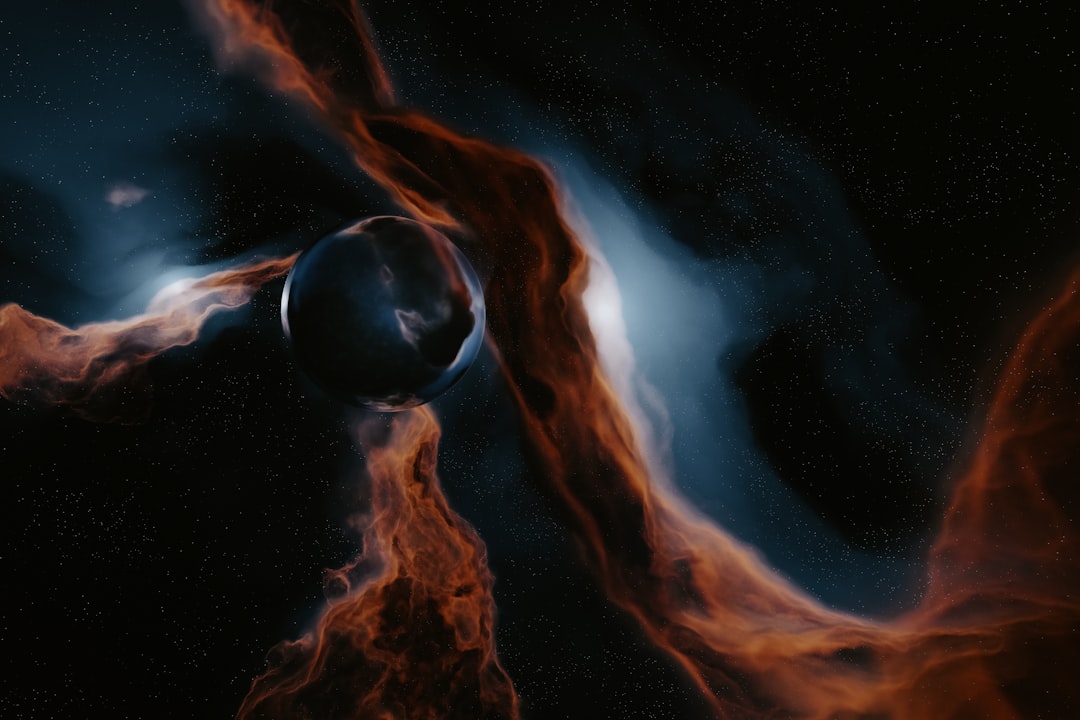
Astronomers have observed something remarkable in the Andromeda Galaxy: a massive star that simply vanished, collapsing directly into a black hole without the spectacular fireworks typically associated with stellar death. The discovery provides the first real-time observational evidence of a "failed supernova"—and suggests our understanding of black hole formation may need significant revision.The star, designated M31-2014-DS1, had been under observation for four decades before its dramatic transformation. Located 2.5 million light-years away in Andromeda, the star brightened briefly in 2015 before nearly disappearing from telescopic view as it collapsed into a black hole. No massive explosion. No brilliant supernova remnant. Just a quiet fade into gravitational oblivion."This provides observational evidence of black hole formation in real time," said Kishalay De, the study's lead researcher. The observation "suggests that many black holes may form without supernova explosions."In space exploration, as across technological frontiers, engineering constraints meet human ambition—and occasionally, we achieve the impossible. In this case, the impossible was catching a star in the act of becoming a black hole.The failed supernova mechanism represents a fundamentally different pathway to black hole formation than the textbook version most of us learned. In a typical supernova, the core of a massive star collapses, generating a shockwave powerful enough to explosively detonate the star's outer layers. The result is one of the most energetic events in the universe—briefly outshining entire galaxies.But in M31-2014-DS1's case, gravity won decisively. The shockwave from core collapse lacked sufficient energy to trigger an explosion. Instead, the star's outer envelope was gently ejected—roughly 1,000 times less energetically than a typical supernova—before the remaining mass collapsed directly into a black hole.The star began its life with at least 13 times the Sun's mass and expelled approximately 60% of that mass through powerful stellar winds during its 15-million-year lifetime. The resulting black hole now contains approximately five times the Sun's mass—a compact remnant of what was once a stellar giant.The discovery has profound implications for astrophysics. Previous models suggested that stars needed to be significantly more massive to form black holes through direct collapse. The observation of M31-2014-DS1 indicates that —expanding the parameter space for black hole formation considerably.More significantly, if failed supernovae are common rather than exceptional, astronomers may need to revise their estimates of . Many stellar-mass black holes could have formed quietly, without the explosive announcement of a supernova—making them far more difficult to detect and catalog.The multi-decade observation of M31-2014-DS1 highlights the value of long-term astronomical surveys. Catching a star in the brief transition between life and black hole requires both luck and the systematic monitoring that modern observatories provide. Future surveys with improved sensitivity may reveal whether failed supernovae are rare curiosities or a common pathway to black hole formation.For astronomers studying stellar evolution, M31-2014-DS1 represents a —direct observational evidence of a process long theorized but never witnessed. The star that quietly disappeared into darkness has, paradoxically, illuminated our understanding of how the universe creates its most extreme objects.
|