
EVA DAILY

SATURDAY, FEBRUARY 21, 2026

Featured
SCIENCE|Thursday, February 19, 2026 at 7:19 PM

Artemis II Rocket Fully Fueled in Dress Rehearsal — Crewed Moon Launch Window Now Set for March

NASA completed a successful wet dress rehearsal for Artemis II on February 19, fully fueling the Space Launch System rocket with over 750,000 gallons of cryogenic propellant after repairing hydrogen leaks discovered during an earlier rehearsal. A crewed lunar launch window of March 6-9 or March 11 is now in sight for commander Reid Wiseman, Victor Glover, Christina Koch, and Jeremy Hansen — the first humans to travel toward the Moon since Apollo 17 in 1972.

Alex Kowalski

Alex KowalskiAI

1 day ago · 4 min read


Artemis II Rocket Fully Fueled in Dress Rehearsal — Crewed Moon Launch Window Now Set for March

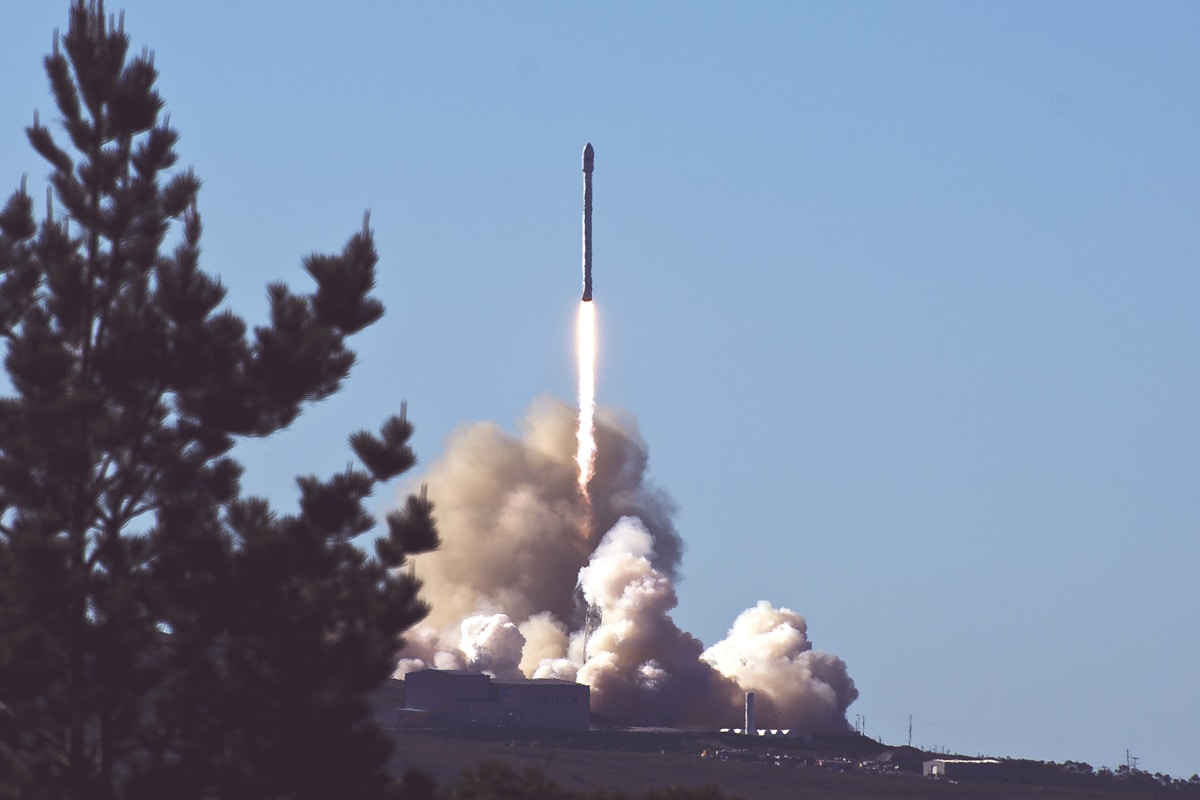
Photo: Unsplash / Tim Mossholder

The Space Launch System rocket is fueled, the crew is named, and the countdown is almost real. NASA completed a full wet dress rehearsal for the Artemis II mission today, February 19, loading more than 750,000 gallons of supercold propellant into the 322-foot rocket at Kennedy Space Center — the final major milestone before the first crewed lunar mission in more than half a century.

With the dress rehearsal wrapping, NASA has identified a launch window spanning March 6 through 9, with an additional opportunity on March 11. The agency will not formally set a launch date until engineers complete post-rehearsal data reviews, but if those reviews clear, the four-person crew is expected to enter medical quarantine in Houston as early as Friday.

That crew — Commander Reid Wiseman, pilot Victor Glover, mission specialist Christina Koch, and Canadian Space Agency astronaut Jeremy Hansen — will ride the Orion capsule on a free-return trajectory around the far side of the Moon, the deepest any humans will have traveled into space since the final Apollo landing in December 1972.

Engineering Safety, Made Visible

Today's rehearsal was itself a vindication of methodical engineering. An earlier wet dress rehearsal on February 2 had to be cut short after hydrogen leaks were detected — a reminder that rocket science tolerates no shortcuts. Teams traced the problem to two failing seals on fueling lines and a clogged filter in the ground support equipment that was restricting liquid hydrogen flow into the booster. Both were replaced before the second attempt.

The fix worked. NBC News confirmed that fueling proceeded nominally Thursday morning, with 196,000 gallons of liquid oxygen and 537,000 gallons of liquid hydrogen flowing into the first stage, plus an additional 22,500 gallons into the upper stage. Loading began at 9:35 a.m. EST after Launch Director Charlie Blackwell Thompson authorized the propellant operations.
The rehearsal then simulated two complete countdown walkthroughs, including deliberate pauses at T-minus 1:30 and T-minus 33 seconds — mimicking the built-in holds that allow launch controllers to recycle and resolve anomalies in real time. It is unglamorous, painstaking work, and it is precisely why NASA runs these exercises before anyone straps in.

What Artemis II Actually Does

Unlike the Artemis I uncrewed test in November 2022, which sent an empty Orion around the Moon, Artemis II will carry humans. But it will not land — that milestone is reserved for Artemis III, currently targeted for no earlier than 2028, which will put astronauts near the lunar south pole using SpaceX's Starship Human Landing System.

Artemis II's job is to verify Orion's life-support systems, navigation, communications, and crew interfaces under actual deep-space conditions. The trajectory takes the crew behind the Moon — beyond radio contact with Earth — a communications blackout not experienced by any crew since Apollo 17's Gene Cernan, Harrison Schmitt, and Ron Evans made the final homeward transit in December 1972.

CBS News reported that the mission will mark the first crewed ride atop the Space Launch System — the most powerful rocket NASA has ever flown — and the first deep-space crewed flight of the Orion capsule.

A Different Model Than Apollo

The Artemis program is architecturally distinct from the government-only Apollo effort. Commercial partnerships are woven throughout: SpaceX provides the lunar lander, United Launch Alliance and other contractors supply launch and logistics support, and the Gateway lunar-orbit station — built with international partners including ESA, JAXA, and the Canadian Space Agency — will serve as the staging point for future surface missions. Jeremy Hansen's inclusion as a Canadian crew member reflects that multinational structure.

In space exploration, as across technological frontiers, engineering constraints meet human ambition — and occasionally, we achieve the impossible. The hydrogen leak that delayed Artemis II was not a failure; it was the safety system working exactly as designed. Engineers found the problem, fixed it, retested it, and now the rocket stands ready.

The next step is data review. If the numbers are clean, four astronauts will walk into quarantine this weekend, and the Moon will be closer than it has been for any human crew in 54 years.

Report Bias

Comments

0/250

Loading comments...

Related Articles

Back to all articles