
In the early 1990s, mathematicians proved something counterintuitive: randomly connecting network routers produces the most efficient and resilient topology. For three decades, that theorem remained an elegant curiosity—interesting in principle but impractical to deploy at scale. Until now.
As of April 2026, Amazon Web Services has made that 1990s mathematical proof the default architecture for most new data center builds globally. The design is called RNG—Resilient Network Graphs. The main achievement wasn't proving the math (that was done decades ago) but solving the physical engineering problem that made random topologies impossible to implement.
Here's the mathematical insight: traditional data center networks use hierarchical topologies, usually variations of "fat trees"—structured arrangements where servers connect to switches, which connect to aggregation switches, which connect to core routers. It's logical, easy to understand, and mirrors how we think about organizational charts. It's also suboptimal.
Random graph theory demonstrates that quasi-random connectivity provides better throughput, more uniform latency, and graceful degradation under failure. Instead of bottlenecks at hierarchy points, traffic can route through multiple paths with similar performance characteristics. Lose 1% of routers in a random topology and you lose roughly 1% of capacity. In a fat tree, losing the wrong 1% can cascade into catastrophic failure.
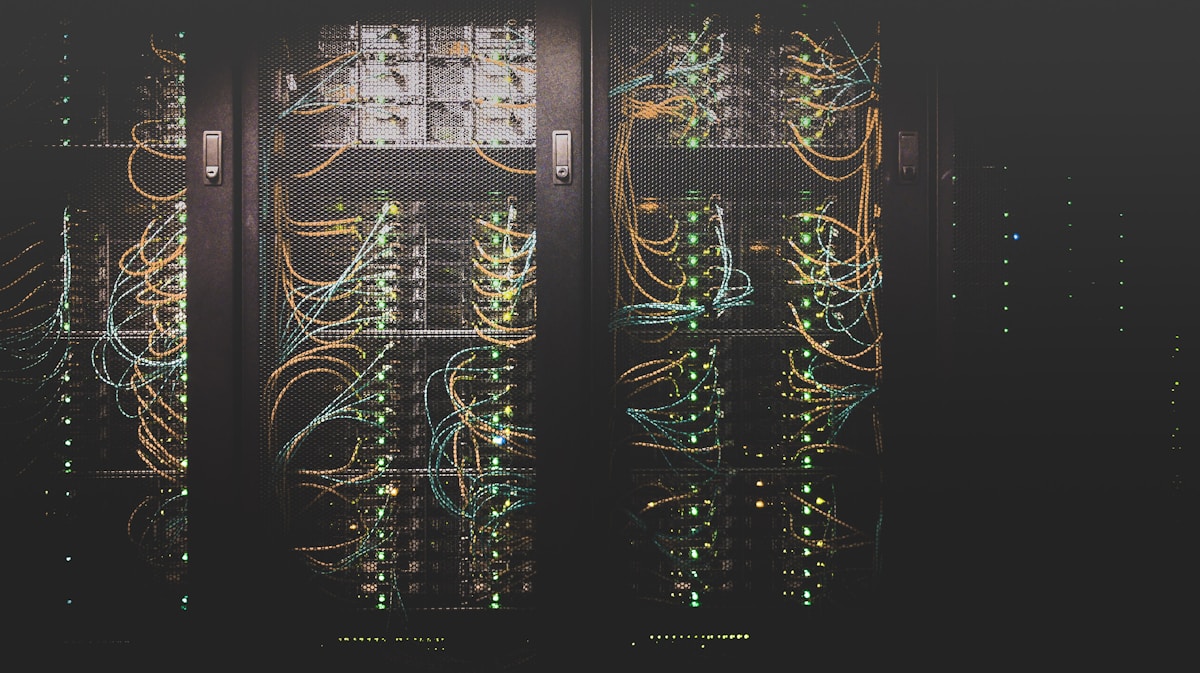
The problem was always physical implementation. You can't literally run random cables across a data center—it becomes an unmanageable nest of wiring. Installing new equipment would require rerouting dozens of connections. Maintenance would be a nightmare. The math was beautiful; the engineering was impossible.
AWS solved this with ShuffleBoxes—passive optical devices with shuffled internal wiring. Think of them as physical implementations of randomness that appear deterministic to the network layer. A server rack plugs into a local port; inside the ShuffleBox, optical fibers route connections in a predetermined but quasi-random pattern. The logical topology is random; the physical cabling remains structured.
Adding a new server rack means connecting to a nearby ShuffleBox port. No rewiring elsewhere in the data center. No reconfiguring the topology. The device itself embodies the mathematical randomness, making the network appear randomly connected while the physical infrastructure stays manageable.
The performance numbers are striking: 69% fewer routers, up to 33% better throughput, and a projected 40% reduction in network equipment electricity consumption. That last figure is particularly significant—data centers consume roughly 1-2% of global electricity, and networking equipment is a meaningful fraction of that. A 40% reduction in network power translates to measurable climate impact at AWS's scale.
Before deploying this globally, AWS ran 530 processor-years of simulation on EC2 instances, modeling everything from traffic patterns to failure modes. The first production deployment went live near Dublin in late 2024. Two years of operational data confirmed the simulations: the design works.
Crucially, no customer workload changes were required. From an application perspective, the network just became faster and more reliable. The architectural shift is entirely invisible to the software layer—which is exactly how infrastructure improvements should work.
This is why we fund pure mathematics. In the early 1990s, nobody was thinking about AWS or hyperscale data centers—the web barely existed. Mathematicians studied random graphs because they were mathematically interesting, because the proofs were elegant, because understanding network topology was intrinsically valuable.
Thirty years later, that abstract theorem is saving millions of dollars in equipment costs and gigawatt-hours of electricity. The path from proof to production took three decades and required solving non-trivial engineering problems. But the math was always there, waiting for technology to catch up.
What other theoretical results are sitting in journals right now, waiting for the engineering moment when they become practical? Quantum error correction codes from the 1990s are finally relevant now that we have quantum computers. Cryptographic protocols developed decades ago underpin modern blockchain systems. Algorithms considered too computationally expensive in the 1980s are trivial on today's hardware.
The arc from theory to application is long, unpredictable, and often invisible. You rarely know which mathematical curiosity will transform infrastructure twenty years later. That's the argument for foundational research—not because every theorem will have practical applications, but because the ones that do can reshape entire industries.
The universe doesn't care what we believe. Let's find out what's actually true. Sometimes "what's actually true" is a 1990s graph theory proof. And sometimes, three decades later, it becomes the backbone of the internet.