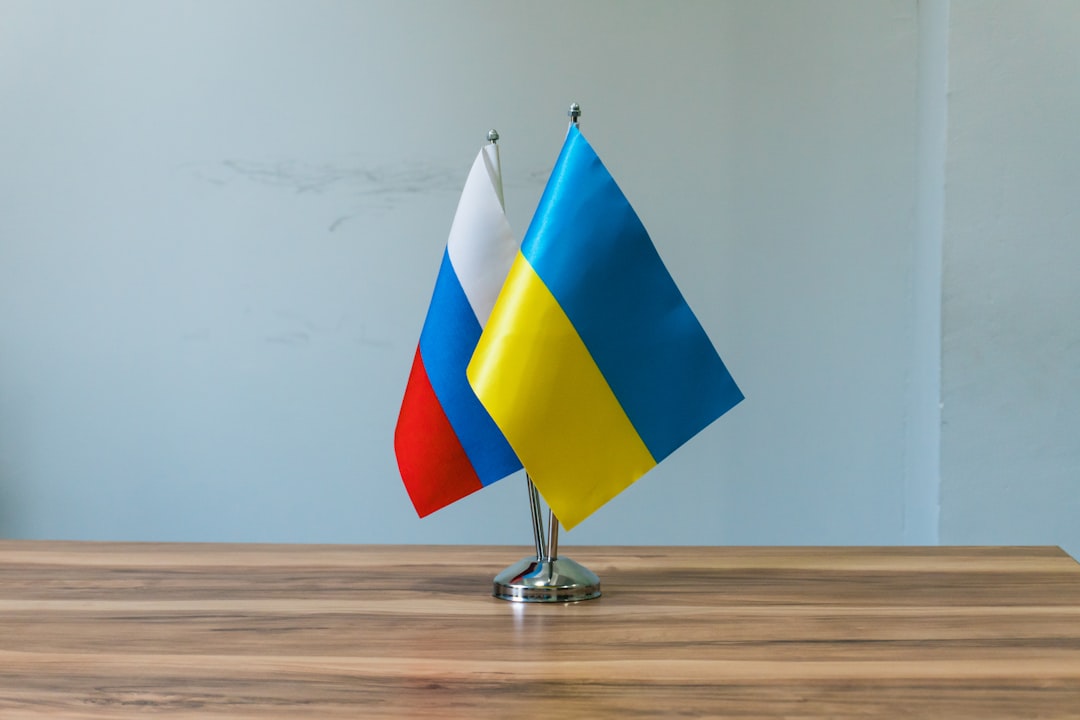
Volodymyr Zelensky has accused Donald Trump of exerting "undue pressure" on Ukraine to accept terms in any prospective peace settlement with Russia — marking the most open rupture between the wartime Ukrainian president and his principal American patron since the full-scale invasion began in February 2022.
"There is pressure from the United States," Zelensky said in remarks first reported by Reuters. "I consider this pressure undue." The statement, characteristically blunt, landed with the force of a diplomatic break on both sides of the Atlantic.
At the heart of the confrontation is a question that has defined the war from its outset: whether Ukraine can be compelled to formally recognise Russia's hold on the territories it has seized by force. Those territories — encompassing the Donbas region, including the oblasts of Donetsk and Luhansk, as well as Zaporizhzhia and Kherson in the south — amount to approximately one-fifth of Ukraine's pre-war landmass. Russian forces currently occupy roughly 80 percent of that claimed territory.
Zelensky has been unequivocal on this point for months, and he repeated it Tuesday with the precision of a leader acutely aware of his domestic constraints. The Ukrainian public, which has absorbed four years of war, mass displacement, and sustained aerial bombardment, will not sanction a territorial settlement that legitimises Russian conquests, he argued. Any leader who signed such a document would face a political reckoning at home.
"The Ukrainian public won't let me hand territory to Russia," he said separately, framing the constraint not merely as his own conviction but as a structural political reality that no amount of external pressure can override.
The Trump administration has moved aggressively in recent weeks to revive diplomatic engagement with Moscow, reopening channels that were frozen following Russia's full-scale invasion. Officials in Washington have floated frameworks that would freeze the conflict broadly along current lines of contact — an arrangement that Kyiv views as a euphemism for the permanent loss of sovereign territory.
For Zelensky, the distinction between a temporary ceasefire and a de facto territorial concession is not abstract. The Minsk process — the ceasefire agreements brokered between 2014 and 2015 following Russia's initial seizure of Crimea and parts of the Donbas — froze a conflict that Russia used as a staging ground for the 2022 invasion. Kyiv regards any arrangement that resembles Minsk — frozen lines, unresolved sovereignty, continued Russian military presence near the border — as a trap that defers rather than resolves the threat.
European governments have watched Tuesday's developments from the sidelines with undisguised anxiety. Since Trump's return to office, allies in Brussels, Berlin, Paris, and Warsaw have struggled to assert themselves in a negotiating process that Washington appears determined to conduct bilaterally — with Moscow, and without substantive European input. The Munich Security Conference earlier this month underscored the depth of that transatlantic estrangement.
The strategic stakes extend well beyond the map lines themselves. Any peace framework that rewards territorial conquest with international recognition would overturn the foundational postwar norm — codified in the United Nations Charter — that borders cannot be changed by force. Allies in Eastern Europe, particularly the Baltic states and Poland, have warned that a settlement imposed on Ukraine would embolden further Russian adventurism along NATO's eastern flank.
For now, Zelensky retains the formal authority to reject any terms he deems incompatible with Ukrainian sovereignty and law. The Ukrainian constitution, amended in 2019, explicitly commits the state to recovering all occupied territories including Crimea. A constitutional amendment would require a parliamentary supermajority — a political threshold that appears unreachable under current conditions.
To understand today's headlines, we must look at yesterday's decisions. The question of whether American pressure can alter that constitutional and political reality — or whether it will fracture the U.S.-Ukraine relationship that has been the linchpin of Kyiv's military survival — is now the central drama of the war's diplomatic phase.