What distinguishes the latest investigation into Iran's crackdown on protest from the extensive body of prior human rights reporting is not witness testimony. It is radiological evidence — clinical, reproducible, and of a character that is legally admissible in international proceedings in a way that eyewitness accounts, however credible, are not.
The Guardian has obtained and published X-ray images taken from protesters injured during Iran's waves of suppression, most significantly during the Mahsa Amini uprising of 2022 to 2023. The images document birdshot pellet injuries concentrated in two anatomical regions: the face and eyes, and the genitals. The pattern is not random. Ballistic trauma distributed in this manner is inconsistent with the indiscriminate application of crowd control munitions and consistent with deliberate targeting of specific body parts.
Birdshot — a shotgun load delivering multiple small pellets in a spread pattern — is nominally a less-lethal crowd control tool. At close range, however, its effects are catastrophic. Pellets fired at the head penetrate the orbital socket with sufficient force to destroy the eye entirely. Pellets fired at the genitals cause severe tissue damage and, in many documented cases, permanent injury. The X-ray imagery published by The Guardian makes the nature and location of these injuries clinically explicit.
The significance of the anatomical pattern cannot be overstated. Eyes and genitalia are not incidentally in the line of fire during conventional crowd control operations. Security forces deploying birdshot for general crowd dispersal — even in a manner that falls short of international standards — do not produce injury patterns concentrated at these anatomical sites unless that targeting is either instructed or systematically permitted. The images suggest, at minimum, that Iranian security forces were operating under rules of engagement that permitted the deliberate mutilation of demonstrators.
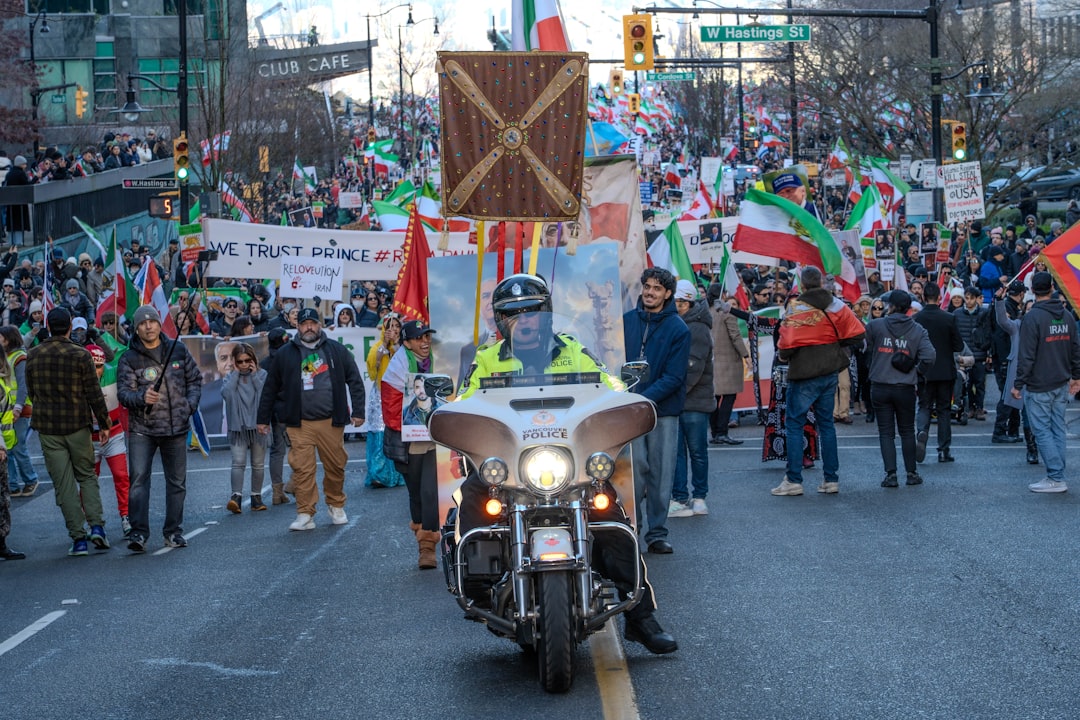
The Mahsa Amini uprising, which began in September 2022 following the death of the 22-year-old Kurdish-Iranian woman in morality police custody, was the most sustained domestic challenge to the Islamic Republic since the Green Movement of 2009. The Iranian government's response involved security forces, Basij militia members, and plainclothes agents deployed across dozens of cities. According to human rights organisations including Amnesty International and Iran Human Rights, at least 500 protesters were killed and thousands more injured.
The radiological documentation now published by The Guardian adds a new dimension to what was already extensively catalogued. This is evidence of a different character.
The accountability question follows directly. Can X-ray evidence of this kind support future proceedings before the International Criminal Court or United Nations mechanisms? In principle, yes — with important caveats. The ICC's jurisdiction over Iran is complicated by the fact that Tehran is not a signatory to the Rome Statute, meaning a referral would require action by the UN Security Council, where Russia and China hold vetoes. A UN-mandated fact-finding mission or special tribunal, modelled on mechanisms deployed for Syria and Myanmar, represents an alternative pathway that does not require Council unanimity.
The Iranian government has not responded publicly to The Guardian's investigation. Tehran's standard response to international human rights documentation has been to dismiss it as politically motivated interference in internal affairs.
For the protesters who carry these injuries — many of them young women and men who took to the streets over a dress code enforcement — the question of future accountability is not hypothetical. It is the difference between a government that mutilated them with impunity and one that eventually answers for it.