
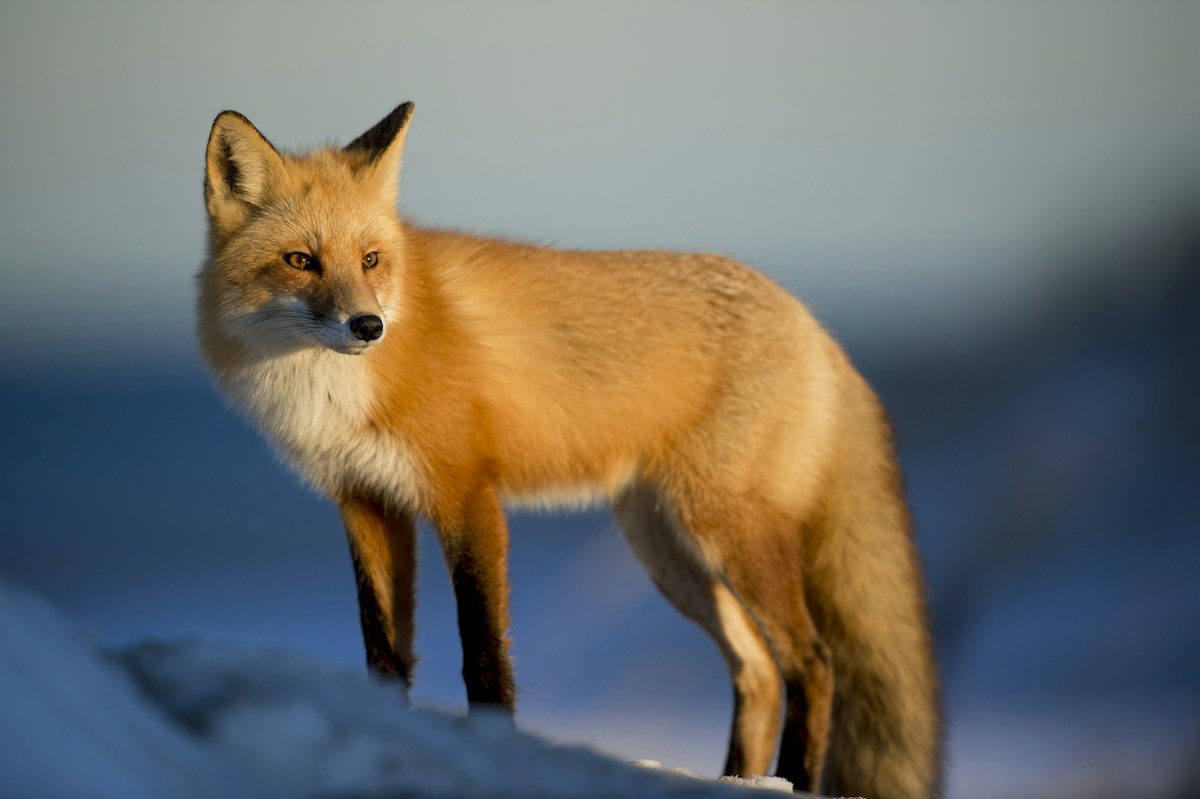
Animals across the planet are not merely passive subjects of human observation—they are watching us in return, and what they see is fundamentally altering their behavior.
A groundbreaking Yale-led study published in Science analyzed 11.8 million location points from 4,500 animals spanning 37 species, revealing that more than 65% modified their behavior based on human presence. The research flips the traditional conservation narrative: rather than humans simply encroaching on wildlife, an intricate dance of mutual observation and adaptation is unfolding across ecosystems.
The behavioral responses vary dramatically by species. Gray wolves expanded their ranges, possibly traveling farther to maintain distance from human activity. Ravens similarly covered more ground, though for different reasons—likely capitalizing on food sources linked to human settlements. White-tailed deer, coyotes, turkeys, vultures, and hawks all showed distinct patterns of adjustment.
Ruth Oliver of UC Santa Barbara and Scott Yanco of the Smithsonian Institution led the research, which built on six years of collaboration among more than 50 organizations. The study employed an innovative methodology, separating the effects of direct human presence from habitat loss by pairing mobile phone data with satellite measurements—a technique made possible by analyzing behavioral shifts between 2019 and 2020 during COVID-19 lockdowns.
"Animals are affected by both direct human presence and by human-caused changes to the physical environment," noted Walter Jetz, one of the study's contributors. This dual impact means wildlife must navigate not only the physical transformation of landscapes but also the immediate presence of humans moving through those spaces.
In nature, as across ecosystems, every species plays a role—and humanity's choices determine whether the web of life flourishes or frays. The findings suggest that conservation strategies cannot rely on one-size-fits-all approaches. Some species may require temporal rather than spatial buffers—managing when humans enter sensitive areas rather than prohibiting access entirely. Others might benefit from structured recreation schedules that reduce disturbance during critical periods like breeding or migration.
The research illuminates a profound reality: wildlife is not simply reacting to human-altered landscapes but actively responding to our presence in real time. Animals possess the cognitive capacity to detect, interpret, and adjust to human behavior patterns. This awareness offers both challenges and opportunities for conservation.
The scale of the study—tracking thousands of animals across dozens of species—provides unprecedented insights into human-wildlife coexistence. It moves beyond anecdotal observations to reveal systematic patterns of behavioral adaptation. Some animals avoid us, others exploit our presence, and all navigate a world increasingly shaped by human activity.
For conservation to succeed, we must acknowledge that wildlife is watching us as intently as we watch them. Our movements, our schedules, our presence in wild spaces—all send signals that reverberate through ecosystems. Understanding these responses allows for more nuanced management strategies that recognize animals as active participants rather than passive victims in a changing world.
The study demonstrates that effective conservation requires addressing not just habitat preservation but the timing and intensity of human activity. In some cases, limiting when people enter sensitive areas may prove more beneficial than restricting where they go entirely. The key lies in recognizing that wildlife behavior is dynamic, responsive, and far more sophisticated than previously understood.
As human populations expand and wild spaces contract, the capacity for wildlife to observe and respond to our behavior may determine which species adapt and which decline. The research suggests that conservation success depends on our willingness to modify our own behavior in recognition of the fact that we are being watched—and our choices matter.