
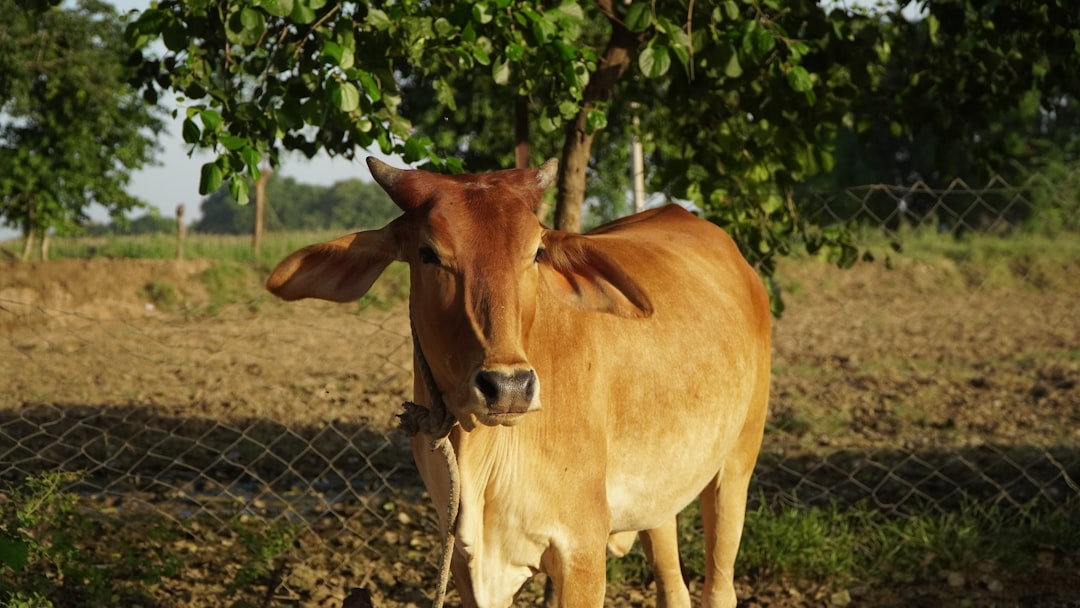
In a striking reversal of the religious and political narratives that have defined Indian cattle politics for years, Muslim farmers in West Bengal are protecting cows from slaughter while Hindu traders are demanding their right to sell cattle for meat, revealing how economic realities can upend ideological assumptions.
The unusual situation emerged ahead of Bakrid, the Muslim festival that traditionally involves animal sacrifice. According to The Quint, Muslim cattle farmers in the state are refusing to sell their cows for slaughter, while Hindu traders who have historically supplied cattle for meat are protesting against restrictions.
The reversal challenges the BJP's central political narrative that positions Hindus as cow protectors and Muslims as threats to sacred animals. For nearly a decade, the ruling party has championed strict anti-slaughter laws and vigilante cow protection groups, often targeting Muslim cattle traders and transporters. Several lynchings of Muslims accused of cattle smuggling or beef consumption have occurred across India since 2014.
But in West Bengal—where the BJP has struggled to unseat Chief Minister Mamata Banerjee's Trinamool Congress—the economic calculus has produced a different configuration. Muslim farmers who rear cattle for dairy and agricultural purposes are reluctant to sell animals that represent significant investment and ongoing income. Hindu traders, who have dominated the cattle trade for generations, see meat sales as a profitable business opportunity.
In India, as across the subcontinent, scale and diversity make simple narratives impossible—and fascinating. The country's cattle economy involves hundreds of millions of animals, complex supply chains spanning multiple states, and buyers and sellers from all religious communities. The BJP's ideological push for cow protection has disrupted these established economic relationships, creating winners and losers in ways that don't map neatly onto religious identity.
West Bengal has historically taken a more liberal approach to cattle slaughter than BJP-governed states. The state allows buffalo slaughter and has not enforced the strict transportation restrictions that prevail in northern India. But even here, the political climate has shifted. Muslim traders report increased scrutiny and harassment, while the BJP has demanded tougher enforcement.
The current impasse demonstrates how religious politics collides with livelihood realities. Muslim farmers who decline to sell cattle for slaughter aren't making an ideological statement about Hindu sentiments—they're making an economic calculation about asset retention. Hindu traders demanding slaughter rights aren't challenging their community's religious values—they're asserting their business interests in a legal market.
The BJP's response has been notably muted. The party cannot easily champion Hindu traders who want to facilitate cow slaughter, nor can it attack Muslim farmers who are protecting cows. The situation exposes the contradictions inherent in politicizing an economic sector as vast and diverse as India's cattle trade.
For Mamata Banerjee, the episode offers political vindication. She has consistently argued that the BJP's cow politics are imported from northern India and don't reflect Bengali culture, where Hindu and Muslim communities have coexisted with more fluid social boundaries. Her government has resisted pressure to impose stricter cattle slaughter bans, arguing that such measures hurt farmers and traders of all religions.
The broader implications extend beyond West Bengal. India's cattle economy has been severely disrupted since 2014, with interstate trade declining, prices fluctuating wildly, and violence against traders creating a climate of fear. The economic costs have been substantial, particularly for farmers who depend on cattle sales to supplement agricultural income.
Yet the BJP's cow protection agenda remains politically potent in many states. The party has successfully mobilized Hindu voters around the issue, positioning itself as defender of sacred traditions against perceived Muslim encroachment. That this narrative breaks down in West Bengal doesn't necessarily diminish its effectiveness elsewhere.
The West Bengal case study offers a reminder that India's religious politics, however intense, still operate within economic constraints. When protecting cows makes financial sense for Muslims and slaughtering them serves Hindu business interests, ideology gives way to pragmatism. The question is whether this economic reality can reshape political narratives, or whether the narratives have become self-sustaining regardless of facts on the ground.