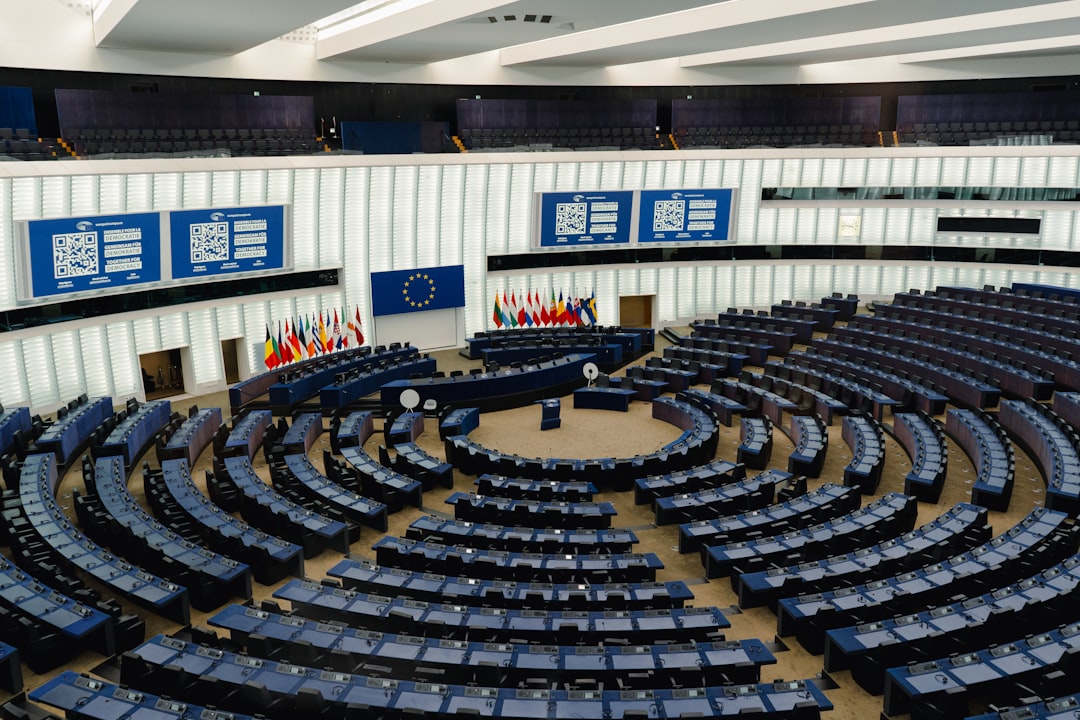
While official American delegations exchanged carefully worded reassurances with European counterparts at the Munich Security Conference last week, a parallel diplomatic track was running underneath — one documented by El País across multiple European capitals with multi-source corroboration.
According to the Spanish newspaper, the Trump administration has engaged in a deliberate effort to deepen ties with European populist and far-right parties — not as a diplomatic sideshow but as a calculated element of a broader strategy to erode the institutional foundations of the European Union.
The parties in question span the European populist spectrum. Italy's governing coalition under Giorgia Meloni has maintained warm relations with Washington since Trump's return to office. Contacts with Marine Le Pen's Rassemblement National in France and Herbert Kickl's Freiheitliche Partei Österreichs in Austria have been documented. Similar outreach has been reported in relation to parties in Germany, the Netherlands, and Hungary, where Viktor Orbán's government has long been Moscow's most sympathetic voice within the EU.
The operational logic, as described by the El País investigation, is coherent if alarming. Parties that favour national sovereignty over supranational governance, that are sceptical of EU regulatory frameworks, and that have complicated or openly sympathetic relationships with Russia represent natural allies for an administration that has made no secret of its view that the EU is a geopolitical competitor rather than a strategic partner.
At the Munich Security Conference, American officials publicly endorsed the principle of European security — while simultaneously, according to sources cited by El País, cultivating networks of political actors whose programme explicitly runs counter to the multilateral frameworks that underpin that very security architecture. The juxtaposition was not lost on European observers present at both the official and unofficial sessions.
The implications for EU solidarity on Ukraine are severe and must be stated plainly. The Union's ability to maintain a coherent collective response to Russia's invasion — including the sanctions architecture that has imposed real costs on the Russian economy — depends on unanimity among its 27 member states. Governments aligned with the administration's preferred political actors have, in several cases, already used their veto positions to complicate or delay EU-level decisions on Ukraine assistance and Russian sanctions renewal.
European centrist governments have begun to push back, though the tools available to them are limited. France and Germany have separately signalled preparedness to proceed on defence cooperation frameworks that exclude member states deemed unreliable. The idea of a coalition of the willing within the EU — or a core Europe that moves ahead without its more reluctant members — has resurfaced in Brussels policy discussions for the first time in years.
The broader historical context cannot be ignored. To understand today's headlines, we must look at yesterday's decisions. American support for European integration was a cornerstone of postwar foreign policy for seven decades — from the Marshall Plan through the post-Cold War enlargement that brought Central and Eastern European nations into both NATO and the EU. The current administration represents a categorical departure from that posture. Whether European institutions can withstand pressure from both outside and from within their own membership is the defining question of this political moment.