

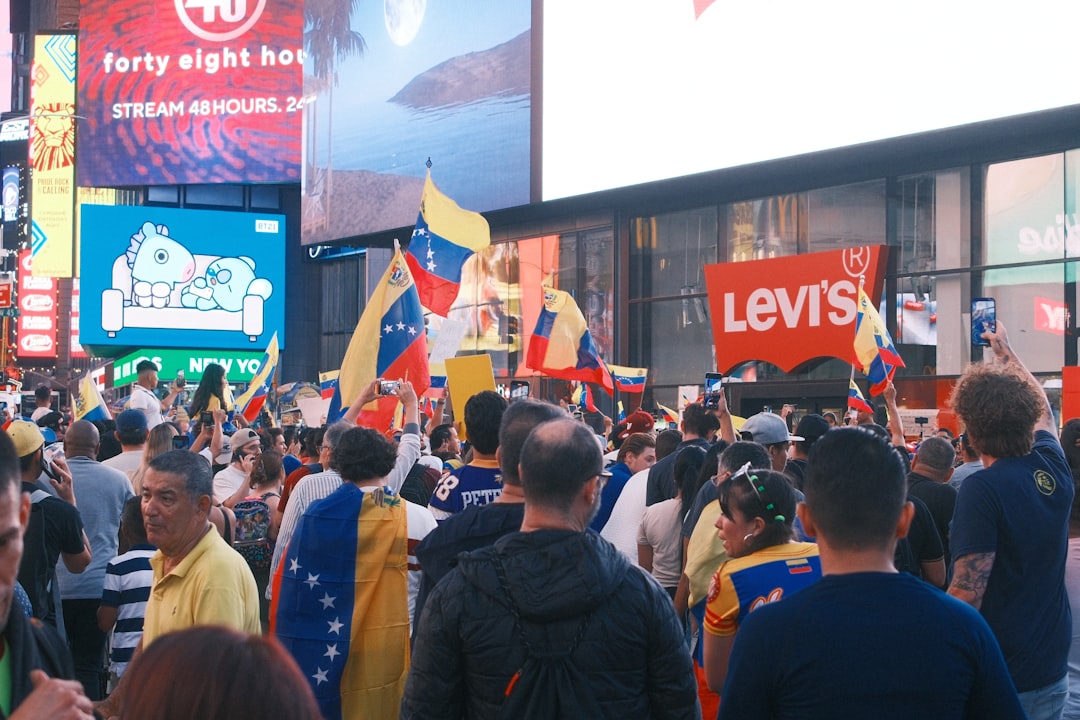
Venezuela's opposition interim president has announced a sweeping general amnesty and pledged to transform a notorious detention facility into a sports center, signaling what could be a pivotal democratic transition moment - if promises become reality.
The declaration, reported by G1 Globo, comes as the Venezuelan diaspora - scattered from Miami to Madrid - watches with deep skepticism born from years of broken promises and authoritarian entrenchment.
The interim president's announcement represents the most significant gesture toward reconciliation since the opposition declared a parallel government, but implementation remains the critical test. Venezuela has seen numerous political declarations evaporate in the face of regime resistance, and this amnesty will mean nothing if political prisoners remain behind bars.
The commitment to close a torture center strikes at the heart of Nicolás Maduro's repressive apparatus. Human rights organizations have documented systematic abuse in Venezuela's detention facilities, where political dissidents face beatings, sleep deprivation, and worse. Converting such a facility into a sports center would be symbolically powerful - transforming an instrument of fear into a space for community.
But the Venezuelan diaspora - 7 million people who fled economic collapse and political persecution - have heard promises before. They're asking not what the interim president says, but when prisoners will walk free and how the opposition will enforce its authority against a regime that controls the military and security forces.
This is the paradox of Venezuela's parallel governments: one side has international recognition, the other has tanks. An amnesty only matters if you control the prisons. A promise to close a torture center only matters if soldiers follow your orders, not Maduro's.
The announcement also carries risks for the opposition. A general amnesty could theoretically extend to regime officials responsible for human rights violations - a politically toxic prospect for victims' families seeking justice. The details matter enormously: who qualifies for amnesty, what crimes are excluded, and whether this becomes reconciliation or impunity.
For the millions of Venezuelans watching from abroad, this is personal. Every political prisoner has a family member in New York or Santiago or Bogotá, waiting for phone calls that sometimes never come. Every closed torture center represents a cousin or neighbor who might have suffered there.
Latin America has seen democratic transitions before - Chile after Pinochet, Argentina after the juntas. Those transitions required not just promises, but power. The interim president has made the promise. Now comes the harder part: making it real.
Twenty countries, 650 million people, and yes, we're more than your neighbor's problems. Somos nuestra propia historia - and Venezuela is writing a chapter the whole hemisphere is watching.



