
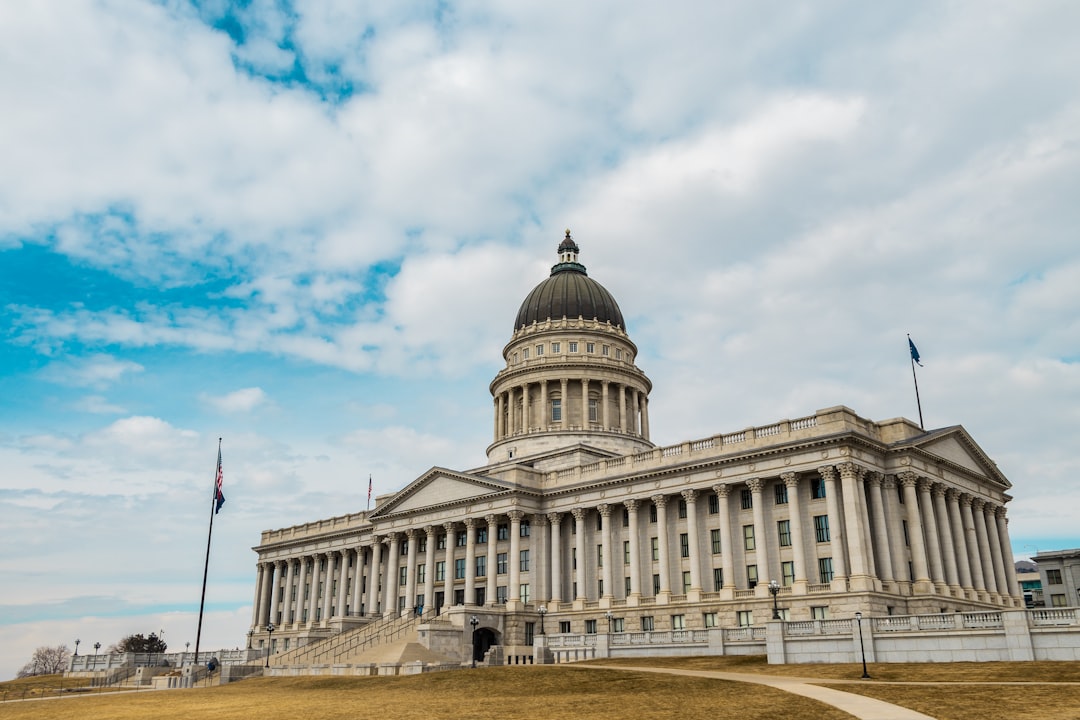
Utah Governor Spencer Cox has signed legislation expanding the state's Supreme Court from five to seven justices, a move that comes as the court prepares to rule on a politically charged redistricting case that could reshape the state's congressional map.
The bill, reported by the Associated Press, passed the Republican-controlled legislature along party lines and takes effect immediately. Critics accuse the governor and legislative leaders of attempting to influence the pending redistricting decision by adding justices likely to side with Republican interests.
The controversy mirrors a broader national debate about court expansion—one that has touched the U.S. Supreme Court, state courts from North Carolina to Arizona, and even local judicial bodies.
The Redistricting Battle
At the heart of the controversy is Utah's congressional map, drawn by the Republican-controlled legislature in 2022. Voters had previously approved a redistricting commission through a ballot initiative, but lawmakers largely ignored the commission's recommendations.
The legislature's map divided Salt Lake County—the state's most Democratic area—among all four congressional districts, effectively diluting urban Democratic votes across predominantly rural Republican districts. This practice, known as "cracking" in redistricting terminology, is legal under federal law but may violate state constitutional provisions.
The Utah Supreme Court heard oral arguments on the case in December 2025. A decision could come within weeks.
Timing Raises Eyebrows
The decision to expand the court now, with a major redistricting case pending, has drawn criticism from both legal experts and Democratic lawmakers.
"This is court-packing, plain and simple," said State Senator Kathleen Riebe, a Democrat from Cottonwood Heights, during floor debate on the bill. "We're changing the rules in the middle of the game because Republicans don't like how the referee might call it."
Republicans counter that the court has needed expansion for years due to a growing caseload, and that the timing is coincidental. Governor Cox said in a statement that the additional justices would "improve the administration of justice" and reduce delays in the state's highest court.
Legal scholars note that governors typically nominate justices who share their judicial philosophy, meaning Cox's two new appointments will likely lean conservative on questions of state constitutional interpretation.
Part of a National Pattern
Court expansion has become a recurring tool in state-level political fights. In recent years, Arizona Republicans added justices to the state Supreme Court, Georgia expanded its appellate courts, and North Carolina's legislature repeatedly altered court structures when political control shifted.
At the federal level, some progressive Democrats have advocated expanding the U.S. Supreme Court to counter the conservative supermajority, though President Joe Biden's commission on court reform ultimately recommended against it. Republicans universally opposed the idea when Democrats controlled Congress.
The Utah expansion may face legal challenges of its own, though any such challenge would go before the very court being expanded—creating a procedural knot that underscores the messy intersection of law and politics.
The redistricting case remains pending. If the original five-justice court rules before the new justices are confirmed, the expansion would be moot for that particular decision. If not, Cox's appointees could participate in the ruling.
As Americans like to say, 'all politics is local'—even in the nation's capital. What happens in Salt Lake City's courtrooms could influence how other states approach the delicate balance between judicial independence and political accountability.