

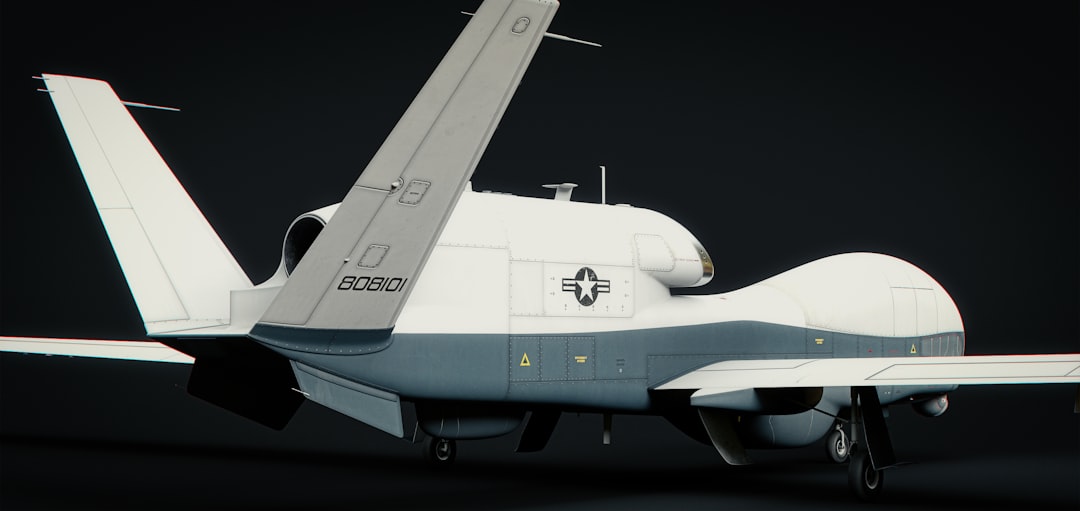
The United States military is adopting counter-drone technologies developed by Ukrainian forces, according to defense sources, marking a remarkable reversal in which battlefield innovations from a country receiving American aid are being integrated into U.S. systems following vulnerabilities exposed by Iranian drone attacks.
The technology transfer reflects lessons learned during Iran's extensive drone campaigns, which revealed gaps in American air defense systems optimized for traditional aircraft and ballistic missiles rather than slow-moving, low-altitude unmanned platforms. Ukraine has developed sophisticated counter-drone capabilities through nearly four years of intensive combat against Russian forces that have employed drones extensively.
According to sources familiar with the programs, the Ukrainian systems emphasize electronic warfare approaches that jam or spoof drone navigation and control signals, rather than relying exclusively on kinetic intercepts. This proves particularly valuable against swarm attacks involving dozens or hundreds of drones, where traditional air defense missiles become cost-prohibitive—each interceptor may cost hundreds of thousands of dollars to defeat drones worth mere thousands.
To understand today's headlines, we must look at yesterday's decisions. When Russia invaded Ukraine in 2022, Western militaries viewed themselves as technological mentors, providing advanced systems to Ukrainian forces assumed to lack equivalent capabilities. Yet prolonged high-intensity warfare has made Ukraine a testing ground for technologies and tactics that even advanced militaries have not employed at scale.
The Ukrainian battlefield has driven rapid innovation cycles impossible in peacetime military development. Systems are designed, tested in combat, refined based on operational feedback, and deployed again within weeks—a process that typically requires years in Western procurement systems. This has created capabilities in specific domains, particularly counter-drone operations and electronic warfare, where Ukrainian forces now possess practical experience exceeding that of American units.
Iran's attacks exposed specific vulnerabilities in American air defense architecture. The systems are optimized for high-value threats—advanced aircraft, cruise missiles, ballistic missiles—that justify expensive interceptors. Relatively simple drones flying low and slow can penetrate these defenses because the cost exchange becomes unsustainable: defending against a $20,000 drone with a $2 million interceptor missile creates arithmetic that favors attackers.
Ukrainian electronic warfare solutions address this imbalance by disrupting drone communications and navigation at marginal cost per engagement. Rather than destroying each drone kinetically, systems jam control frequencies, inject false GPS signals, or hijack command links. The approach works best against commercial-grade drones with limited anti-jamming capabilities, though more sophisticated platforms require layered defenses combining electronic and kinetic effects.
The technology adoption carries symbolic significance beyond immediate military applications. It demonstrates that innovation flows in multiple directions, not merely from advanced militaries to less-developed forces. Countries engaged in existential conflicts develop solutions that peacetime militaries, insulated from immediate threats, have less incentive to pursue. This challenges assumptions about technological hierarchies and suggests that operational experience may matter more than research budgets for certain capability domains.
For Ukraine, American adoption of its technologies provides validation and potentially revenue streams if systems are licensed commercially. Ukrainian defense firms have sought international markets for products proven in combat, though regulatory barriers and security concerns have limited sales. American integration could accelerate wider adoption by NATO allies seeking interoperable solutions.
The broader question centers on whether Western militaries will adapt procurement processes to capture innovations emerging from active conflicts more rapidly. Traditional development timelines measured in decades make sense for complex platforms like fighter aircraft, but fail for rapidly evolving domains like counter-drone warfare where threats and countermeasures evolve continuously. Ukraine's compressed innovation cycles offer a model, though replicating them in peacetime bureaucracies presents cultural and regulatory challenges.
The episode also highlights how conflicts reshape capability balances in unexpected ways. Iran's drone attacks drove American interest in Ukrainian solutions, creating technology transfer pathways that would not have existed absent both conflicts. In this sense, the interconnected nature of modern security challenges—Ukraine, Middle East, potential Indo-Pacific contingencies—creates opportunities for cross-pollination of tactical innovations that could prove decisive in future confrontations.

