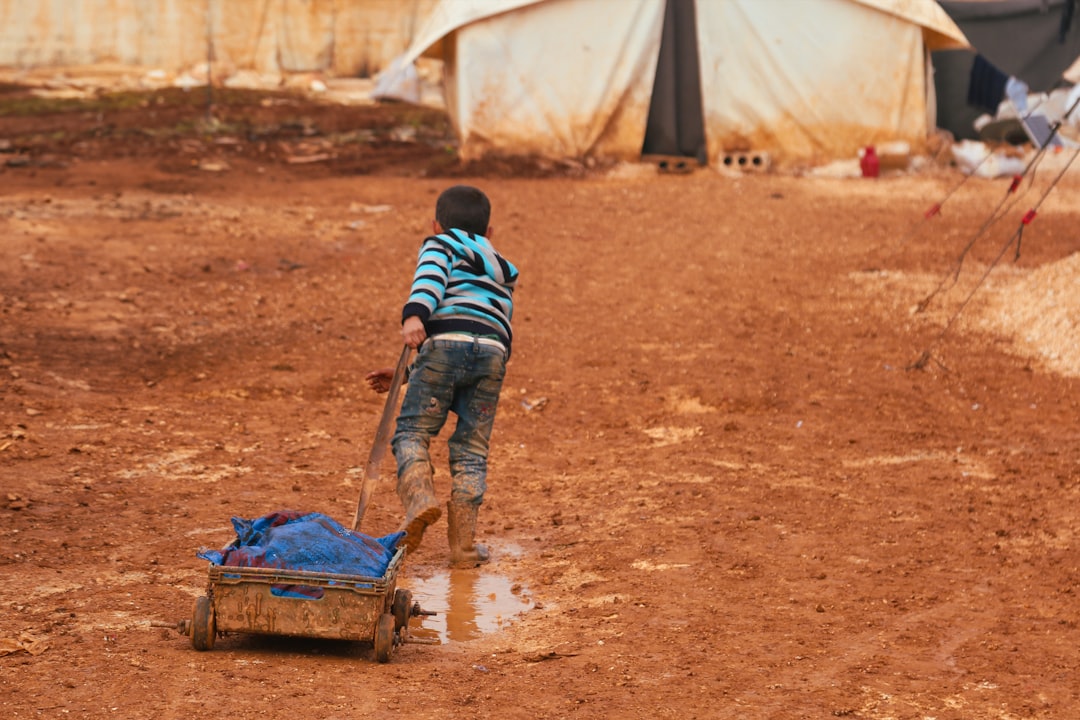
The United Nations refugee agency has reported that up to 3.2 million people have been displaced within Iran since the conflict began, according to a statement released Thursday—a humanitarian catastrophe unfolding largely beyond the view of international observers and dwarfing initial assessments of the crisis's civilian toll.The figure, provided by the UN High Commissioner for Refugees (UNHCR), represents nearly 4 percent of Iran's population of 89 million and marks one of the largest internal displacement crises since the Syrian civil war forced millions from their homes beginning in 2011."We are witnessing a humanitarian emergency of staggering proportions," a UNHCR spokesperson stated, according to Reuters. "Millions of Iranians have fled their homes due to airstrikes, fears of further military action, and the breakdown of essential services in conflict zones."The displacement has been concentrated in areas near military and oil infrastructure targeted by U.S. strikes, particularly along the Persian Gulf coast and near the Kharg Island oil terminal. Residents of Bandar Abbas, Bushehr, and other coastal cities have fled inland, overwhelming the capacity of host communities and straining Iran's already sanctions-battered economy.To understand today's headlines, we must look at yesterday's decisions. The displacement crisis recalls the Syrian civil war's devastating impact on civilians, when more than 6 million people were displaced internally and another 5 million fled abroad. That catastrophe took years to fully materialize; Iran's displacement has occurred in a matter of days.Unlike Syria, however, Iran faces international sanctions that severely limit humanitarian assistance. Western relief organizations have minimal presence in the country, and financial restrictions make it difficult to transfer funds for aid operations. The Iranian government has historically resisted international humanitarian intervention, viewing it as a pretext for intelligence gathering."The combination of rapid displacement, limited international access, and 's own reluctance to accept foreign aid creates a perfect storm for humanitarian disaster," said , a Middle East humanitarian expert who has worked in conflict zones across the region. Reports from inside , difficult to verify due to information controls, suggest that makeshift displacement camps have emerged on the outskirts of inland cities, with families sheltering in schools, mosques, and public buildings. Access to food, clean water, and medical care has reportedly deteriorated sharply in areas hosting displaced populations.The UNHCR statement notably did not include information about casualties or detailed conditions for displaced persons, likely reflecting the agency's limited access to affected areas. Iranian authorities have not released official casualty figures, though scattered reports suggest civilian deaths from airstrikes and secondary effects such as fires and infrastructure collapse.The displacement crisis adds another dimension to the conflict's economic impact on . Millions of people unable to work, combined with the disruption of oil exports and ongoing sanctions, threaten to push 's economy into depression. The Iranian rial has lost significant value since the crisis began, exacerbating inflation that was already running above 40 percent annually.For neighboring countries, the specter of a refugee exodus looms. , , and have all experienced previous waves of Iranian refugees during periods of instability. While no significant cross-border movement has yet been reported, humanitarian organizations are preparing for that possibility should the conflict intensify or persist.European governments, already strained by refugee arrivals from , , and , have expressed private concern about another potential migration crisis. The political sensitivity of Iranian refugees—given the conflict's origins in military action—could complicate asylum processes and strain transatlantic relations.The humanitarian crisis has received relatively limited attention amid the focus on military operations, energy supplies, and geopolitical maneuvering. Human rights organizations have called for greater international focus on civilian protection and humanitarian access, but those pleas have been overshadowed by the immediate economic and security concerns. said. The UNHCR has called for $450 million in emergency funding to support displacement response, though it remains unclear how much of that assistance could reach affected populations given current access constraints. The appeal has met with a tepid response from Western governments focused on the military and economic dimensions of the crisis.
|