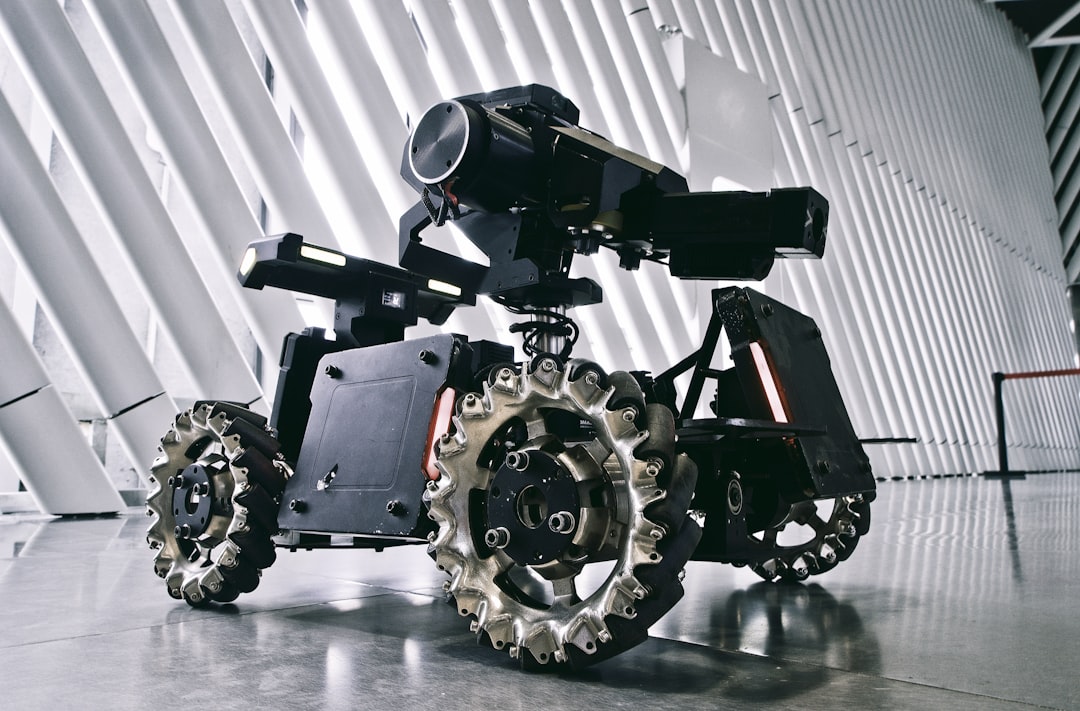
A Ukrainian autonomous ground robot held a defensive position against Russian assault for six weeks, marking a significant milestone in combat robotics. This isn't a prototype demonstration or a controlled test. This is an autonomous system conducting sustained defensive operations in active combat conditions.According to Defense One, the system maintained its position, engaged targets, and survived repeated assaults without requiring human operators on site. The specific technical capabilities remain classified, but the operational duration tells us what we need to know: this technology works.Six weeks is the key metric here. Anyone can build a drone that flies for an hour or a ground robot that operates for a day. Building a system that survives six weeks in combat conditions means solving power, maintenance, target discrimination, threat response, and environmental resilience. Those aren't easy problems.This represents a genuine technical achievement. Autonomous defensive systems have been theoretically possible for years, but theory and battlefield deployment are very different challenges. The gap between "works in the lab" and "works under artillery fire for a month and a half" is enormous.The implications are significant. If defensive positions can be held by autonomous systems, the calculus of assault changes dramatically. Attackers can't rely on defenders getting tired, running out of ammunition, or making mistakes under stress. An autonomous defensive system doesn't get fatigued. It doesn't panic. It executes its programming consistently.We're now at the point where autonomous weapons have moved from concept to battlefield reality. The technology exists, it's deployed, and it's effective. That opens a set of questions that defense departments and international bodies have been trying to avoid: what are the rules of engagement for autonomous systems? Who's accountable when they make targeting errors? How do we prevent escalation when machines are making split-second decisions?Some will argue this is a dangerous development. They're not wrong. Autonomous weapons represent a fundamental shift in how warfare is conducted. But the technology exists now. The question isn't whether it should be developed — it's already deployed.What's interesting from a technical perspective is that this wasn't announced as a breakthrough. There was no press conference, no promotional video, no company taking credit. It emerged quietly in defense reporting. That suggests the technology is mature enough that it's being treated as operational capability, not experimental.Ukraine has been functioning as a live testing ground for military technology. Drones, electronic warfare, autonomous systems — technologies that would take a decade to move from prototype to deployment in peacetime are being fielded in months. The war has accelerated development cycles in ways that would be impossible otherwise.That acceleration has consequences. We're deploying autonomous weapons systems without fully working through the ethical, legal, and strategic frameworks that should govern them. International humanitarian law requires combatants to distinguish between military and civilian targets. Can an autonomous system do that reliably? What happens when it can't?The technology is impressive. The fact that it works is now established. What comes next is the harder question. And based on the pace of development we're seeing in , we don't have much time to figure it out.
|