
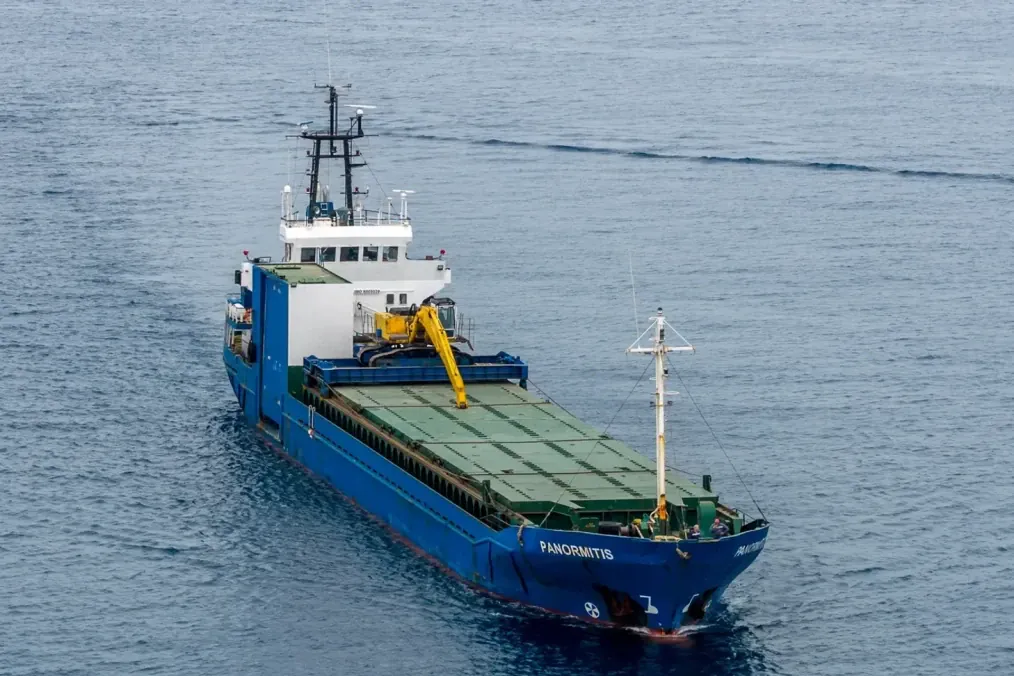
Ukraine has warned Israel of severe diplomatic consequences if the bulk carrier PANORMITIS is allowed to dock and unload suspected stolen grain at Haifa port—the second such incident exposing Tel Aviv's delicate balancing act between Moscow and Kyiv.
The vessel is suspected of carrying over 6,000 tons of wheat and 19,000 tons of barley allegedly sourced from Russian-occupied Ukrainian territories, according to United24 Media. Ukrainian investigators claim the grain was transferred from another vessel operating from the occupied port of Berdiansk, with documentation processed through Russian ports to obscure its origins.
"If the vessel is permitted to unload, Ukraine reserves the right to use the full range of diplomatic and international legal response measures," a senior Ukrainian diplomatic source told Axios. The source warned the move would "lead to a crisis in relations between Ukraine and Israel."
The warning comes after a previous Russian vessel, the ABINSK, successfully delivered approximately 43,000 tons of grain to Haifa despite Ukrainian objections and protests from Foreign Minister Andrii Sybiha. That incident—and now this second warning—highlights Israel's increasingly uncomfortable position as it attempts to maintain workable relations with both Moscow and the West.
In Israel, as across contested regions, security concerns and aspirations for normalcy exist in constant tension. For Israel, that tension manifests in its need for Russian cooperation in Syria, where Moscow maintains significant influence and military presence. Israeli military operations against Iranian weapons transfers through Syrian territory require at minimum tacit Russian acquiescence—a strategic calculation that complicates Jerusalem's ability to fully align with Western sanctions on Russia.
Israel has provided humanitarian aid to Ukraine and established a field hospital early in the conflict, but has refrained from supplying weapons systems despite repeated Ukrainian requests. Prime Minister Benjamin Netanyahu has maintained regular contact with Russian President Vladimir Putin, citing Israel's security imperatives in the region.
The grain dispute places Israel in a particularly awkward position. While Jerusalem has condemned Russia's invasion of Ukraine in international forums, accepting cargo that Kyiv considers stolen from occupied territories would represent a more tangible form of economic engagement that undermines Ukrainian sovereignty claims.
Ukrainian authorities have been tracking suspected grain theft systematically, using shipping data and satellite imagery to identify vessels transporting agricultural products from occupied ports. The practice represents a significant revenue stream for Russian occupation authorities in southern Ukraine, funding military operations while depriving Ukrainian farmers and the state of income from their own land.
For Israel, the incident underscores the costs of its regional security strategy. The country's dependence on Russian goodwill in Syria—where Israeli aircraft regularly strike Iranian-linked targets—constrains its diplomatic maneuverability in ways that differ markedly from other Western-aligned democracies. Unlike European nations that have sacrificed energy security to impose sanctions on Moscow, Israel faces trade-offs that directly implicate its military operations and counter-Iran strategy.
The Israeli government has not yet publicly responded to Ukraine's latest warning. Shipping records show the PANORMITIS has not yet reached Haifa, leaving Israeli authorities time to decide whether to deny port access—potentially angering Moscow—or proceed with the unloading and accept the diplomatic fallout from Kyiv and potentially Western capitals.