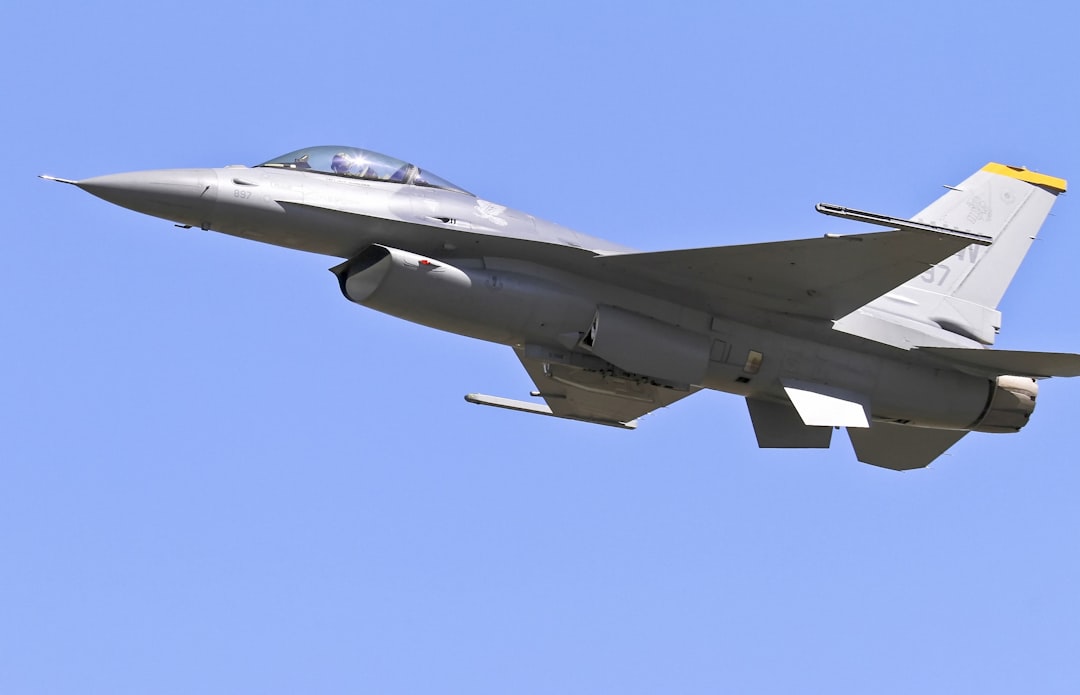
Ukraine's newly deployed F-16 fighter jets intercepted every Russian cruise missile fired overnight in what military officials are calling a watershed moment in the war, demonstrating that Western aircraft are fundamentally reshaping the battlefield's aerial dynamics after nearly three years of grinding attrition.Ukrainian air defense forces achieved a 100 percent intercept rate against Russian cruise missile attacks during the night of March 13-14, with F-16s "doing most of the work," according to the Ukrainian Air Force Command. The achievement marks the first time since the invasion began that Ukraine has successfully neutralized an entire Russian cruise missile barrage."This represents a qualitative shift in our air defense capabilities," a Ukrainian Air Force spokesperson stated, according to Euromaidan Press. "The F-16s provided capabilities we simply did not possess with Soviet-era systems—beyond-visual-range engagement, advanced radar, and superior maneuverability."Russia launched a multi-axis cruise missile attack targeting critical infrastructure across Ukraine, including energy facilities and command centers. The assault appeared designed to test Ukraine's newly enhanced air defenses and probe for vulnerabilities. Instead, it demonstrated the transformative impact of Western fourth-generation fighters.To understand today's headlines, we must look at yesterday's decisions. Ukraine has been pleading for F-16s since the invasion's early months, arguing that Soviet-era MiG-29 and Su-27 fighters were outmatched by Russia's more numerous and technologically advanced air force. Western nations resisted for more than a year, citing training timelines, maintenance complexities, and escalation concerns.The first F-16s arrived in Ukraine in late 2025 following intensive pilot training programs conducted in Denmark, Romania, and the United States. The initial deployment comprised approximately two dozen aircraft—a fraction of 's request but sufficient to begin operations. Additional fighters are scheduled for delivery throughout 2026.Thursday night's success validates the strategic logic of the F-16 transfer while raising questions about why it took so long to implement. The aircraft's advanced radar systems allowed Ukrainian pilots to detect and track Russian cruise missiles at greater distances than Soviet-era equipment, while AIM-120 air-to-air missiles provided reliable beyond-visual-range intercept capabilities. said , a senior fellow at the Carnegie Endowment for International Peace who specializes in Russian military affairs. The achievement carries significant psychological and strategic weight. Russian cruise missile attacks have terrorized Ukrainian civilians for nearly three years, destroying energy infrastructure, hospitals, and residential buildings while forcing millions into shelters during air raid alerts. Demonstrating reliable intercept capabilities could fundamentally alter that dynamic.For , the development is deeply concerning. Cruise missiles represent a relatively affordable means of striking targets deep inside without risking pilots or expensive manned aircraft. If can consistently intercept such attacks, will need to either expend far more missiles to achieve objectives or shift to more expensive and risk-prone tactics.'s Ministry of Defense has not commented on the failed missile strike, though military bloggers close to the Russian armed forces acknowledged the intercept rate represented in the operation. Some Russian analysts have called for deploying more advanced weapons systems to counter 's improved defenses.The F-16's air defense success also has implications for 's long-running debate over offensive operations. While the aircraft proved highly effective in a defensive role, Ukrainian officials have emphasized their desire to use F-16s for ground attack missions against Russian positions and logistics networks.Western nations have imposed restrictions on using provided weapons to strike targets inside , though those limitations have gradually eased. The F-16s operate under similar constraints, complicating 's ability to use them for offensive counter-air operations against Russian airbases. said a senior Ukrainian military official, speaking anonymously to discuss operational matters. The successful intercept operation comes at a critical juncture in the war. With front lines largely static and both sides preparing for potential spring offensives, air superiority could prove decisive in determining which side can mass forces and logistics effectively. maintains numerical superiority in combat aircraft, but the F-16 deployment suggests may be able to contest airspace more effectively than previously possible. If additional Western fighters arrive as scheduled, the aerial balance could shift further.For Western policymakers who delayed F-16 transfers, Thursday night's success will likely prompt reflection on whether earlier provision might have saved lives and infrastructure. But it also demonstrates that even incremental Western support continues to meaningfully impact 's defensive capabilities nearly three years into the war.
|