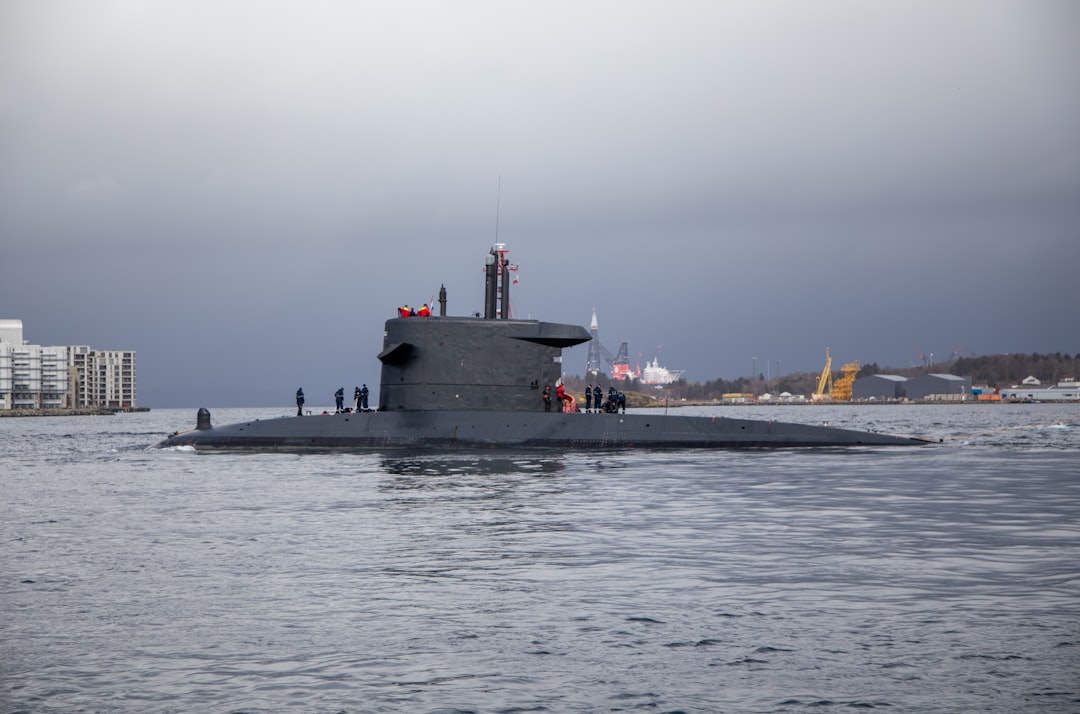
British naval forces tracked multiple Russian submarines conducting surveillance of critical undersea cables in the North Atlantic last month, Defence Secretary John Healey revealed Wednesday, exposing a hidden dimension of the ongoing confrontation between Moscow and Western nations.
The disclosure, made during a parliamentary statement, confirms long-standing suspicions that Russia has been systematically mapping undersea infrastructure that carries the vast majority of global internet traffic and financial communications, according to The Guardian.
"Throughout March, the Royal Navy deployed assets to monitor and deter Russian submarine activity in waters near critical infrastructure," Healey told the House of Commons. "We observed systematic surveillance of undersea cable routes. Russia should be in no doubt that we are watching, and any sabotage will bring serious consequences."
The revelation comes amid heightened concern about the vulnerability of undersea cables, which carry approximately 99% of intercontinental data traffic. The cables are essential to global commerce, communication, and military operations, yet remain largely undefended due to their vast geographic spread.
To understand today's headlines, we must look at yesterday's decisions. Undersea cable security emerged as a strategic priority following suspicious incidents in the Baltic Sea and North Atlantic over the past two years. In 2024, cables connecting Finland, Sweden, and Estonia suffered simultaneous breaks that investigators attributed to deliberate sabotage rather than natural causes.
British intelligence agencies have tracked Russian naval activity around cable routes for years, but Healey's public confirmation represents the first official acknowledgment that Moscow is actively surveying these systems. The surveillance suggests preparation for potential sabotage operations during a future conflict.
"This is classic Russian doctrine," said Admiral Chris Parry, a former Royal Navy commander who now serves as a security analyst. "Map the infrastructure during peacetime so you know exactly where to strike if war comes. Undersea cables are an obvious target because they're critical and difficult to defend."
The Royal Navy deployed Type 23 frigates and Astute-class attack submarines to shadow the Russian vessels, which included Yasen-class nuclear-powered submarines equipped with advanced sensors capable of precise cable location and analysis. British forces maintained surveillance for several weeks as the Russian submarines moved methodically along cable routes.
"We didn't just watch," Healey said. "Our presence was deliberate and visible. We wanted Moscow to know that these activities are not unobserved and will not be tolerated."
The cables at risk carry enormous volumes of data and financial transactions. A single transatlantic cable can handle terabits of information per second, supporting everything from stock market trades to video calls. Experts estimate that damaging multiple major cables could cause hundreds of billions of dollars in economic losses and severely disrupt communications between North America and Europe.
The strategic implications extend beyond economics. Military communications, intelligence sharing, and command-and-control systems all depend on undersea cable networks. NATO's ability to coordinate forces across the Atlantic could be compromised if key cables were severed.
"This is about more than internet access," said Dr. Emily Goldman, director of the Atlantic Council's Cyber Statecraft Initiative. "These cables are critical national security infrastructure. Their loss would fundamentally alter the military balance."
Russia has developed specialized capabilities for undersea operations, including miniature submarines and unmanned underwater vehicles that can operate at the depths where cables are laid. The country's Main Directorate of Deep Sea Research, a secretive military unit, operates vessels specifically designed for cable manipulation and sabotage.
Western nations have responded by enhancing monitoring of cable routes and developing rapid repair capabilities. Britain, France, and the United States have invested in specialized ships that can quickly locate and repair damaged cables, though the process still takes days or weeks depending on location and depth.
The European Union is also considering regulations requiring cable redundancy and alternative routing to ensure no single failure point can isolate entire regions. However, the cost of such measures runs into billions of euros, and implementation would take years.
From a correspondent's perspective, having covered naval confrontations in the Baltic and Arctic, the current cable surveillance represents an evolution of Russian military strategy. Rather than direct confrontation with Western forces, Moscow is mapping vulnerabilities that could be exploited asymmetrically during a conflict.
The revelation of British tracking activities also serves a deterrent function. By publicly acknowledging that Russian submarine movements are monitored, London signals that any sabotage attempt would be immediately attributed to Moscow and met with consequences.
"We will not allow Russia to threaten critical infrastructure with impunity," Healey said. "The rules-based international order depends on the sanctity of global commons, including the seabed."
As the confrontation between Russia and Western nations continues across multiple domains – military, economic, cyber, and now undersea – the vulnerability of critical infrastructure becomes increasingly apparent. The cables that connect continents and enable modern civilization remain largely undefended, watched over by naval forces that can deter but not entirely prevent determined sabotage.