
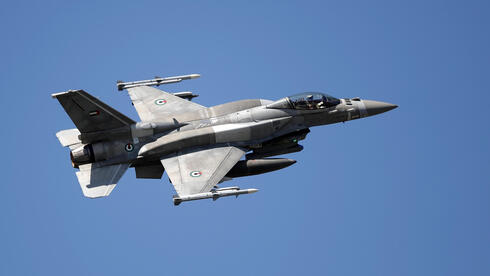
The United Arab Emirates conducted previously undisclosed military strikes inside Iran, marking the first time an Arab nation has joined Israel in offensive operations against the Islamic Republic, according to a Wall Street Journal report.
The most significant strike targeted a refinery at Lavan Island in early April, igniting a major fire and substantially reducing the facility's production capacity. The operation occurred around the time President Donald Trump announced a ceasefire framework, though Washington reportedly had not expressed concern about the UAE's participation.
Tehran publicly acknowledged being hit in "an enemy attack" at the time, subsequently launching a barrage of missiles and drones toward the United Arab Emirates and Kuwait in response. Since the war's start, the UAE has documented over 550 ballistic missiles, dozens of cruise missiles, and more than 2,260 drones launched from Iran toward the emirate.
A source told the Journal that Washington "quietly welcomed the UAE's participation, as well as the involvement of any other Gulf state willing to join the fighting," noting the ceasefire had not formally begun when the strikes occurred.
Abu Dhabi refused direct comment on the reported strikes. Instead, the Foreign Ministry referenced earlier statements asserting its right to respond militarily to hostile actions—language carefully calibrated to neither confirm nor deny operations while preserving strategic ambiguity.
The development represents a profound shift in regional security architecture. For the first time, an Arab nation has openly aligned with Israel in military action against Iran, transforming the Abraham Accords from diplomatic agreements into operational security partnerships.
The UAE has historically balanced security partnerships with the United States and Israel against economic and diplomatic ties with Tehran. Public acknowledgment of striking Iranian territory could provoke a stronger Iranian response, explaining the secrecy surrounding the operation. Iranian officials have made clear that attacks from UAE territory would be met with retaliation against Emirati targets.
Regional analysts suggest the operation signals a fundamental recalculation in Abu Dhabi. "The UAE has concluded that maintaining good relations with Iran is no longer possible given Iranian threats," said one Gulf security official who spoke on condition of anonymity. "The question now is whether other Gulf states follow this path."
The timing—during Trump administration ceasefire negotiations—suggests coordination with Washington. The reported American welcome for Gulf state participation indicates a broader regional strategy to contain Iranian military capabilities through coalition operations rather than solely through Israeli or American strikes.
In Israel, as across contested regions, security concerns and aspirations for normalcy exist in constant tension. The UAE's willingness to move from behind-the-scenes intelligence cooperation to direct military action represents a crossing of a strategic threshold that reshapes Middle Eastern geopolitics.
The implications extend beyond immediate military effects. If confirmed, the strikes would establish precedent for Arab-Israeli military cooperation against Iran, potentially drawing other Abraham Accords signatories—Bahrain, Morocco, and potentially Saudi Arabia—into more overt security alignment.
Israeli officials declined comment on the reported UAE operations, maintaining the country's policy of neither confirming nor denying strikes attributed to it by foreign media. However, defense analysts in Tel Aviv noted that expanding the coalition of states willing to act against Iranian military infrastructure serves Israeli strategic interests by distributing risk and demonstrating regional consensus.
The secrecy surrounding the operation underscores the delicate balance Gulf states must maintain. While willing to act against Iranian threats, they remain wary of public confrontation that could invite sustained retaliation or undermine economic ties. Dubai's status as a regional financial hub depends partly on maintaining channels to Tehran, even as security imperatives push toward confrontation.
As the region absorbs this development, the question shifts from whether Arab states will align with Israel against Iran—the UAE operation answers that—to how openly they will do so, and which other nations will follow Abu Dhabi's lead into uncharted strategic territory.