
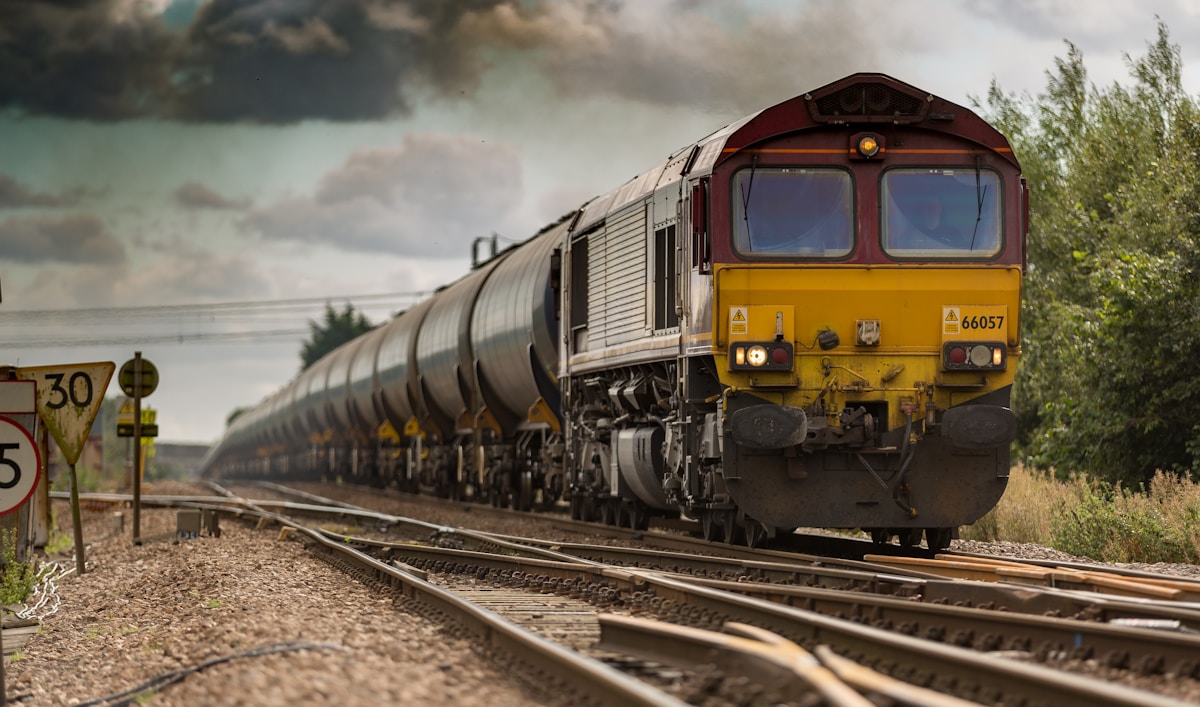
Turkey and Armenia held a joint working group meeting in Kars to advance the rehabilitation and operationalization of the Kars-Gyumri railway, marking concrete progress in normalizing relations between the historic adversaries despite regional complications.
Both countries' foreign ministries issued statements emphasizing "the significance of the early operation of the Gyumri-Kars railway in the context of enhancing regional transport communications." The railway, closed since 1993 during the first Nagorno-Karabakh war, would provide Armenia with direct access to Turkish and European markets, potentially transforming the landlocked nation's economic prospects.
The normalization process, initiated in 2022 following Azerbaijan's military victories over Armenia, represents a delicate balancing act for all parties. For Turkey, improving relations with Yerevan serves multiple purposes: it positions Ankara as a regional stabilizer, opens economic opportunities, and demonstrates independence from Azerbaijani preferences—though Turkey remains Baku's closest ally.
For Armenia, the railway offers economic diversification and reduced dependence on routes through Georgia or Iran. More importantly, it provides an alternative to reliance on Russia, whose failure to protect Armenian territory has prompted Yerevan's broader strategic reorientation toward Western partners.
In the Caucasus, as across mountainous borderlands, ancient identities and modern geopolitics create intricate patterns of conflict and cooperation. The Armenia-Turkey rapprochement, unthinkable a decade ago, reflects how military realities—specifically Azerbaijan's decisive victory in 2020 and complete takeover of Nagorno-Karabakh in 2023—have reshuffled regional calculations.
Yet the process remains fragile. Azerbaijan, while publicly supportive of Turkey-Armenia normalization in principle, fears being economically bypassed if the Kars-Gyumri route reopens without a parallel opening of the Azerbaijan-Armenia border. Baku has insisted that full normalization should include Armenian recognition of Azerbaijani sovereignty over Nagorno-Karabakh and agreement on a corridor connecting mainland Azerbaijan to its Nakhchivan exclave through Armenian territory.
The railway talks represent the most tangible progress in the normalization process. Previous attempts, including a 2009 protocol, collapsed under pressure from diaspora communities and geopolitical complications. This time, both sides appear more committed, driven by changed circumstances: Armenia needs economic outlets and alternatives to Russian dependence, while Turkey seeks to position itself as a constructive regional power amid its broader strategic competition with Russia and Iran.
The technical discussions in Kars—covering track rehabilitation, customs procedures, and operational logistics—may seem mundane, but they represent diplomacy through infrastructure. In a region where borders have been closed for three decades and bitter historical grievances remain unresolved, reopening a railway line constitutes significant progress.
Whether this momentum extends to full diplomatic relations, including opening the land border for general transit, depends on broader regional dynamics. Azerbaijan's position, Armenian domestic politics, and Turkish calculations about balancing relations with Baku and Yerevan will all influence the pace and scope of normalization. For now, the Kars-Gyumri railway remains the most promising symbol of potential regional integration.