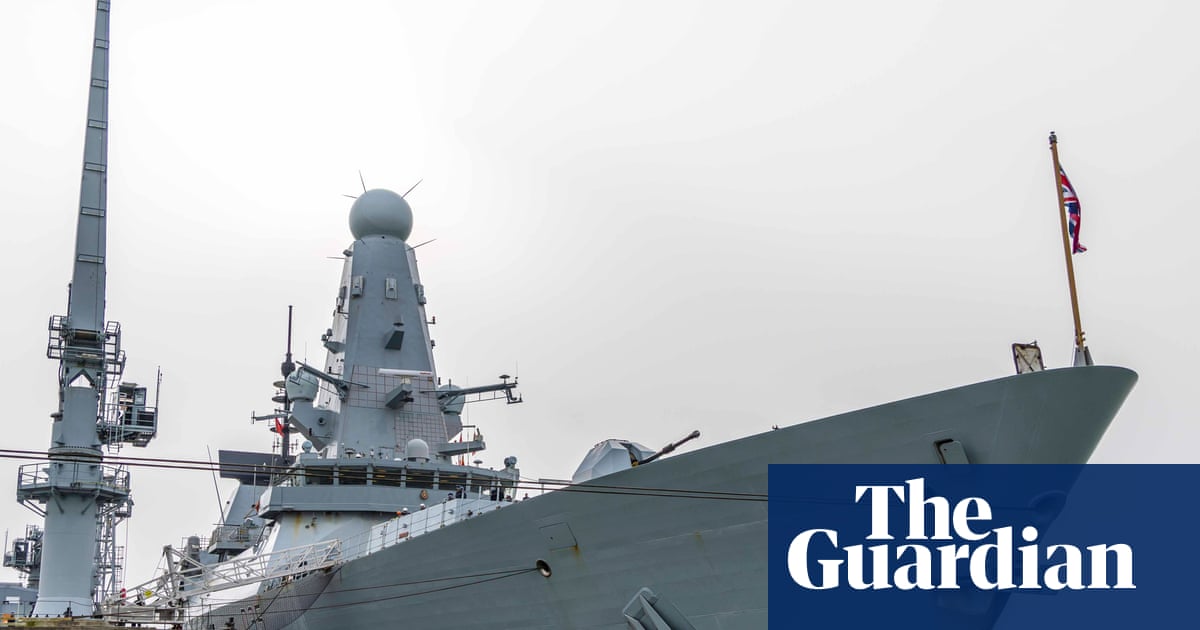

Denmark has declared that Greenland does not need the US hospital ship that Donald Trump just dispatched to the Arctic territory - but Washington is sending it anyway. The uninvited medical mission marks a sharp escalation in Trump's pressure campaign on the Danish autonomous territory, testing the limits of NATO solidarity and raising urgent questions about European sovereignty.
The move comes after weeks of Trump openly discussing his desire to acquire Greenland, including suggesting he might use "economic force" to do so. Copenhagen has repeatedly rejected any discussion of territorial transfer, calling Greenland's status non-negotiable. Now Washington is bypassing Danish objections entirely, deploying American military medical assets to an ally's territory over explicit protests.
"This is what happens when a US president treats a NATO ally like a weak state whose sovereignty is optional," said a senior EU diplomat who spoke on condition of anonymity. "If Europe cannot defend Denmark's territorial integrity over Greenland, what message does that send about the Baltic states? About Poland?"
The hospital ship deployment is particularly troubling to European security analysts because it bypasses the normal frameworks of alliance cooperation. NATO members routinely conduct joint operations and provide mutual assistance - but those arrangements happen through diplomatic channels, with host nation consent. Trump's approach resembles the unilateral projection of power into another country's sovereign space.
Brussels has remained conspicuously silent on the Greenland crisis, exposing the EU's limited capacity to defend member states against American pressure. Denmark is a full EU member, and Greenland is constitutionally part of the Danish realm despite its autonomous status. Yet no European Commission statement has condemned Washington's actions, and no European Council emergency session has been called.

The strategic stakes are immense. Greenland sits astride critical Arctic shipping routes and holds vast mineral deposits crucial for renewable energy technology and defense manufacturing. Its Thule Air Base is one of America's most important early-warning installations. Trump has been transparent about his interest: he wants control of these assets, and he appears willing to pressure an ally to get them.
What makes this crisis particularly dangerous for Europe is the precedent it establishes. Trump is demonstrating that American military and economic power can override European sovereignty when Washington decides a territorial arrangement no longer serves US interests. If that principle applies to Danish Greenland, why not to other European territories America considers strategically vital?
European defense officials are watching nervously. Poland, the Baltic states, and Romania all host significant American military installations. Their governments have long understood that their security depends on the American commitment to NATO's Article 5 mutual defense guarantee. But if Washington treats Danish sovereign objections as irrelevant, what protection does Article 5 really provide?
The hospital ship itself may be a humanitarian gesture on paper - medical aid rarely invites international condemnation. But the optics are clear: America is establishing a unilateral presence in Greenland, demonstrating that it can deploy military assets to the territory regardless of what Copenhagen says. Today it's a hospital ship. What will Washington send tomorrow?
"Trump is treating Greenland like unclaimed real estate in a property negotiation," said one NATO parliamentary assembly member. "But Greenland belongs to Denmark. It's not for sale, and it's not America's to take. If Europe accepts this precedent, we're accepting that our borders exist at Washington's pleasure."
Brussels decides more than you think - but apparently Brussels has decided that defending Danish sovereignty over Greenland isn't worth confronting Washington. That silence may be the most consequential European decision of all.