
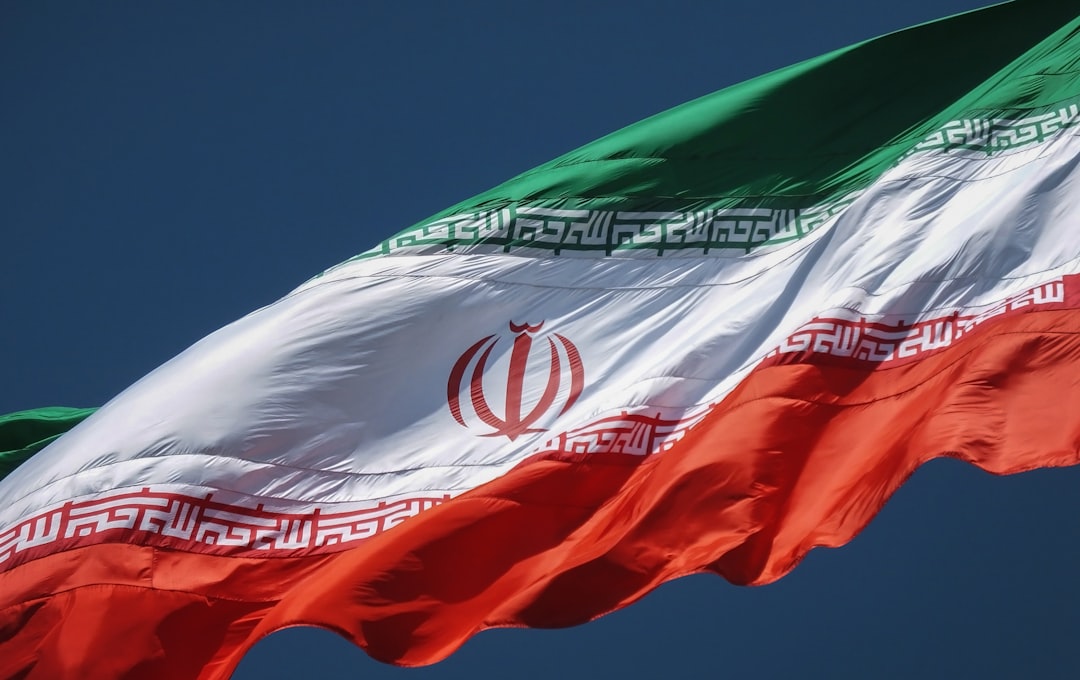
The outline of a potential nuclear agreement between Washington and Tehran has triggered deep unease in Israel, where officials warn that any deal permitting Iranian uranium enrichment could ultimately enable a nuclear-armed adversary on their doorstep.
According to The Guardian, the proposed framework under discussion would allow Iran to continue enriching uranium to levels far exceeding those permitted under the 2015 Joint Comprehensive Plan of Action, which Donald Trump withdrew the United States from during his first presidency.
The emerging deal structure has prompted an extraordinary political dynamic in Israel, where critics of Prime Minister Benjamin Netanyahu are positioning to assign him personal responsibility should Iran achieve nuclear weapons capability. "If Iran gets a bomb, it will be Bibi's," opposition figures have declared, using the prime minister's nickname.
To understand today's headlines, we must look at yesterday's decisions. The current predicament traces directly to Netanyahu's vigorous lobbying for the original deal's collapse in 2018. At the time, Israeli intelligence agencies presented what they characterized as definitive proof that Iran had maintained a clandestine nuclear weapons program despite the agreement's restrictions.
Netanyahu personally addressed the United Nations and the U.S. Congress, displaying what he claimed were thousands of pages of Iranian nuclear archives obtained by Israeli intelligence operatives. His campaign contributed significantly to Trump's decision to reimpose sanctions on Tehran, a move that effectively terminated the JCPOA framework.
Yet the intervening years have validated the warnings of deal advocates. Without the constraints imposed by international inspectors, Iran has dramatically accelerated its enrichment activities. The International Atomic Energy Agency now reports Iranian stockpiles of uranium enriched to 60 percent purity—a technical threshold that places Tehran within weeks of weapons-grade material should it choose to proceed.
The preliminary terms under discussion would reportedly establish verification mechanisms and enrichment limits, but would not require Iran to dismantle the advanced centrifuge infrastructure it has constructed since 2018. Israeli defense officials privately acknowledge this represents a fundamentally altered strategic landscape compared to the original agreement.
Political opponents in Jerusalem have seized on the contradiction between Netanyahu's previous advocacy and the current situation. Yair Lapid, leader of the opposition, stated that the prime minister's "maximalist approach has delivered us the worst of all possible outcomes."
The criticism carries particular weight as Israel confronts simultaneous security challenges on multiple fronts, including intensified exchanges with Hezbollah along the Lebanese border and ongoing conflict in Gaza. Military planners have long identified a nuclear-capable Iran as the preeminent existential threat to Israeli security.
Senior European diplomats, speaking on condition of anonymity, indicated that the Trump administration appears determined to secure some form of agreement with Tehran despite Israeli reservations. The diplomatic calculus has shifted considerably since 2018, with Washington now prioritizing regional de-escalation and the stabilization of energy markets.
A senior Israeli cabinet minister told reporters that Jerusalem retains "all options" in responding to an Iranian nuclear program, a formulation historically understood to include military action. However, the feasibility of unilateral Israeli strikes has diminished as Iran has fortified and dispersed its nuclear facilities over the past seven years.
The controversy underscores a broader recalibration of Middle Eastern alignments. The Abraham Accords, which normalized Israeli relations with several Arab states, were predicated partly on shared concerns about Iranian regional influence. Yet those same Arab governments have quietly indicated to American officials that they would support a diplomatic resolution that constrains Tehran's nuclear ambitions.
As negotiations continue, Israeli officials confront a strategic dilemma without clear resolution. The political reckoning for Netanyahu will likely extend beyond the immediate question of the Iranian program to encompass a broader evaluation of his decade-long approach to regional security architecture.