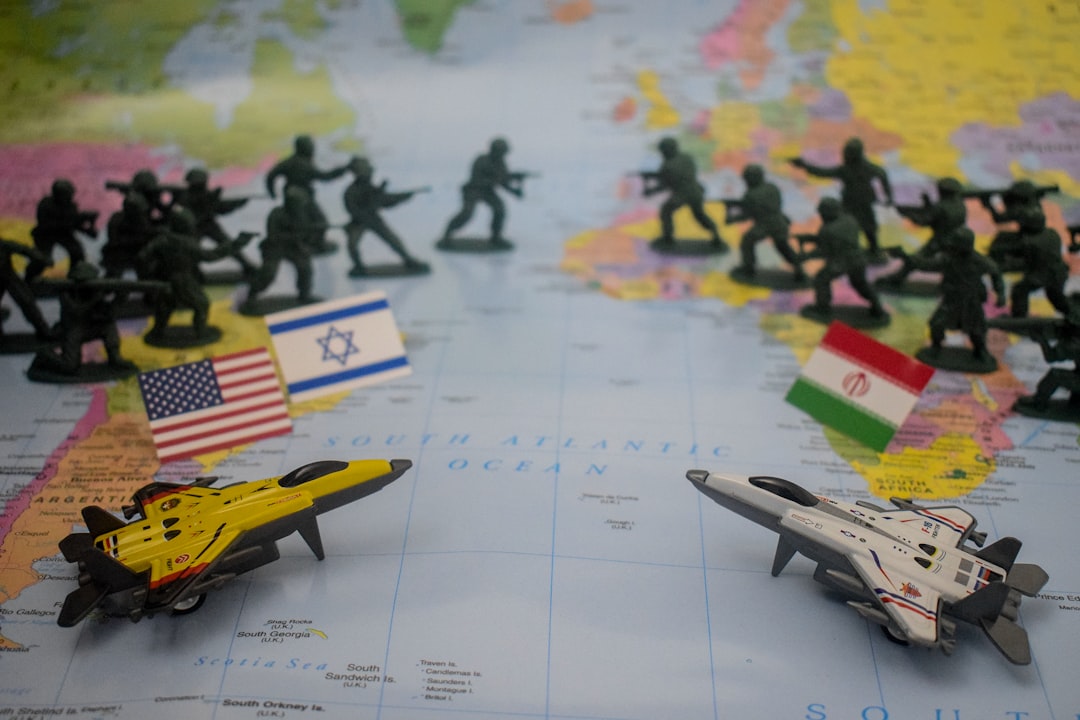
President Donald Trump has abruptly canceled planned diplomatic talks between U.S. envoys and Iranian officials in Pakistan, according to Axios reporting, raising questions about Washington's strategic approach to Iran and broader implications for Middle East security.
The cancellation came without detailed public explanation, leaving regional analysts and Israeli security officials uncertain about whether the decision reflects substantive policy shifts or tactical maneuvering in ongoing diplomatic efforts to address Iranian nuclear ambitions and regional activities.
For Israel, U.S. engagement with Iran represents one of the most consequential aspects of American Middle East policy. Israeli governments have consistently opposed direct negotiations that might lead to sanctions relief without addressing Tehran's nuclear program, ballistic missile development, and support for proxy forces including Hezbollah, Hamas, and other groups threatening Israeli security.
The planned Pakistan venue itself carried significance, representing a neutral third-party location that might facilitate indirect or exploratory discussions without the formality of direct bilateral negotiations. Islamabad has maintained relationships with both Washington and Tehran, positioning it as a potential facilitator for sensitive diplomatic contacts.
President Trump's approach to Iran has oscillated between maximum pressure campaigns and periodic signals of willingness to negotiate. During his previous administration, he withdrew from the Joint Comprehensive Plan of Action (JCPOA) negotiated under President Barack Obama, reimposing comprehensive sanctions while also engaging in occasional diplomatic outreach.
In Israel, as across contested regions, security concerns and aspirations for normalcy exist in constant tension. The question of how Washington engages with Tehran directly affects Israeli strategic calculations about regional threats and the potential for military action.
Prime Minister Benjamin Netanyahu's government has welcomed U.S. pressure on Iran but remains wary of any diplomatic process that might constrain Israel's freedom of action or provide Tehran with sanctions relief without addressing what Jerusalem views as fundamental security concerns.
The cancellation comes at a moment of heightened regional tensions. Iran continues advancing its nuclear program, with international inspectors reporting enrichment levels approaching weapons-grade concentrations. Meanwhile, Tehran has expanded its network of proxy forces across the region and demonstrated increasingly sophisticated military capabilities.
Israeli intelligence assessments suggest Iran is working to consolidate a "ring of fire" around Israel through allied militias in Lebanon, Syria, Iraq, and Yemen, while also maintaining support for Palestinian militant groups in Gaza and the West Bank.
The Abraham Accords, which normalized relations between Israel and several Arab states including the UAE and Bahrain, were partly motivated by shared concerns about Iranian regional ambitions. These normalization agreements created new channels for security cooperation and intelligence sharing focused on countering Iranian influence.
Analysts note that Trump's unpredictable diplomatic style makes it difficult to assess whether the cancellation signals a hardening U.S. position or merely reflects tactical considerations about timing, venue, or negotiating conditions. Previous administrations have engaged in extended diplomatic processes with Iran, often involving multiple rounds of talks with varying degrees of progress.
For regional security planners in Tel Aviv, Riyadh, Abu Dhabi, and other capitals concerned about Iranian power projection, the lack of clarity about U.S. intentions complicates strategic planning. Countries throughout the region must calibrate their own policies—including potential military preparations, diplomatic initiatives, and alliance structures—based on assessments of American commitment and approach.
The canceled talks also raise questions about what diplomatic alternatives might exist for addressing the Iranian nuclear program and regional activities. European powers have periodically attempted to maintain dialogue with Tehran, though with limited success in constraining nuclear advances or modifying regional behavior.
Israel has maintained that it reserves the right to take unilateral military action if necessary to prevent Iran from acquiring nuclear weapons capabilities, regardless of diplomatic processes. Israeli officials have conducted extensive planning for potential strikes against Iranian nuclear facilities, though such operations would carry enormous risks and uncertain outcomes.
The regional strategic environment remains volatile, with ongoing conflicts in Gaza, tensions along the Lebanon border, Syrian instability, and broader competition between Iran and Gulf states shaping a complex security landscape where American engagement plays a crucial but sometimes unpredictable role.
As the implications of the canceled talks become clearer, regional actors will be watching closely for signals about whether Washington intends to pursue alternative diplomatic channels, maintain maximum pressure approaches, or shift toward more confrontational postures that could fundamentally reshape Middle East security dynamics.