

President Trump is hosting Microsoft, Amazon, Google, Meta, and OpenAI executives today at 3PM ET to formalize a "Ratepayer Protection" pledge, and the topic isn't what most people think.
It's not about AI safety. It's not about regulation. It's about electricity.
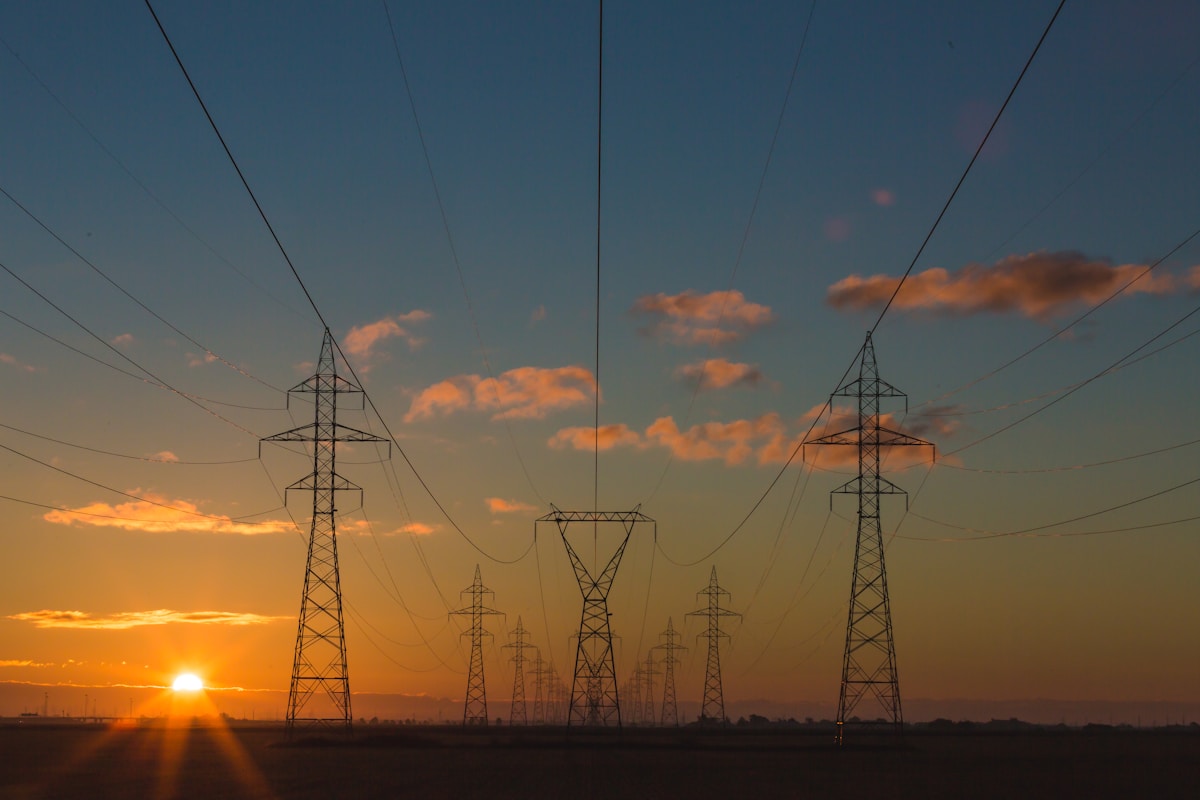
Specifically, it's about the fact that AI data centers are consuming so much power that utilities in multiple regions are warning about grid strain, and the White House is now stepping in to make sure tech companies foot the bill instead of passing costs onto regular consumers ahead of the 2026 midterms.
Let me be clear about what's happening here: AI is no longer just a semiconductor story. It's a power story. And that's a huge shift that most investors still haven't priced in.
The numbers are staggering. A single large AI data center can consume as much electricity as a small city—we're talking hundreds of megawatts of continuous demand. When you're training models or running inference at scale, those GPUs and CPUs we've been talking about? They're power-hungry beasts. And they don't take breaks. Unlike normal data centers that have variable loads, AI infrastructure runs 24/7 at maximum capacity.
Utilities across the country have been sounding alarms for months. In Virginia, Texas, and Ohio—the three states with the most hyperscale data center construction—grid operators are flagging capacity concerns. The problem isn't that we'll run out of electricity tomorrow. The problem is that reliable, dispatchable, always-on power is becoming a gating factor for AI expansion.
You can't run an AI data center on intermittent wind and solar alone. You need baseload power that's there all the time. That means natural gas, nuclear, or coal. And building new generation capacity takes years and massive capital investment.
That's where today's White House meeting comes in. The administration is pushing tech companies to secure dedicated generation rather than simply pulling more power off the existing grid and passing the infrastructure costs to consumers through higher utility bills. Translation: if you want to build massive AI data centers, you need to also build or contract the power plants to run them.
This creates a huge investment opportunity that Wall Street is still underpricing.
Traditionally, the AI trade has been: buy Nvidia, buy hyperscalers, buy semiconductor equipment makers. That's been the playbook for two years. But if power is now the bottleneck, the returns start shifting to companies that can provide that power under long-term contracts.
That includes traditional generation companies, but more interestingly, it includes emerging areas like small modular reactors (SMRs) and advanced nuclear. Companies positioning around dedicated reactor deployments for industrial and data center customers—like Oklo, NuScale, and others—are suddenly sitting in a much more favorable policy and demand environment.
Think about the math: if a hyperscaler is spending billions on AI compute, and the constraint isn't chips anymore but power to run those chips, then securing 300-500 MW of dedicated generation becomes strategic capex, not discretionary spending. That creates long-term contracted revenue for whoever can supply that power, and those contracts typically run 15-20 years.
This also explains why we're seeing more interest in utility-scale batteries, grid-scale storage, and even natural gas peaker plants located adjacent to data centers. Anything that provides firm, always-on capacity is suddenly more valuable.
Now, to be clear, today's White House event is largely symbolic. This is a political pledge ahead of midterms, not binding regulation. But the signal matters. When the federal government starts publicly linking AI growth to energy infrastructure, that tends to unlock policy support, permitting prioritization, and eventually, capital allocation.
For retail investors, this means the AI trade is broadening beyond pure tech. If you've been all-in on semiconductors and software, you're exposed to one leg of a multi-legged story. The energy and infrastructure angle is still early, which means there's alpha available for people who see it coming.
Risks? Sure. If AI demand growth slows, power demand slows with it. If the economy weakens and data center buildouts get delayed, the whole thesis takes longer to play out. And if utilities successfully push back and tech companies don't end up funding their own generation, the opportunity shrinks.
But structurally, the trend is clear: AI is running out of electricity faster than it's running out of chips. And the companies that solve that problem are going to be the next leg of this bull market.
If they can't explain it simply, they're probably hiding something. This one's simple: AI needs power, and there isn't enough of it. Pay attention to who's building it.


