

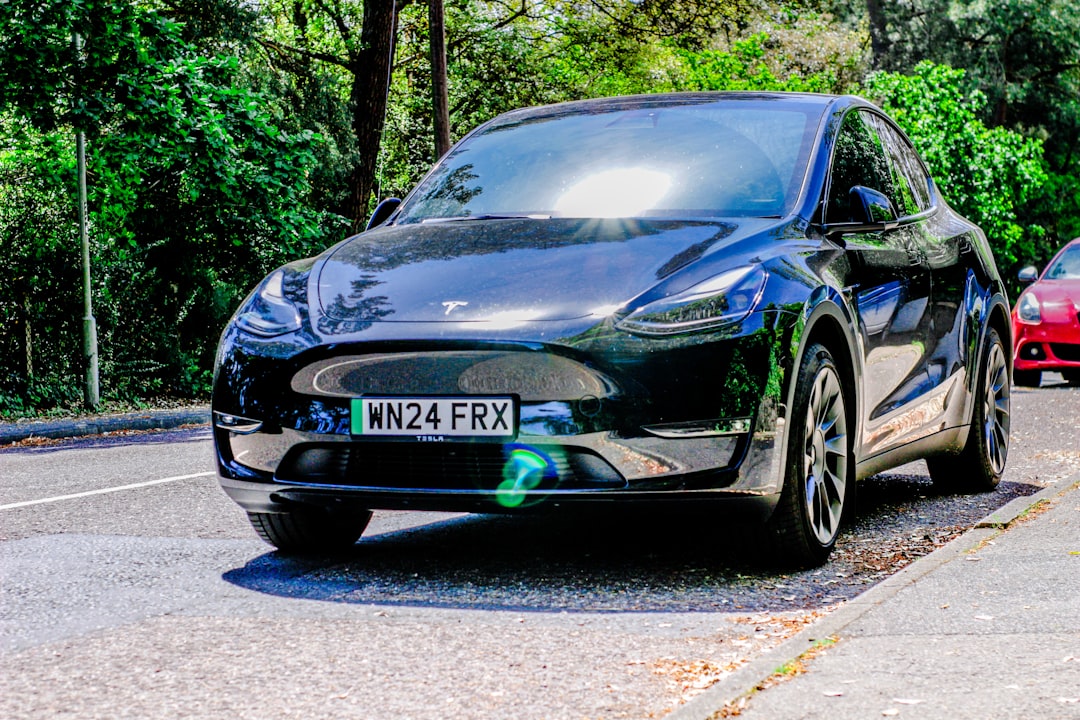
Tesla's sales across Europe have collapsed to levels that industry analysts describe as extraordinary for an established manufacturer, with the electric vehicle company recording year-on-year declines of 93 percent in Norway, 81 percent in the Netherlands, 59 percent in Germany, 58 percent in Spain, and 55 percent in the United Kingdom, according to data compiled by CleanTechnica from national automotive registration records.
The scale of the declines has no precedent in modern European automotive history for a major brand not in active corporate distress. Consumer surveys conducted across multiple European countries in January and February consistently identify the same primary factor: the political activities and public statements of Tesla's chief executive, Elon Musk.
Musk's increasingly prominent role in American right-wing politics — including his close association with President Trump's administration, his direction of the so-called Department of Government Efficiency (DOGE), and his public interventions in European domestic politics, including open endorsements of Germany's far-right Alternative for Germany party and Britain's Reform UK — have provoked a visceral consumer backlash in markets where his products had previously thrived.
To understand today's headlines, we must look at yesterday's decisions. Norway was, by any measure, Tesla's most committed market — a country where generous state subsidies for electric vehicles had made Teslas ubiquitous on urban streets, and where the Model 3 became the best-selling car of any type in 2019 and subsequent years. The 93 percent sales collapse in Norway is not a market fluctuation; it is a consumer revolt of a kind rarely observed in peacetime economies.
European Tesla owners have also faced a peculiar social pressure. What was once a status symbol associated with environmental consciousness and technological sophistication has been reimagined, in some social contexts, as a political statement the owner did not intend to make. Reports from Germany, France, and the Netherlands document a rising number of Tesla owners applying stickers to their vehicles disavowing Musk's politics, alongside online communities dedicated to selling Teslas and switching to European brands.
The declines are the more striking given the broader European electric vehicle context. Battery electric vehicle sales across the continent grew by approximately 14 percent in January 2026 compared to the same month in 2025, with European manufacturers including Volkswagen, BMW, and Renault reporting strong order books. Tesla is losing market share in a growing market — a structural haemorrhage rather than a cyclical dip.
Tesla's product line has also aged. The Model 3 and Model Y, which account for the overwhelming majority of European sales, were introduced in 2017 and 2019 respectively. While both have received interior and software updates, European competitors have produced newer designs with comparable range, superior interior quality by most assessments, and a charging infrastructure that, while not matching Tesla's Supercharger network in raw size, has narrowed the gap significantly.
The company has not responded publicly to the European sales data. Musk has made no indication that he intends to moderate his political activities in response to consumer reaction, describing criticism of his politics as coordinated and inauthentic.
Industry analysts at LMC Automotive estimate that if current trends hold, Tesla's European market share could fall below two percent by the end of 2026 — from a peak of approximately eight percent in 2023. The financial consequences extend beyond revenue: Tesla's European Gigafactory in Berlin, which employs more than 12,000 workers, was built to serve a European market that may no longer want to buy what it produces.
"We are watching, in real time, what happens when a brand becomes identified with a political position that the majority of its target market finds repugnant," said one senior automotive industry consultant in Munich, who asked not to be named. "In twenty years of this business, I have never seen anything like it."



