

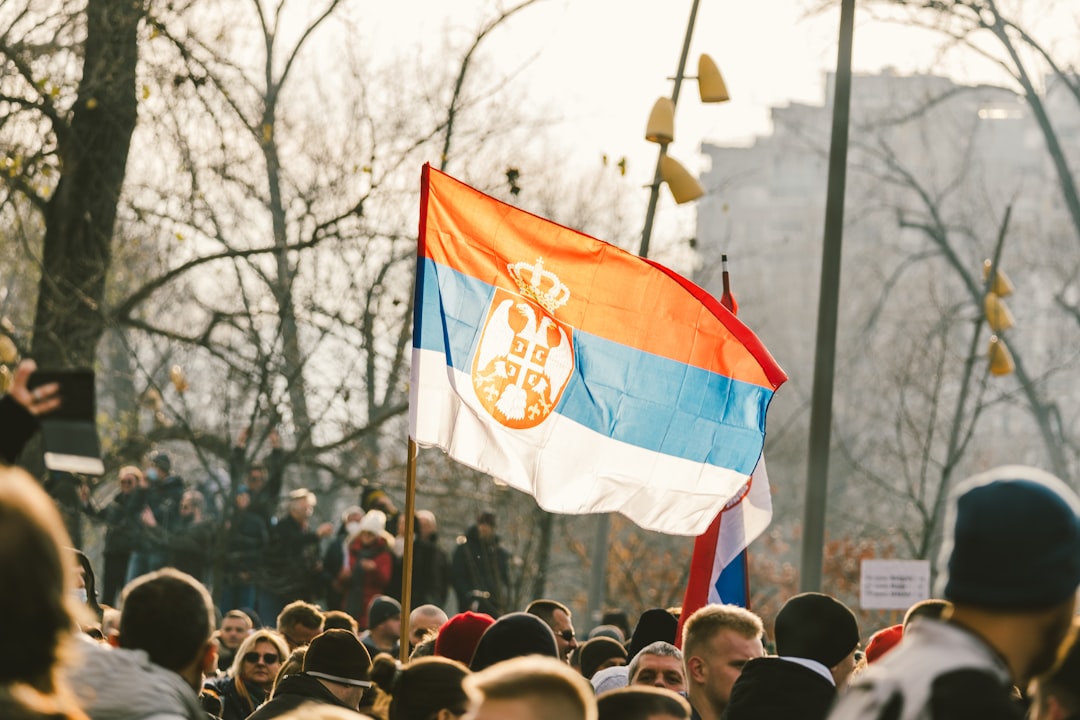
Belgrade's Faculty of Electrical Engineering entered blockade on March 3, marking the latest expansion of student protests that have become the most significant civic mobilization in Serbia since the demonstrations that toppled Slobodan Milošević in 2000. The blockade comes as opposition forces secured a rare electoral victory in the eastern town of Knjaževac, where voters <link href="https://n1info.rs/vesti/etf-u-blokadi-oborena-lista-sns-a-u-knjazevcu/">rejected the ruling Serbian Progressive Party (SNS) list</link> that has dominated the country's politics for over a decade.The student movement issued a sharp warning against regime loyalists attempting to co-opt their grassroots mobilization. "We will not allow regime servants to appropriate our struggle," the official Student Blockade account declared, reflecting deepening concerns about political infiltration as the protests enter their third month.The Faculty of Electrical Engineering, one of Belgrade's most prestigious institutions, joins more than 40 faculties across Serbia that have suspended normal operations. Students have maintained blockades while continuing to hold classes independently, a tactic reminiscent of the parallel education systems established during the 1990s wars and isolation.In the Balkans, as across post-conflict regions, the path forward requires acknowledging the past without being imprisoned by it. The parallels to the anti-Milošević protests are impossible to ignore. Like their predecessors a generation ago, today's students face a ruling party that controls most media, dominates municipal governments, and has blurred the lines between state institutions and party apparatus.The electoral defeat in Knjaževac represents a significant crack in the SNS's political dominance. The town of 18,000 in eastern Serbia has traditionally been a stronghold for President Aleksandar Vučić's party. Opposition candidates <link href="https://www.insajder.net/vesti/opozicija-u-arandelovcu-ne-izlazimo-na-lokalne-izbore-podrska-studentskoj-listi">secured mayoral positions</link> by running on platforms echoing student demands for accountability, particularly following the Novi Sad railway station collapse that killed 15 people in November.The student movement's warning about regime infiltration addresses a genuine concern in Serbian civil society. Opposition politician and others have noted attempts by individuals with ties to the ruling party to position themselves within protest movements. In , traditional opposition parties announced they would , instead supporting an independent student-led list to avoid diluting the grassroots character of the movement.Yet the students face challenges their predecessors in 2000 did not encounter. Unlike the era, when the country was internationally isolated and economically devastated, contemporary has maintained economic growth and EU accession negotiations. The government points to infrastructure projects, foreign investment, and relative stability compared to the chaotic 1990s.The Public Prosecutor's Office for Organized Crime has <link href=>opened investigations into allegations</link> that the Security Information Agency (BIA) interfered in prosecutorial elections, adding institutional legitimacy to student claims about state capture. These investigations represent a rare instance of state institutions acting independently of executive control.The movement has carefully maintained its nonpartisan character while advancing concrete demands: release of documentation about the disaster, prosecution of officials responsible for the collapse, and restoration of institutional independence. This focus on accountability rather than regime change distinguishes the 2026 protests from their 2000 predecessors, though the long-term political implications may prove equally profound.Regional observers note that civic mobilization in the Balkans often faces the challenge of sustaining momentum beyond initial outrage. Student movements in neighboring and have struggled to translate protest energy into lasting institutional change. Yet the combination of sustained blockades, electoral setbacks for the ruling party, and institutional investigations suggests this movement has achieved a level of organizational coherence previous protests lacked.Farmers have joined the protests in recent days, with one agricultural worker from dramatically surrendering his legally-owned weapons and Kosovo war uniform to police in solidarity with student demands. These cross-sectoral alliances indicate the movement has expanded beyond its university origins to encompass broader dissatisfaction with governance.As spring approaches and the academic year nears its conclusion, students face critical decisions about maintaining pressure without exhausting their base. The government, meanwhile, must calculate whether continued confrontation or accommodation better serves its interests ahead of potential early elections. For now, the blockades continue, and the parallels to 2000 grow more compelling with each passing week.
|



